
Dehumidification in Merritt Island Behind Interior Walls: How to Prevent Recurring Damage
Living in coastal Florida has its perks—warm weather, ocean breezes, and lush surroundings. But if you own a home in Brevard County, you already know the downside: humidity never really leaves.
While most homeowners worry about visible moisture—wet floors, ceiling stains, or condensation on windows—the bigger threat often hides behind interior walls. Moisture trapped inside drywall cavities can quietly lead to structural deterioration, indoor air problems, and recurring repair costs.
That’s where professional dehumidification behind interior walls becomes essential.
This guide explains why hidden moisture develops, how experts remove it, and—most importantly—how to prevent the same problem from coming back.
Why Hidden Wall Moisture Is So Common in Merritt Island Homes
Florida homes are constantly exposed to humidity levels that stay elevated for much of the year. Even well-maintained properties can develop moisture pockets behind walls due to a combination of environmental and structural factors.
Common causes include:
- Small plumbing leaks inside wall cavities
- AC condensation lines running through walls
- Wind-driven rain entering through exterior seams
- Flood or storm moisture that never fully dried
- Poor ventilation in bathrooms or kitchens
Because drywall absorbs moisture easily, even minor dampness can spread quietly over time.
The biggest issue?
Most homeowners don’t notice until damage has already begun.
What Happens When Moisture Gets Trapped Behind Drywall
Interior walls are designed to remain dry. When moisture becomes trapped, it changes how building materials behave.
Here’s what typically occurs:
Drywall absorbs moisture
The gypsum core acts like a sponge.
Wood framing begins holding humidity
This slows the drying process and increases risk of deterioration.
Air quality begins to shift
Musty odors often develop first.
Paint or texture may bubble or discolor
This is often the first visible warning sign.
Because airflow inside walls is extremely limited, natural drying rarely works.
Early Warning Signs of Hidden Moisture Inside Walls
Catching the problem early can dramatically reduce repair costs.
Watch for these common indicators:
- A persistent musty smell with no visible source
- Paint bubbling or peeling in isolated areas
- Walls feeling cool or slightly damp to the touch
- Warping baseboards or trim
- Recurring moisture readings during inspections
In Merritt Island homes, these signs often appear after:
- Summer humidity spikes
- Plumbing issues
- AC system malfunctions
- Storm-driven rain events
If ignored, the problem continues spreading behind surfaces.
Why Traditional Drying Methods Don’t Work Behind Walls
Many homeowners try surface drying methods first—fans, portable dehumidifiers, or opening windows. While helpful for surface moisture, these methods rarely remove moisture trapped inside wall cavities.
Here’s why:
- Air cannot circulate effectively inside sealed wall spaces
- Insulation slows evaporation
- Moisture becomes trapped between materials
- Florida’s outdoor humidity prevents natural drying
This is why professional structural drying methods are often required.
How Professionals Detect Moisture Behind Interior Walls
Before starting dehumidification, technicians must identify exactly where moisture exists.
Modern moisture detection combines several tools.
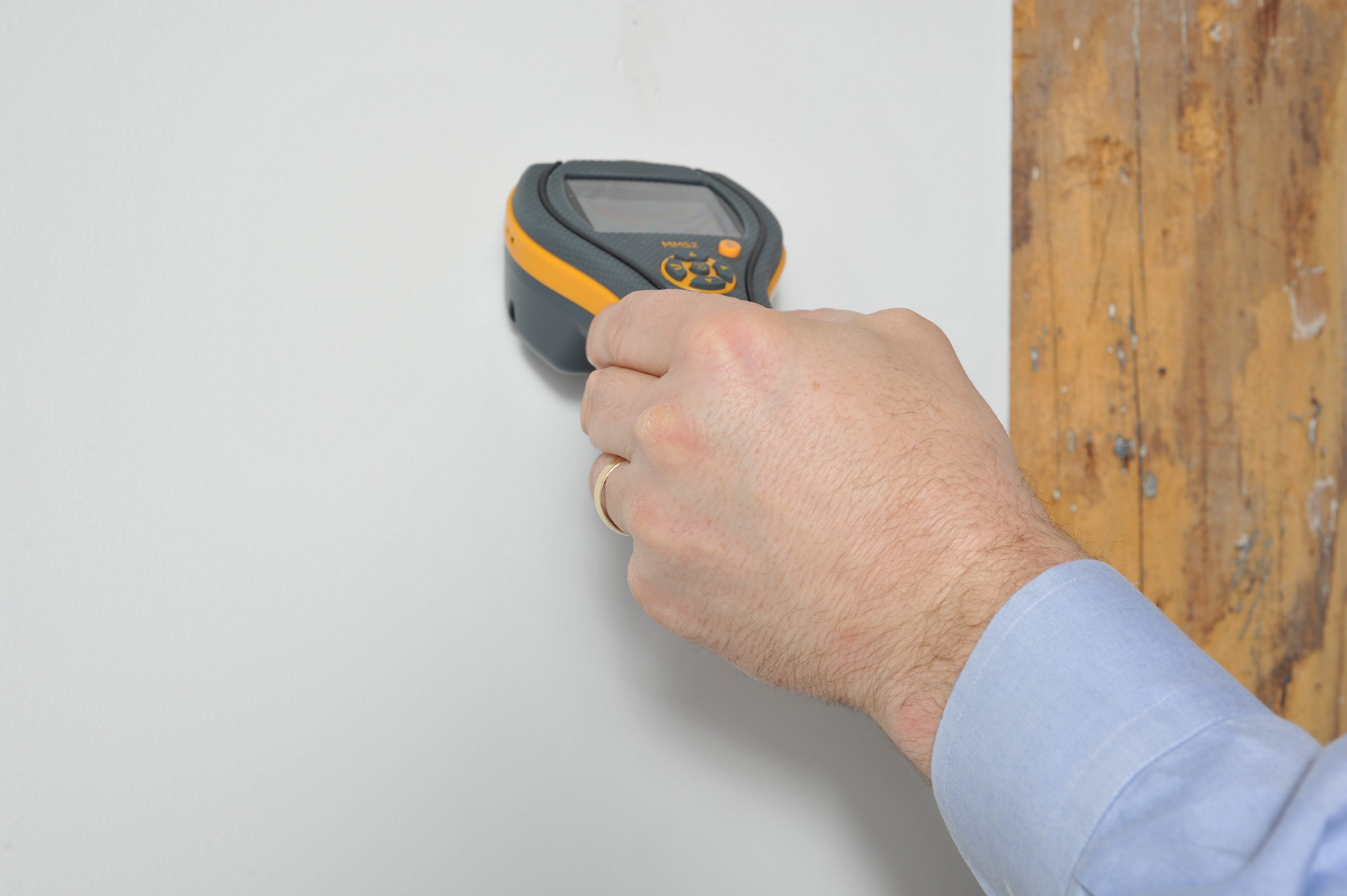
Moisture Meters
These devices measure moisture content in drywall and wood framing.
They help determine:
- How far moisture has spread
- Whether materials are salvageable
- Where drying equipment should be placed
Thermal Imaging
Infrared cameras identify temperature differences that often indicate hidden moisture.
Thermal scans are especially useful because they:
- Detect moisture without opening walls
- Reveal patterns caused by leaks
- Speed up inspection time
Humidity Mapping
Professionals measure indoor humidity levels in multiple rooms to determine whether hidden moisture is affecting the overall environment.
This step is critical in coastal areas where humidity fluctuates daily.
How Dehumidification Works Behind Interior Walls
 Once hidden moisture is confirmed, structural drying begins using specialized techniques designed specifically for enclosed spaces.
Step 1: Creating Controlled Access Points
Small holes may be drilled near the base of the wall to allow airflow inside the cavity. These openings are minimal and easily repaired later.
This step allows technicians to:
- Release trapped humidity
- Introduce controlled airflow
- Prevent moisture from spreading upward
Step 2: Injection Drying Systems
Flexible hoses push dry air directly into wall cavities.
This technique accelerates evaporation by:
- Breaking trapped humidity cycles
- Drying insulation and framing
- Reducing long-term structural risk
Injection drying is especially effective after plumbing leaks.
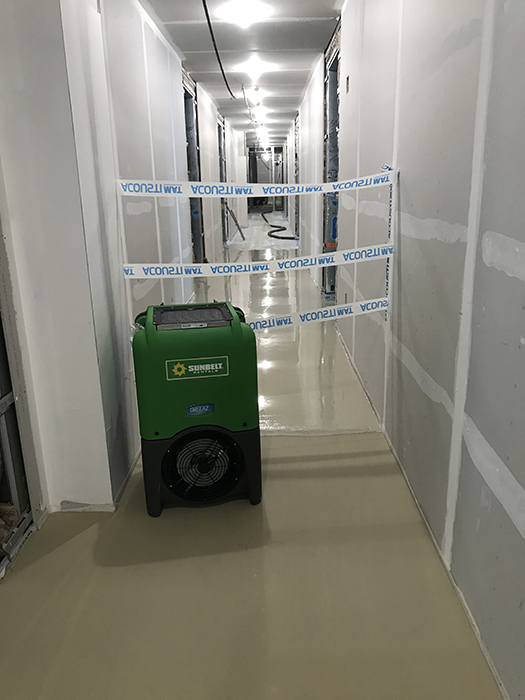
Step 3: Commercial Dehumidifiers
Professional-grade dehumidifiers remove moisture from the air as evaporation occurs inside the walls.
These units are significantly more powerful than residential models and can:
- Remove gallons of moisture daily
- Stabilize indoor humidity levels
- Speed structural drying timelines
Step 4: Continuous Moisture Monitoring
Technicians regularly test moisture levels during the drying process.
Drying continues until materials return to safe moisture ranges.
This prevents recurring damage.
Why Hidden Moisture Often Returns Without Proper Dehumidification
One of the most common mistakes homeowners make is repairing the visible issue without addressing moisture trapped inside structural materials.
For example:
- Fixing a plumbing leak but not drying the wall cavity
- Repainting stained areas without moisture testing
- Replacing drywall without correcting humidity levels
These situations frequently lead to repeat problems within months.
Proper structural drying prevents this cycle.
The Role of HVAC Systems in Wall Moisture Problems
Air conditioning systems play a major role in moisture control in Florida homes.
However, several HVAC-related issues can introduce moisture into walls:
- Condensation forming on poorly insulated ducts
- Clogged condensate drain lines
- Oversized AC systems that short-cycle
- Air handlers located in enclosed wall areas
When HVAC moisture spreads inside wall cavities, it often goes unnoticed.
Routine HVAC maintenance is one of the most effective prevention strategies.
Storm Season and Its Impact on Hidden Wall Moisture
Merritt Island homes experience heavy rains and tropical weather patterns throughout the year.
Wind-driven rain can enter homes through:
- Window seams
- Roof flashing gaps
- Exterior wall penetrations
Even when surfaces appear dry, moisture may remain inside structural layers.
Storm-related moisture is one of the leading causes of hidden wall humidity in coastal Florida properties.
Preventing Recurring Moisture Behind Interior Walls
The good news? Most hidden moisture issues are preventable with consistent monitoring and maintenance.
Keep Indoor Humidity Between 45%–55%
This range helps prevent condensation inside wall cavities.
Consider using:
- Whole-home dehumidifiers
- Smart humidity monitors
- Proper AC runtime settings
Inspect Plumbing Annually
Small plumbing leaks are one of the most common causes of wall moisture.
Annual inspections help catch:
- Slow pipe leaks
- Loose fittings
- Aging plumbing materials
Maintain Exterior Sealing
Exterior gaps allow rainwater intrusion.
Check regularly:
- Window caulking
- Roof flashing
- Exterior penetrations
This is especially important after storms.
Service HVAC Systems Regularly
Routine maintenance ensures proper airflow and condensation management.
Technicians should inspect:
- Drain lines
- Duct insulation
- Evaporator coils
Proper airflow helps prevent humidity buildup inside walls.
Schedule Moisture Inspections After Water Events
Even minor leaks or spills can introduce hidden moisture.
Professional inspections help confirm whether structural drying is needed.
Why Coastal Homes Require More Frequent Moisture Monitoring
Coastal environments like Merritt Island experience:
- Higher average humidity
- Salt air exposure affecting building materials
- Frequent rain patterns
- Rapid temperature changes
These factors create ideal conditions for moisture migration into structural cavities.
Homes closer to waterways or lagoons may require more frequent inspections due to elevated environmental exposure.
Cost Benefits of Early Dehumidification
Many homeowners delay structural drying because they assume it will be expensive. In reality, early intervention typically saves significant repair costs.
Early dehumidification helps prevent:
- Drywall replacement
- Flooring damage
- Structural repairs
- Repainting large areas
- Long-term indoor air corrections
The longer moisture remains trapped, the more expensive repairs become.
When to Call for Professional Wall Dehumidification
Consider scheduling a moisture inspection if:
- You recently had a plumbing leak
- Your home experienced storm intrusion
- You notice recurring musty odors
- Paint damage keeps returning
- Indoor humidity feels difficult to control
These early indicators often point to hidden moisture inside structural cavities.
Final Thoughts: Stopping Hidden Moisture Before It Returns
Hidden moisture behind interior walls is one of the most overlooked problems in coastal Florida homes. Because the damage develops slowly and out of sight, it often goes untreated until repairs become costly.
Professional dehumidification addresses the root issue—trapped structural moisture—rather than just surface symptoms.
For homeowners in Merritt Island, consistent humidity control, regular inspections, and fast response to leaks are the keys to preventing recurring damage.
When interior walls stay dry, your home stays healthier, stronger, and far more resilient against Florida’s challenging climate.
