Moisture Detection in Sanford in Slab Foundation Houses: How Moisture Spreads Silently
Moisture Detection in Sanford in Slab Foundation Houses: How Moisture Spreads Silently
Slab foundation homes are common throughout Sanford. From established neighborhoods near Lake Monroe to newer developments across Central Florida, many properties are built directly on concrete slabs. This style of construction works well in Florida’s sandy soil and warm climate—but it also creates a unique set of moisture challenges.
One of the most misunderstood issues in slab homes is how moisture spreads silently.
Unlike elevated foundations or crawl spaces where water may be visible underneath the home, slab foundations conceal moisture movement. Concrete is porous. It absorbs water, distributes it laterally, and releases it slowly. By the time visible damage appears inside the home, moisture may have already traveled through flooring systems, drywall, and framing.
Understanding how moisture detection works in Sanford slab homes—and how water migrates without obvious warning signs—can help homeowners protect their property before structural damage or mold growth develops.
Why Slab Foundation Homes in Sanford Are Vulnerable to Moisture
Sanford’s Central Florida climate plays a major role in slab moisture behavior.
High Summer Humidity
Indoor and outdoor humidity levels remain elevated for much of the year.
Heavy Rainfall and Storm Events
Sudden downpours saturate soil around foundations.
Rising Groundwater
While Sanford is inland compared to Cocoa or Merritt Island, heavy rain can still raise groundwater levels temporarily.
Capillary Action in Concrete
Concrete absorbs water from surrounding soil and distributes it internally.
These environmental conditions create the perfect setup for silent moisture migration.
How Moisture Enters Slab Foundation Homes
Moisture in slab homes does not always come from dramatic flooding. In fact, many cases begin with subtle events.
Common sources include:
-
Plumbing leaks beneath the slab
-
Refrigerator water line failures
-
Washing machine overflow
-
Dishwasher leaks
-
Roof leaks traveling down interior walls
-
Exterior grading issues
-
AC condensation problems
In slab homes, even small amounts of water can travel far from the original source.
How Moisture Spreads Silently Through Concrete
Concrete may look solid and impenetrable, but it behaves like a sponge.
When moisture contacts the slab:
-
It enters microscopic pores
-
It spreads laterally
-
It moves toward lower-pressure areas
-
It rises upward through capillary action
This means a leak in one room may create damp conditions in another area entirely.
By the time flooring shows signs of distress, moisture may have been present for weeks.
The First Areas Typically Affected
In Sanford slab homes, moisture often appears first in subtle locations.
Baseboards
Water wicks upward into drywall and causes swelling along baseboard edges.
Lower Drywall Sections
The bottom 1–3 inches of drywall may soften or discolor.
Flooring Edges
Laminate or engineered wood may begin to cup or separate.
Tile Grout Lines
Darkened grout near exterior walls can indicate slab moisture.
Because these signs are subtle, homeowners sometimes overlook them.
Why Visual Inspection Is Not Enough
Surface dryness does not guarantee structural dryness.
Concrete can hold moisture internally even if the top layer feels dry.
Drywall may appear intact while insulation behind it remains damp.
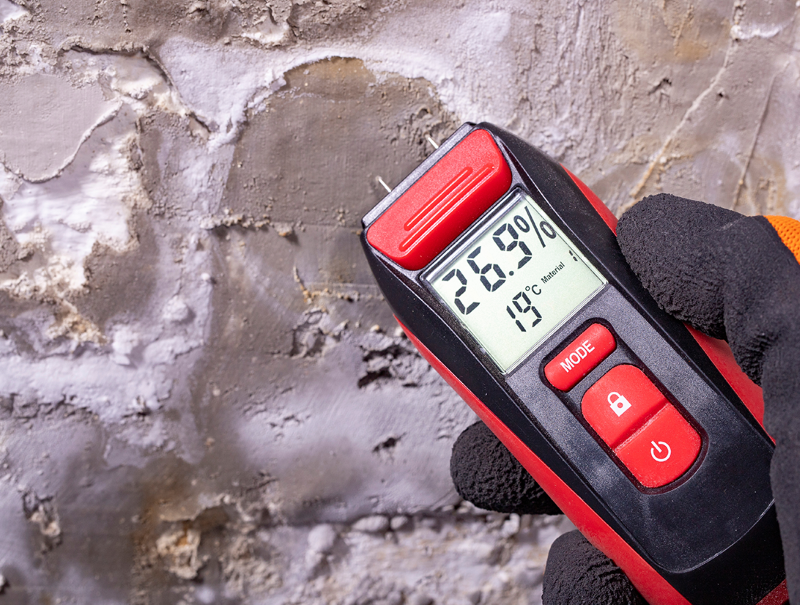
Professional moisture detection tools are necessary to identify hidden saturation.
These tools may include:
-
Pin-type moisture meters
-
Non-invasive moisture scanners
-
Thermal imaging cameras
-
Hygrometers
Thermal imaging identifies cooler areas that may indicate hidden moisture behind walls or beneath flooring.
Companies such as Inspections and More FL often combine multiple detection methods for accuracy.
Common Silent Moisture Scenarios in Sanford
Scenario 1: Minor Plumbing Leak
A slow leak beneath the slab allows water to migrate outward. The homeowner notices soft flooring weeks later, but the source originated elsewhere.
Scenario 2: Heavy Rain Saturation
Soil around the foundation becomes saturated. Moisture migrates through the slab edge and wicks into drywall.
Scenario 3: Appliance Overflow
Water from a washing machine spreads across flooring and seeps into slab seams.
Scenario 4: Roof Leak Traveling Down Walls
Water enters at the roofline and travels through framing to the slab edge.
In each case, moisture spreads quietly.
Why Early Moisture Detection Matters
The longer moisture remains undetected:
-
The greater the risk of mold growth
-
The higher the likelihood of flooring failure
-
The more drywall may require removal
-
The more extensive structural drying becomes
In Sanford’s humid environment, moisture does not evaporate quickly.
Early detection significantly reduces repair scope.
How Professionals Approach Moisture Detection in Slab Homes
A structured approach typically includes:
Step 1: Source Identification
Plumbing, roofing, and exterior systems are evaluated.
Step 2: Moisture Mapping
Moisture readings are taken along slab edges, across flooring, and behind drywall.
Step 3: Thermal Imaging
Temperature variations highlight hidden damp zones.
Step 4: Humidity Assessment
Indoor humidity is measured to determine environmental contribution.
Step 5: Targeted Testing
Suspected areas are verified with additional tools.
This method prevents unnecessary demolition while ensuring no hidden moisture remains.
The Role of Humidity in Moisture Spread
Sanford’s humidity complicates drying.
High indoor humidity:
-
Slows slab evaporation
-
Encourages condensation
-
Increases mold risk
-
Extends drying timelines
Maintaining indoor humidity between 45–55% supports effective moisture control.
Whole-home dehumidification may be recommended in some cases.
Preventing Silent Moisture Issues
Homeowners can reduce risk by:
-
Monitoring plumbing systems regularly
-
Installing leak detection devices
-
Maintaining proper exterior grading
-
Ensuring gutters direct water away from foundations
-
Inspecting baseboards after heavy rain
-
Monitoring indoor humidity levels
-
Scheduling post-storm evaluations
Routine inspections provide early warning.
Cost Factors in Moisture Detection and Drying
Costs vary depending on:
-
Size of affected area
-
Duration of moisture exposure
-
Flooring removal requirements
-
Equipment usage
-
Accessibility of affected zones
Early intervention typically reduces total expense.
Waiting often increases repair complexity.
Why Local Experience Matters
Sanford’s environment includes:
-
High summer humidity
-
Frequent thunderstorms
-
Slab-on-grade construction
-
Extended cooling seasons
-
Seasonal rainfall fluctuations
Professionals familiar with Sanford, Melbourne, Palm Bay, Cocoa, and Merritt Island understand how Florida slab homes respond to moisture events.
Local expertise ensures detection strategies match environmental conditions.
A Practical Takeaway for Sanford Homeowners
Moisture in slab foundation houses spreads quietly and often invisibly. Concrete absorbs and distributes water internally, allowing dampness to migrate far from its origin.
Relying solely on visual inspection can leave hidden moisture untreated.
Professional moisture detection—including thermal imaging and moisture mapping—identifies issues early, allowing targeted drying and preventing long-term damage.
In Florida’s humid climate, silent moisture can quickly become structural deterioration or mold growth if ignored.
By acting promptly and using structured detection methods, Sanford homeowners can protect their slab foundation homes from unseen moisture risks—preserving both structural integrity and indoor comfort for years to come.