
Understanding Thermal Imaging Inspection Challenges in Palm Bay After Plumbing Leaks
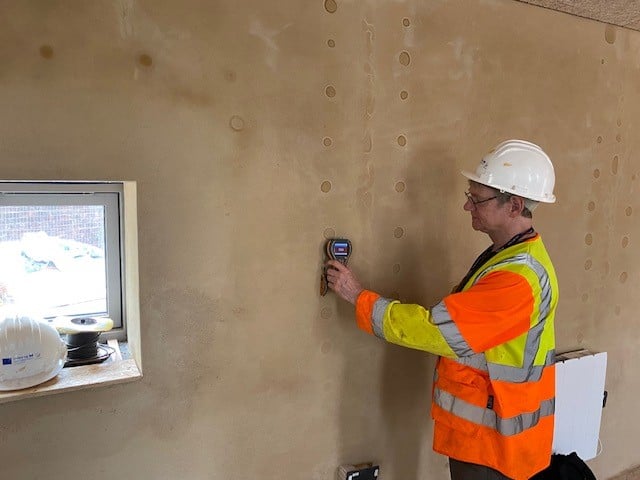
Plumbing leaks in Palm Bay homes rarely stay contained to one small area. Whether it’s a slow supply line drip behind a bathroom wall, a failed shut-off valve under a kitchen sink, or a slab leak beneath tile flooring, water has a way of spreading beyond the obvious wet spot.
Thermal imaging inspections are one of the most useful tools for locating hidden moisture after a plumbing leak. But here’s something many homeowners don’t realize: in Palm Bay’s humid climate, interpreting thermal images after a leak can be more complicated than it sounds.
Florida’s heat, humidity, and slab construction patterns all influence how moisture behaves — and how thermal cameras “see” it.
Let’s take a closer look at why thermal imaging inspections matter after plumbing leaks, and what makes them more challenging in Palm Bay.
How Thermal Imaging Works After a Plumbing Leak
A thermal imaging camera does not see water directly.
Instead, it detects temperature differences on surfaces.
After a plumbing leak:
- Wet areas often cool differently than dry areas
- Evaporation can lower surface temperatures
- Saturated materials hold heat differently
These variations create patterns on a thermal screen that help inspectors identify suspicious areas behind walls, ceilings, or floors.
But those patterns don’t always tell the full story on their own.
Why Palm Bay’s Climate Makes It More Complex
Palm Bay experiences:
- High year-round humidity
- Warm temperatures even at night
- Heavy summer thunderstorms
- Extended storm season moisture
When humidity levels are elevated, surface temperatures across a home can become more uniform. That reduces thermal contrast — the difference between wet and dry materials.
In simpler terms, everything can look similar in temperature.
That makes it harder to immediately distinguish between:
- Active plumbing moisture
- Ambient humidity
- HVAC cooling patterns
- Insulation gaps
- Sun exposure differences
Local experience becomes critical in interpreting those readings correctly.
Slab-On-Grade Homes Add Another Challenge
Many Palm Bay homes are slab-on-grade construction.
When a plumbing leak occurs beneath a slab:
- Moisture spreads laterally
- Concrete absorbs water
- Flooring materials trap dampness
- Surface temperature shifts become subtle
Thermal imaging may show cooler areas along flooring edges or baseboards. But those cooler zones must be confirmed with moisture meters.
Concrete can hold moisture without creating dramatic temperature differences.
Without proper confirmation, it’s easy to underestimate the spread.
The “Low Contrast” Problem in Humid Conditions
Thermal imaging works best when there is a noticeable temperature difference.
In Palm Bay’s humid climate:
- Air temperature and wall temperature may be very close
- Evaporation slows due to high humidity
- Surface cooling effects become less obvious
This creates what inspectors call low thermal contrast.
Low contrast makes leak patterns less dramatic on the thermal display.
That’s why thermal imaging must always be paired with moisture detection tools.
False Positives After Plumbing Leaks
After a plumbing leak, homeowners sometimes expect thermal cameras to clearly “highlight” the damaged area.
However, several conditions can mimic moisture patterns:
- Air conditioning vents cooling sections of drywall
- Exterior wall shading
- Sun-heated roof sections
- Insulation voids
- Temporary condensation
In Palm Bay’s climate, even humidity alone can create subtle temperature variations.
Professional inspectors evaluate patterns — not just color differences on a screen.
Why Timing Matters After a Leak
The timing of a thermal inspection significantly affects results.
Immediately after a plumbing leak:
- Surfaces may still be wet
- Evaporation creates stronger cooling patterns
- Thermal contrast may be clearer
Several days later:
- Moisture may migrate deeper
- Surface temperatures normalize
- Thermal contrast reduces
In Palm Bay’s humid environment, drying slows. That means moisture may remain embedded even if surface temperatures appear stable.
Moisture meters confirm whether drying is complete.
Wall Cavities and Vertical Spread
Water from plumbing leaks often travels vertically and laterally.
Common spread zones include:
- Along studs inside walls
- Behind kitchen cabinets
- Beneath bathroom vanities
- Around toilet flanges
- Into adjacent rooms
Thermal imaging helps locate unusual patterns, but Palm Bay’s humidity requires careful confirmation to determine how far water traveled.
Guesswork leads to missed pockets of moisture.
The Role of Moisture Meters
Thermal imaging identifies suspicious zones.
Moisture meters confirm actual moisture content.
Inspectors typically use:
- Pinless meters for surface scanning
- Pin meters for deeper material readings
- Humidity meters for environmental evaluation
In humid Florida homes, these measurements are essential.
Without confirmation, repairs may stop too soon.
HVAC Interaction After Plumbing Leaks
Air conditioning systems in Palm Bay homes can complicate readings.
After a leak:
- AC systems may cool affected areas unevenly
- Condensation can form on cooled surfaces
- Ductwork temperature variations may mimic moisture
Understanding how HVAC systems influence thermal readings helps avoid misinterpretation.
Experienced professionals evaluate airflow patterns alongside moisture readings.
Why DIY Thermal Cameras Often Miss the Full Picture
Affordable handheld thermal cameras are widely available.
But without understanding:
- Dew point
- Relative humidity
- Thermal contrast
- Building construction
- Florida-specific moisture behavior
…it’s easy to misread results.
Professional inspections rely on:
- Calibrated equipment
- Cross-verification with moisture meters
- Environmental measurement
- Knowledge of Palm Bay construction styles
Thermal imaging is a diagnostic tool — not a standalone answer.
Protecting Palm Bay Homes After Plumbing Leaks
Thermal imaging inspections protect Palm Bay homes by:
- Locating hidden moisture behind walls
- Identifying spread beneath flooring
- Preventing unnecessary demolition
- Guiding targeted drying
- Confirming structural stability
Even in challenging humidity conditions, when interpreted correctly, thermal imaging remains invaluable.
Why Local Experience Matters
Palm Bay’s climate requires a Florida-specific approach.
Local professionals understand:
- How slab homes transmit moisture
- How humidity affects thermal readings
- How storm cycles influence indoor conditions
- How HVAC systems alter temperature patterns
- How to differentiate condensation from intrusion
Experience across Palm Bay, Melbourne, Cocoa, and Merritt Island leads to more accurate leak detection and fewer surprises during repairs.
At Inspections and More FL, inspections combine thermal imaging with moisture verification to ensure plumbing leaks are fully addressed — not partially assumed.
The Bottom Line
After a plumbing leak in Palm Bay, moisture rarely stays in one place. And Florida’s humidity makes detecting that moisture more challenging.
Thermal imaging inspections remain one of the most effective tools available — but only when paired with proper moisture testing and local expertise.
If your Palm Bay home has experienced a plumbing leak, a professional moisture evaluation ensures hidden dampness doesn’t remain inside walls or beneath floors long after visible water disappears.
In Florida, moisture lingers longer. Finding it accurately makes all the difference.
