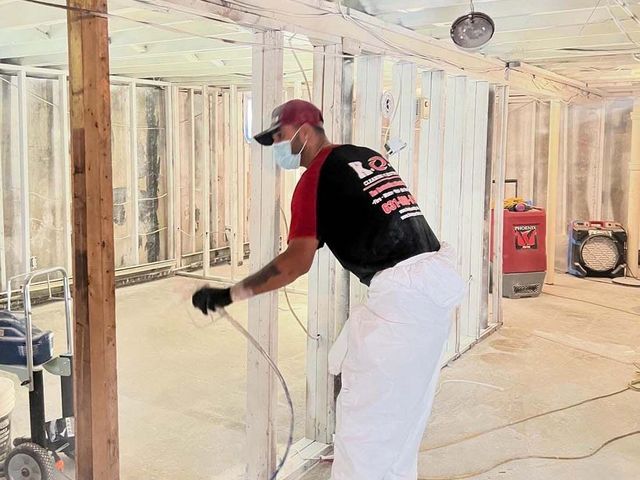
Why Mold Encapsulation Becomes Necessary in Palm Bay in Slab Foundation Houses
Slab foundation homes are common throughout Palm Bay. They’re durable, efficient, and well-suited for Florida construction. But when you combine concrete slabs with high water tables, heavy rainstorms, and year-round humidity, moisture can slowly migrate upward into structural materials.
In many Palm Bay slab homes, mold issues don’t always show up in obvious ways. Sometimes the visible mold is removed, the area is dried, and everything looks fine — but the structural wood framing still needs protection. That’s when mold encapsulation becomes necessary.
Encapsulation isn’t about hiding a problem. It’s about stabilizing treated surfaces and preventing recurring moisture-related contamination in a climate that constantly challenges building materials.
Why Slab Foundations in Palm Bay Are Vulnerable to Moisture
Palm Bay’s environmental conditions create steady pressure on slab homes.
High Water Tables
In many neighborhoods, groundwater levels rise significantly after heavy rain. Concrete slabs can absorb moisture from saturated soil.
Even if no water enters the home visibly, slab edges and perimeter framing can remain damp.
Hydrostatic Pressure
When soil stays saturated, pressure builds beneath the slab. Moisture migrates upward through microscopic pores in concrete.
Over time, that moisture reaches wall base plates and lower framing.
Storm Exposure
Palm Bay experiences intense summer storms and hurricane-season rainfall. Wind-driven rain increases exterior wall saturation.
Persistent Humidity
Florida humidity slows drying and increases the likelihood that wood framing inside walls remains damp longer than expected.
These combined factors create an environment where mold growth can develop in hidden structural areas.
What Mold Encapsulation Actually Is
Mold encapsulation is a protective step used after proper mold remediation and structural drying.
It involves applying a professional-grade coating to:
- Wooden framing
- Subfloor components
- Slab-adjacent wall bases
- Structural sheathing
The encapsulant seals the treated surface and creates a moisture-resistant barrier.
It is not applied over active mold. It follows:
- Moisture correction
- Cleaning of contaminated surfaces
- Drying of structural materials
In slab foundation houses, encapsulation helps protect framing that sits directly above concrete — an area particularly prone to recurring moisture exposure.
Where Mold Commonly Develops in Slab Homes
In Palm Bay slab houses, mold often appears in:
Bottom Wall Plates
Wood framing that sits directly on concrete absorbs moisture migrating upward.
Perimeter Walls
Exterior-facing walls near soil contact are vulnerable after prolonged rain.
Flooring Transitions
Moisture trapped under tile or laminate flooring may affect adjacent framing.
Bathroom and Kitchen Areas
Plumbing lines running through slabs can develop slow leaks that remain hidden.
By the time visible staining appears, contamination may have already affected structural wood.
Why Simple Cleaning Is Not Enough
After mold is removed from framing, the wood may still be susceptible to future moisture absorption.
Without encapsulation:
- Wood remains porous
- Moisture can re-enter treated surfaces
- Staining may resurface
- Recurring humidity can reactivate microbial growth
Encapsulation adds an additional layer of defense — particularly important in Palm Bay’s humid coastal environment.
Challenges Unique to Palm Bay Slab Homes
Encapsulation in slab foundation houses presents specific challenges.
Ongoing Moisture Pressure
If groundwater levels remain high, slab edges may continue absorbing moisture.
Encapsulation must follow thorough drying and moisture stabilization.
Ventilation Limitations
Slab homes lack crawl spaces, so airflow beneath flooring systems is minimal.
Humidity can accumulate along wall bases without proper indoor humidity control.
Salt Air Exposure
Palm Bay’s proximity to the coast increases salt content in the air. Salt accelerates wear on mechanical systems, which can indirectly influence indoor humidity levels.
Hidden Plumbing Lines
Leaks beneath slabs may go undetected without moisture detection tools.
Encapsulation without correcting plumbing issues will not prevent recurrence.
Professionals must confirm moisture sources are fully addressed before applying protective coatings.
How Professionals Approach Encapsulation in Slab Homes
A structured process ensures long-term success.
Step 1: Moisture Detection
Moisture meters and thermal imaging identify damp slab edges and wall bases.
Step 2: Source Correction
Drainage adjustments, plumbing repairs, or exterior sealing are completed before remediation proceeds.
Step 3: Mold Remediation
Contaminated drywall and insulation are removed when necessary. Structural framing is cleaned thoroughly.
Step 4: Structural Drying
Air movers and dehumidifiers reduce moisture content in slab-adjacent wood to safe levels.
Step 5: Encapsulation Application
Protective coating is applied evenly to cleaned and dried framing.
Step 6: Humidity Monitoring
Indoor humidity is stabilized to prevent recurrence.
Professionals experienced in Palm Bay’s coastal slab construction, such as Inspections and More FL, understand how local soil conditions and storm patterns influence moisture migration beneath concrete foundations.
Benefits of Encapsulation in Slab Foundation Houses
When applied correctly, encapsulation provides:
Surface Stabilization
Sealed framing resists future moisture absorption.
Improved Indoor Air Quality
Reduced exposed porous surfaces lower airborne contamination potential.
Structural Protection
Wood framing remains more stable under fluctuating humidity conditions.
Long-Term Moisture Resistance
Encapsulation works alongside dehumidification and ventilation improvements.
In Florida’s climate, prevention is often more effective than repeated remediation.
Preventing Recurring Moisture Issues in Palm Bay Slab Homes
Encapsulation works best as part of a comprehensive moisture management plan.
Property owners can reduce risk by:
- Monitoring indoor humidity (45–55% ideal range)
- Inspecting exterior grading and drainage
- Sealing foundation cracks
- Servicing HVAC systems annually
- Checking slab edges after heavy storms
- Scheduling routine moisture inspections
Homes in nearby Melbourne and Cocoa experience similar storm exposure, but Palm Bay’s waterfront and lagoon proximity increase groundwater influence.
Proactive moisture control reduces future remediation needs.
Why Local Experience Matters
Slab foundation behavior in coastal Florida differs from other regions.
Professionals familiar with Palm Bay understand:
- Hydrostatic pressure patterns
- Slab moisture migration trends
- Seasonal humidity fluctuations
- Storm-driven infiltration behavior
- Evaporation delays in high humidity
Encapsulation decisions must be based on accurate moisture readings and regional building knowledge.
Without local expertise, treatments may be applied prematurely or without addressing root causes.
A Practical Perspective for Palm Bay Homeowners
Mold encapsulation becomes necessary in Palm Bay slab foundation houses when structural framing has been properly remediated and dried but remains vulnerable to ongoing moisture exposure.
It is not a cosmetic fix. It is a protective measure designed to stabilize treated areas and reduce the likelihood of recurrence.
In Florida’s humid coastal environment, slab homes face continuous moisture pressure.
With accurate detection, proper remediation, controlled drying, and well-timed encapsulation, Palm Bay slab foundation houses can remain structurally sound and protected — even in one of the state’s most moisture-challenged climates.