Melbourne Homes Dealing With Moisture Detection After Flooding Events — How Professionals Approach the Issue
Flooding in Melbourne doesn’t always look dramatic. Sometimes it’s heavy storm runoff pooling around the foundation. Other times it’s wind-driven rain during hurricane season finding its way through roof lines, window seals, or sliding glass doors. The visible water may be cleaned up quickly — but the hidden moisture is what creates long-term problems.
In Brevard County, especially in Melbourne neighborhoods near the coast or low-lying drainage areas, professional moisture detection after flooding events is one of the most important steps in protecting a home.
Why Flood-Related Moisture Is a Bigger Issue in Melbourne
Melbourne’s coastal humidity and storm patterns make drying slower than many homeowners expect.
Several local factors contribute:
- High ambient humidity year-round
- Saturated soil after prolonged rainfall
- Slab foundations absorbing groundwater
- Wind-driven rain intrusion during storms
- Elevated water tables in certain areas
Even if standing water never enters the home, moisture can migrate through exterior walls, foundation edges, and roofing systems.
Because Florida heat accelerates microbial growth, even short-term dampness becomes a concern quickly.
What Moisture Detection Actually Involves
Moisture detection is a structured process designed to identify hidden water intrusion inside structural materials.
In Melbourne homes, professionals typically evaluate:
- Drywall and wall cavities
- Subflooring and hardwood
- Concrete slab edges
- Attic insulation and roof decking
- Crawl spaces (if present)
- HVAC systems
The purpose is to determine:
- Where moisture exists
- How deep it has spread
- Whether structural drying is necessary
This process prevents guesswork and unnecessary demolition.
Common Signs After Flooding Events
Homeowners in Melbourne often notice:
- Musty odors that linger
- Bubbling paint or staining
- Slight warping of flooring
- Increased indoor humidity
- AC running continuously
- Soft drywall near floor level
In some cases, there are no visible signs at all. That’s common when moisture settles behind walls or beneath flooring.
Assuming everything is dry because surfaces look clean can lead to delayed damage.
Step 1: Visual and Environmental Assessment
Professionals begin with a structured walk-through.
They assess:
- Entry points for water
- Roof condition
- Foundation and grading
- Drainage patterns
- Signs of recent intrusion
Understanding how water entered the home helps predict how it traveled.
Floodwater rarely moves in straight lines. It follows framing, insulation layers, and slab edges.
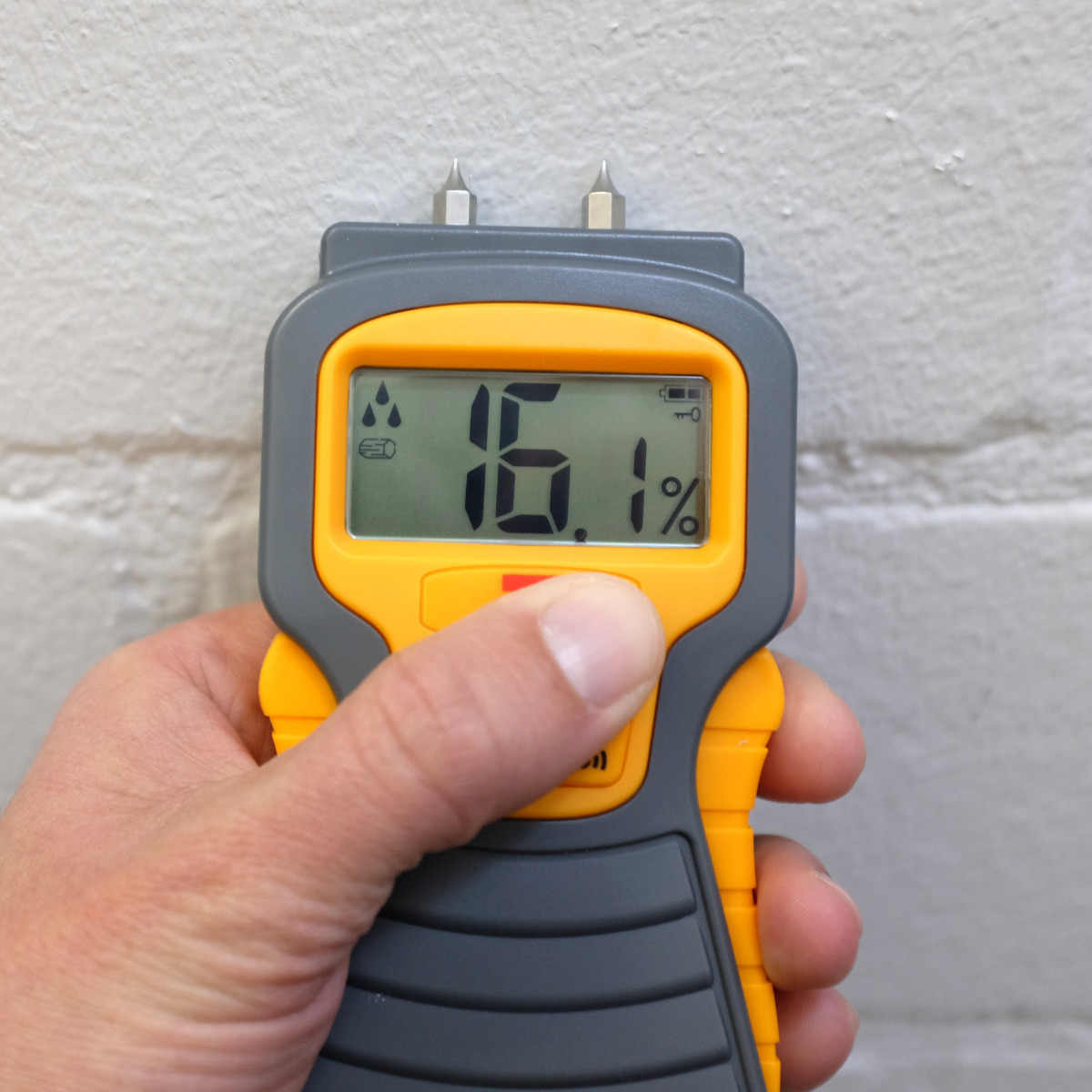
Step 2: Moisture Meter Testing
Moisture meters provide measurable data.
Technicians test:
- Baseboards and drywall
- Subfloor materials
- Wood framing
- Exterior-facing walls
Readings are compared against safe baseline levels.
In Melbourne slab homes, perimeter walls are often the first to show elevated moisture.
This step confirms whether materials are still holding water.
Step 3: Thermal Imaging Inspection
Thermal imaging cameras help identify temperature differences that may indicate hidden moisture.
After flooding events, infrared scanning can reveal:
- Damp insulation inside walls
- Moisture beneath tile or laminate
- Cold spots near slab edges
- Saturated attic decking
Thermal imaging does not replace moisture meters. It guides where deeper testing should occur.
In Melbourne’s humid climate, this step is especially useful for detecting moisture that appears dry on the surface.
Step 4: Attic and Crawl Space Evaluation
Flood-related moisture often spreads upward or downward.
Professionals inspect:
- Attic insulation for dampness
- Roof decking for storm intrusion
- HVAC ducts for condensation
- Crawl spaces for soil saturation
Storm-driven rain in Melbourne frequently affects attics first, especially during high-wind events.
Crawl spaces, where present, trap moisture long after visible water recedes.
Step 5: Humidity and HVAC Assessment
Indoor humidity is measured to determine if structural drying is required.
Flood-related moisture can:
- Increase overall humidity
- Affect AC performance
- Create condensation inside ducts
If HVAC systems have been exposed to high moisture levels, additional evaluation may be necessary.
This prevents airborne contamination from circulating through the home.
What Happens If Moisture Is Found
Detection guides the recovery process.
Depending on severity, professionals may recommend:
Structural Dryouts
Air movers and industrial dehumidifiers remove moisture from walls and flooring.
Air Blower Installation
Targeted airflow helps dry slab edges and wall bases.
Dehumidification
High-capacity units reduce ambient humidity to safe levels.
Mold Remediation
If microbial growth has begun, affected areas are cleaned and treated.
Air Scrubbing
HEPA filtration removes airborne particles during drying or remediation.
Professionals familiar with Melbourne’s storm patterns, such as Inspections and More FL, understand how local humidity affects drying timelines.
Early action often limits recovery to drying rather than material removal.
Cost Factors Homeowners Should Understand
Moisture detection costs vary based on:
- Home size
- Number of suspected areas
- Accessibility of attic or crawl spaces
- Severity of flooding exposure
- Use of advanced equipment like thermal imaging
However, early detection almost always reduces long-term repair expenses.
The most expensive repairs typically occur when moisture is left unaddressed for weeks.
Preventing Recurring Moisture Problems
After flooding events in Melbourne, prevention becomes the focus.
Homeowners can reduce risk by:
- Inspecting roofs after storms
- Monitoring indoor humidity (45–55% ideal range)
- Ensuring proper grading around foundations
- Servicing HVAC systems annually
- Checking attic ventilation
- Scheduling periodic moisture inspections
Homes in nearby Palm Bay and Merritt Island face similar storm exposure, but Melbourne properties may experience different drainage patterns depending on elevation.
Local knowledge improves prevention strategies.
Why Local Experience Matters
Moisture behaves differently in coastal Florida than in drier regions.
Professionals experienced in Melbourne understand:
- Wind-driven rain intrusion patterns
- Slab moisture migration
- Hydrostatic pressure after heavy rainfall
- Storm surge risk in low-lying neighborhoods
- Evaporation delays caused by high humidity
Accurate detection depends on knowing where moisture is most likely to hide in this specific environment.
Local expertise reduces unnecessary demolition and speeds up recovery.
A Practical Perspective for Melbourne Homeowners
After flooding events, moisture detection is about clarity — not alarm.
Water may disappear quickly, but hidden moisture inside walls, flooring, or attic spaces can remain.
Professional evaluation ensures that:
- Structural materials are dry
- Humidity levels are stabilized
- Mold growth is prevented
- Long-term repair costs are minimized
In Melbourne’s storm-prone coastal climate, moisture management is part of responsible homeownership.
With early detection, structured drying, and local experience guiding the process, homes can recover safely and efficiently after flooding — protecting structural integrity and indoor comfort long after the storm has passed.