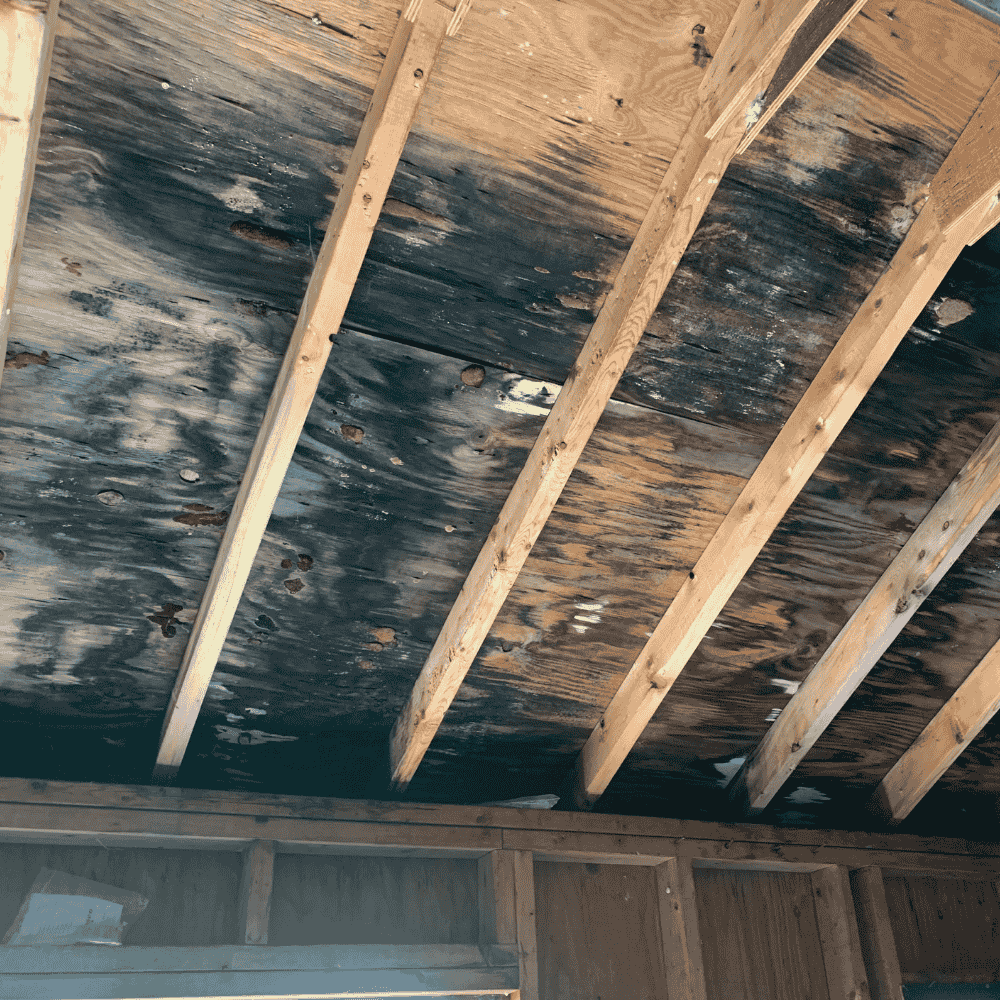
Cocoa Homes Dealing With Mold Encapsulation After Roof Failures — Long-Term Protection Strategies
In Cocoa, roof failures aren’t unusual. Between heavy summer downpours, hurricane-season winds, and years of sun exposure, roofing systems eventually weaken. When that happens, water doesn’t just stain a ceiling — it seeps into attic insulation, saturates roof decking, and travels along framing.
Why Roof Failures in Cocoa Often Lead to Mold
Cocoa’s coastal climate creates the perfect environment for mold to develop after roof damage.
Storm-Driven Rain
Wind can push rain under shingles and flashing. Even small gaps allow moisture to reach roof decking.
High Humidity
Florida humidity slows natural drying. Damp attic wood may stay wet for days without mechanical drying.
Attic Heat
Hot attic air combined with moisture accelerates microbial growth.
Salt Air Exposure
Over time, salt air weakens metal flashing and fasteners, increasing vulnerability to intrusion.
These conditions mean that even short-term leaks can create long-term structural concerns if not addressed properly.
What Mold Encapsulation Actually Means
Mold encapsulation is a protective process used after mold remediation and structural drying.
It involves applying a specialized coating to cleaned attic framing or roof decking to:
- Seal treated wood surfaces
- Lock down residual staining
- Provide a moisture-resistant barrier
- Reduce the chance of future microbial reactivation
Encapsulation is not applied over active mold. It follows proper remediation and moisture stabilization.
In Cocoa homes, it’s commonly used in attics after roof leaks have been repaired.
The Step-by-Step Process After a Roof Failure
Long-term protection begins with a structured approach.
Step 1: Roof Repair and Intrusion Correction
Before anything else, the roof system must be fully repaired. That includes:
- Replacing damaged shingles
- Fixing flashing
- Sealing penetrations
- Inspecting vents
Encapsulation without stopping the leak is ineffective.
Step 2: Moisture Detection and Assessment
Professionals measure:
- Wood moisture content
- Insulation saturation
- Humidity levels in the attic
Thermal imaging may identify hidden damp areas along roof decking.
In Cocoa’s humid climate, wood must reach safe moisture levels before encapsulation begins.
Step 3: Mold Remediation
If growth is present:
- Contaminated insulation is removed
- Structural wood is professionally cleaned
- Air scrubbing may be used to control airborne particles
The goal is to eliminate active contamination, not just visible staining.
Step 4: Structural Drying
Air movers and dehumidifiers are installed to:
- Lower wood moisture content
- Reduce attic humidity
- Stabilize framing
Because Cocoa humidity slows drying, mechanical equipment is essential.
Step 5: Mold Encapsulation Application
Once wood framing is dry and clean, encapsulant is applied evenly to:
- Roof decking
- Trusses
- Rafters
- Sheathing
This creates a sealed surface that resists moisture absorption and adds long-term protection.
Professionals experienced in Brevard County, such as Inspections and More FL, understand how coastal humidity affects drying timelines and encapsulation performance.
Why Encapsulation Protects Cocoa Homes Long-Term
Encapsulation provides several benefits when used correctly.
Surface Stabilization
Treated wood becomes less porous and less prone to reabsorbing moisture.
Reduced Risk of Recurrence
When combined with ventilation improvements, encapsulation helps prevent future growth.
Improved Indoor Air Stability
Sealed attic surfaces reduce the chance of airborne contamination entering living areas.
Structural Preservation
Wood framing remains more resistant to humidity fluctuations.
In Florida’s climate, prevention is often more effective than repeated remediation.
Challenges Unique to Cocoa Attics
Encapsulation in Cocoa homes presents specific challenges.
Ongoing Humidity Exposure
Attics remain hot and humid for much of the year. Ventilation must function properly to support encapsulated surfaces.
Salt Air Effects
Metal components and fasteners may corrode over time, creating new entry points if not maintained.
Insufficient Ventilation
Poor attic airflow can trap humidity even after encapsulation.
Delayed Detection
If leaks went unnoticed for extended periods, damage may extend further than expected.
Encapsulation works best as part of a broader moisture management strategy.
Long-Term Protection Strategies for Cocoa Homeowners
After encapsulation, homeowners can reduce future risk by:
- Scheduling annual roof inspections
- Checking attic spaces after major storms
- Monitoring indoor humidity (45–55% ideal range)
- Ensuring attic ventilation is balanced
- Servicing HVAC systems regularly
- Inspecting flashing and roof penetrations seasonally
Homes in nearby Merritt Island and Melbourne face similar storm exposure, but Cocoa properties often experience fast-moving inland storm bursts that can overwhelm aging roofs.
Routine maintenance protects the encapsulation investment.
Why Local Experience Matters
Roof-related mold issues in coastal Florida differ from drier climates.
Professionals familiar with Cocoa understand:
- Storm-driven intrusion patterns
- Hydrostatic pressure effects near slab edges
- Salt air corrosion on roofing systems
- Evaporation delays caused by humidity
- Attic heat-humidity cycling
Accurate assessment ensures encapsulation is applied at the right time — and for the right reasons.
Without local knowledge, coatings may be applied prematurely or without addressing the underlying moisture source.
A Practical Perspective for Cocoa Homeowners
Mold encapsulation after roof failures in Cocoa is not a cosmetic solution. It’s a long-term protection strategy.
When combined with:
- Proper roof repair
- Thorough remediation
- Structural drying
- Ventilation improvements
Encapsulation stabilizes attic framing and reduces the chance of recurring moisture-related problems.
In Florida’s humid coastal environment, roof maintenance and moisture management go hand in hand.
With timely inspection, professional remediation, and strategic encapsulation, Cocoa homes can remain structurally sound and protected long after a roof failure has been repaired.