
How Air Scrubbing Protects Properties in Melbourne Inside Attic Spaces
In Melbourne, attic spaces take the brunt of Florida’s climate. They sit directly beneath hot roofing materials, absorb humidity from coastal air, and often trap moisture from ventilation imbalances. Most homeowners rarely enter their attic unless there’s a roof issue or insulation upgrade. But when moisture develops overhead, the effects don’t stay confined to that space.
Attics in coastal Florida can become hotspots for microbial growth, airborne particles, and insulation contamination. When this happens, air scrubbing becomes one of the most important protective steps — not just for the attic itself, but for the entire home below.
Let’s take a closer look at why air scrubbing inside attic spaces is often necessary in Melbourne properties and how it helps protect the structure long term.
What the Issue Is
Attics are vulnerable to:
- Roof leaks during heavy rain
- Wind-driven rain entering through vents
- AC duct condensation
- Poor ventilation
- High humidity accumulation
- Insulation saturation
When moisture enters an attic space, it can soak into roof sheathing, rafters, and insulation. Because attics are enclosed and often poorly ventilated, moisture lingers longer than expected.
Once dampness sets in, microbial growth can begin. When that growth is disturbed — by airflow, repairs, or insulation movement — microscopic particles can circulate throughout the attic and potentially into living areas through duct systems or ceiling gaps.
Air scrubbing uses HEPA filtration systems to capture airborne contaminants, helping stabilize the environment during inspection, drying, and remediation.
Why This Happens So Often in Melbourne
Melbourne’s coastal climate creates consistent pressure on attic spaces.
Intense Heat and Humidity
Attics become extremely hot during summer months. When humid air enters through vents, temperature differences create condensation on roof sheathing and ductwork.
Frequent Storm Systems
Heavy rainstorms and tropical weather introduce moisture into attic spaces through small roof vulnerabilities.
Salt Air Exposure
Salt in coastal air gradually affects roof materials and flashing, increasing the chance of minor water intrusion.
AC Ductwork in Attics
Many Florida homes have duct systems running through attic spaces. When ducts sweat or insulation around them deteriorates, condensation develops.
Insufficient Ventilation
Older homes may not have balanced ridge and soffit ventilation, allowing moisture to accumulate overhead.
Because attic conditions are often hidden, moisture issues may go unnoticed for long periods.
Common Signs Property Owners Notice
Attic problems often show up in the living space first.
Homeowners may notice:
- Musty odors indoors
- Ceiling discoloration
- Elevated indoor humidity
- Dust buildup near vents
- Air that feels heavy
- Allergy-like irritation indoors
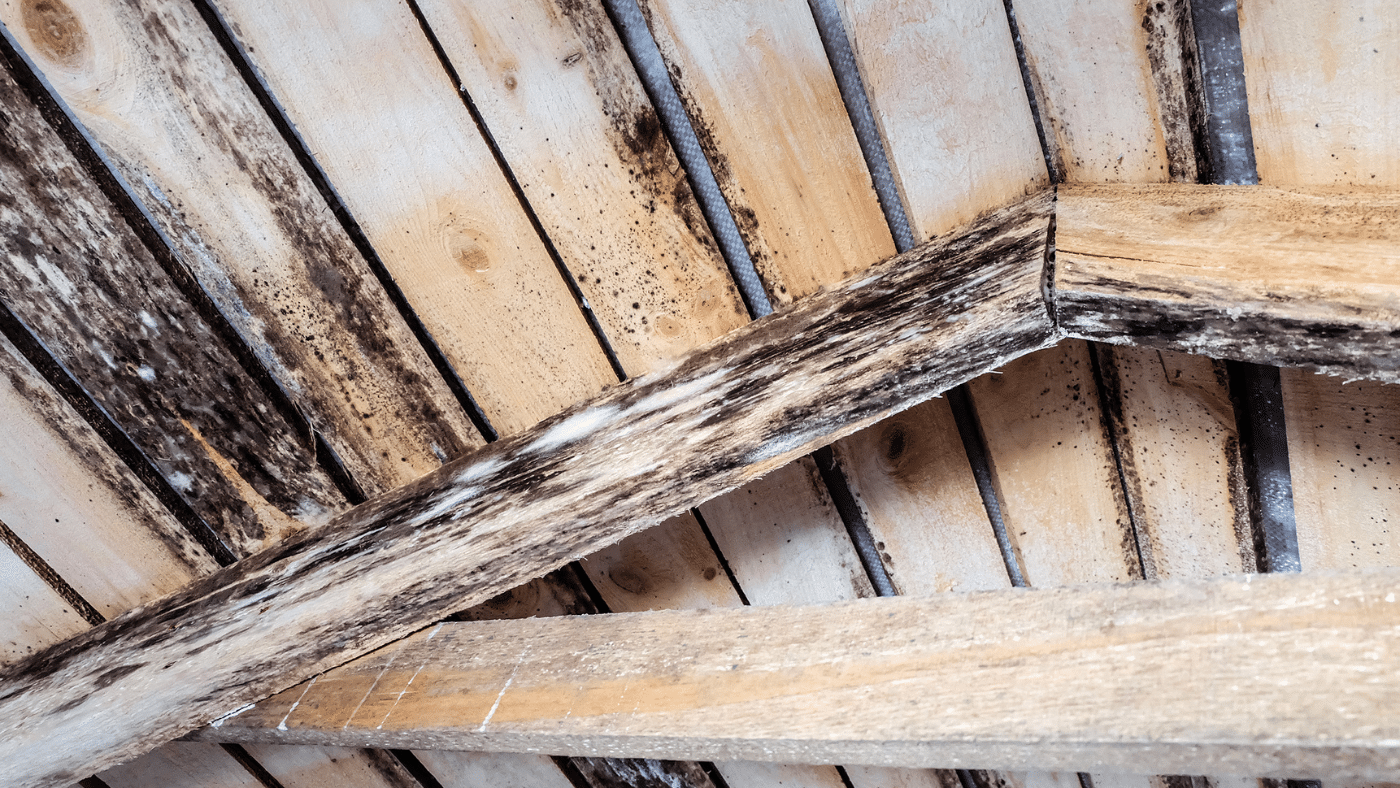
In some cases, a roof inspection reveals dark staining or visible growth on attic framing.
But even when visible growth is limited, airborne particles may already be circulating.
Hidden Risks of Attic Contamination
Attics are connected to the rest of the home more than many realize.
Air Movement Through Duct Systems
If contamination develops near HVAC ducts, particles can circulate through supply vents.
Ceiling Penetrations
Recessed lights, attic access panels, and small ceiling gaps allow air exchange between attic and living spaces.
Insulation Disturbance
When insulation becomes damp and later dries, particles may be released into the air.
Structural Framing
Roof sheathing and rafters can absorb moisture and support microbial growth if humidity remains high.
Air scrubbing helps reduce airborne contamination during stabilization.
Why DIY Cleanup in Attics Is Risky
Attic spaces are difficult to work in safely and effectively.
Common DIY challenges include:
- Limited airflow
- Poor visibility
- No containment
- No airborne filtration
- Disturbing contaminated insulation
- Spreading particles into living spaces
Simply spraying visible growth or replacing insulation without controlling airborne particles can worsen indoor air conditions.
Professional air scrubbing adds a layer of protection during any attic remediation process.
Professional Inspection & Evaluation Process
Before air scrubbing is introduced, a structured evaluation takes place.
Visual Inspection
Checking roof sheathing, rafters, and insulation for moisture staining or growth.
Moisture Detection
Using meters to confirm elevated moisture levels in framing and decking.
Thermal Imaging
Identifying hidden damp zones after heavy rainstorms.
Humidity Assessment
Measuring attic and indoor humidity levels.
HVAC System Review
Inspecting duct insulation and condensate lines for sweating issues.
Companies like Inspections and More FL understand how Melbourne’s humidity influences attic conditions and adjust strategies accordingly.
How Air Scrubbing Protects Attic Spaces
Air scrubbing inside attics serves several protective purposes.
Captures Airborne Particles
HEPA filtration removes microscopic contaminants released during cleaning or drying.
Stabilizes Indoor Air
Prevents attic contamination from spreading into living spaces.
Supports Remediation Work
Provides controlled air movement during insulation removal or surface cleaning.
Reduces Cross-Contamination
When containment is set up, air scrubbers create negative air pressure to prevent particles from migrating.
Enhances Drying
Air scrubbing works alongside dehumidifiers and air movers to stabilize the environment.
Air scrubbing does not replace cleaning or moisture correction. It supports the overall stabilization process.
Proper Remediation Sequence in Attic Spaces
When contamination is confirmed, the process may include:
- Containment setup at attic access
- HEPA air scrubber installation
- Removal of compromised insulation
- Cleaning of affected framing
- Structural drying with air movers
- Dehumidification to control humidity
- Ongoing moisture monitoring
Air scrubbers typically run continuously during the process to maintain air stability.
Preventing Future Attic Moisture Issues
Attic protection in Melbourne requires consistent attention.
- Maintain roof flashing and shingles
- Ensure balanced ridge and soffit ventilation
- Inspect duct insulation
- Clear AC condensate lines
- Monitor indoor humidity levels
- Schedule inspections after heavy rainstorms
Proactive attic evaluations prevent hidden problems from escalating.
Why Local Experience Matters
Attic conditions in Melbourne differ from inland climates. Coastal humidity, salt air exposure, and storm cycles influence moisture behavior overhead.
Local professionals understand:
- How wind-driven rain enters attic vents
- How slab homes interact with attic humidity
- How AC duct sweating affects insulation
- When air scrubbing is necessary — and when it isn’t
Inspections and More FL works within these environmental realities regularly, tailoring solutions to Florida attic conditions.
A Practical Step Toward Attic Protection
Attic moisture issues often develop quietly, but their impact can spread throughout the home.
Air scrubbing protects Melbourne properties by stabilizing airborne conditions during attic remediation and drying. It ensures that contamination remains controlled while underlying moisture problems are addressed.
In Florida’s coastal climate, protecting what’s overhead is just as important as protecting what’s at ground level.
