
Understanding Moisture Detection Challenges in Palm Bay During Extreme Humidity
Extreme humidity in Palm Bay is not unusual — especially during summer months, hurricane season, or after extended rain patterns. What is unusual is how differently moisture behaves inside homes during these periods.
Many homeowners assume that if they don’t see water stains or active leaks, everything is fine. But in Palm Bay’s climate, high ambient humidity alone can create moisture conditions inside walls, attics, and crawl spaces that are difficult to detect without proper tools.
Moisture detection during extreme humidity is one of the most challenging parts of protecting Florida homes. Here’s what most people don’t realize.
Why Extreme Humidity Complicates Detection
Moisture detection is normally used to locate hidden water intrusion from plumbing leaks, roof failures, or AC condensation problems. However, during extreme humidity, even materials that haven’t experienced a direct leak can show elevated moisture readings.
In Palm Bay, outdoor humidity can remain high for days or weeks at a time. That affects:
- Drywall
- Wood framing
- Roof decking
- Subfloors
- Insulation
- Concrete slabs
When the air itself carries heavy moisture, building materials begin absorbing it slowly. This makes it harder to distinguish between active water intrusion and humidity-driven absorption.
Detection becomes more technical and more precise.
The Difference Between Surface Dampness and Structural Moisture
During extreme humidity, surfaces may feel slightly cool or damp, but that does not always indicate a leak. At the same time, hidden structural moisture may exist even when surfaces appear dry.
Moisture detection tools measure:
- Moisture content within materials
- Relative humidity in wall cavities
- Temperature differences behind surfaces
- Dew point conditions
In Palm Bay homes, high humidity can cause false positives if readings are not interpreted correctly.
Experience matters in determining whether moisture is coming from:
- Active leaks
- Condensation buildup
- Humidity absorption
- Past water events
Palm Bay’s Environmental Factors
Several local conditions make moisture detection more challenging.
Coastal Influence
Palm Bay’s proximity to the coast increases baseline humidity levels. Salt air also affects building materials over time.
High Water Table
Ground moisture can influence slab foundations and crawl spaces, especially after heavy rain.
Frequent Storm Activity
Wind-driven rain may enter small openings without leaving obvious interior stains.
Constant AC Usage
Air conditioning systems run continuously. If ductwork sweats or condensate lines clog, moisture can build inside attic spaces.
During extreme humidity, these factors often overlap.
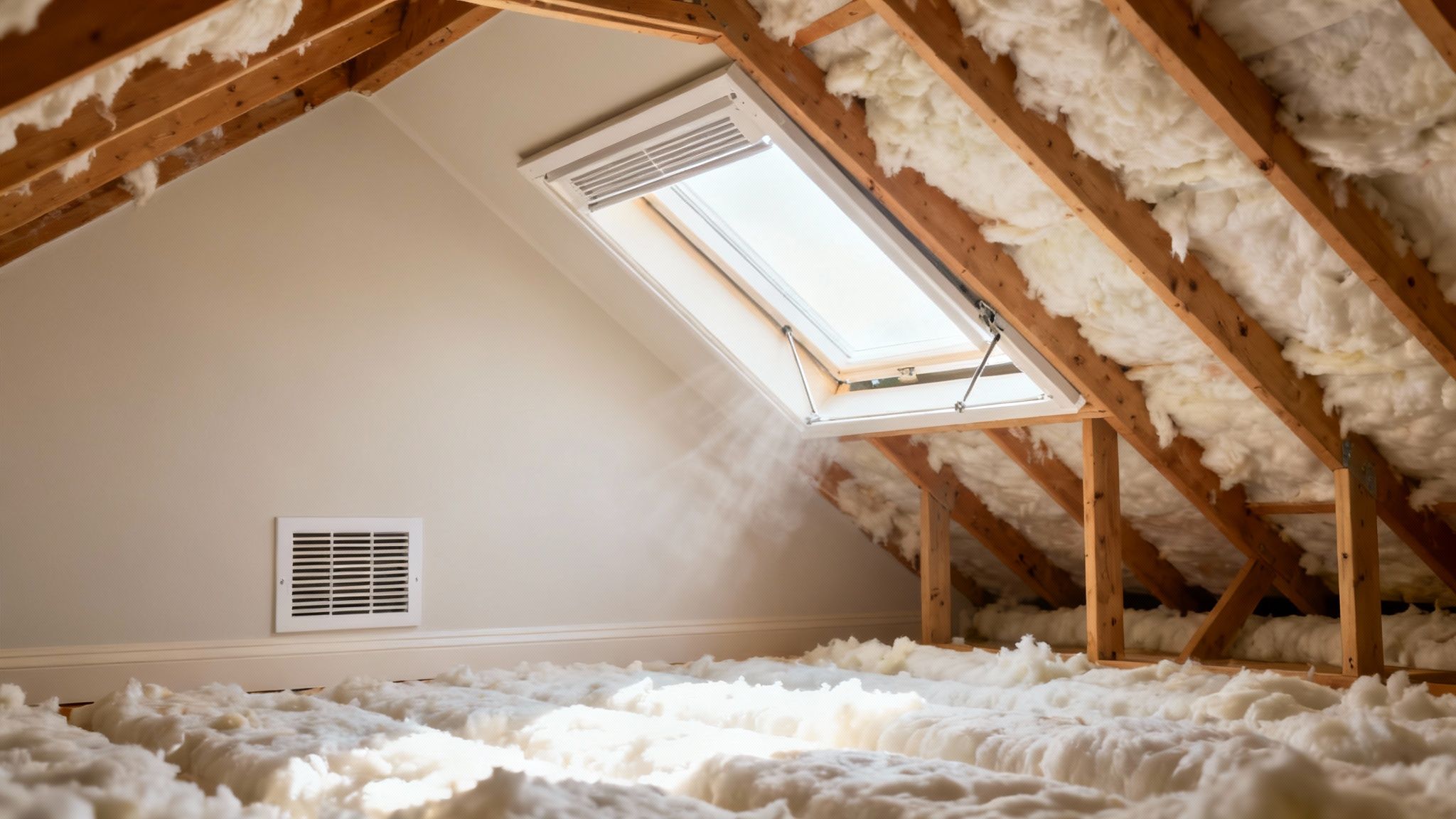
Attics: A Major Detection Challenge
Attics in Palm Bay homes frequently show elevated moisture levels during humid weather — even without roof leaks.
Common contributing factors include:
- Poor ventilation
- Warm air trapped under roof decking
- Sweating ductwork
- Damp insulation
Thermal imaging may show cooler areas, which typically indicate moisture. But in humid conditions, temperature differences may be subtle.
Moisture meters help confirm whether readings are within safe ranges or signal a developing issue.
Attic inspections require careful interpretation during extreme humidity.
Wall Cavities and False Readings
Wall cavities can absorb moisture from both indoor and outdoor humidity.
In older Palm Bay homes, limited vapor barriers allow moisture to migrate through drywall and framing.
Moisture meters may show slightly elevated readings even when there is no active leak. The challenge is determining whether those readings represent:
- Temporary humidity absorption
- Condensation
- Or a plumbing issue hidden inside the wall
This is why comparing multiple readings and mapping affected areas is critical.
HVAC Systems and Hidden Humidity
Extreme humidity often exposes HVAC weaknesses.
Common problems include:
- Oversized AC units that short cycle
- Dirty evaporator coils
- Poor duct insulation
- Blocked condensate lines
- Air handlers located in hot attic spaces
When HVAC systems fail to dehumidify properly, indoor humidity remains high.
Moisture detection may reveal widespread mild dampness rather than localized leaks.
Without correcting HVAC performance, readings may remain elevated.
Slab Foundations and Ground Moisture
Many Palm Bay homes sit on slab foundations. During periods of extreme rain and humidity, moisture can migrate upward through concrete.
This may result in:
- Elevated moisture readings along floor edges
- Damp carpet padding
- Warped flooring
- Musty odors
Moisture detection near slab edges requires understanding how ground moisture interacts with Florida soil conditions.
Not every elevated slab reading indicates a plumbing leak.
Why Timing Matters
Moisture detection during extreme humidity must consider timing.
Testing immediately after a heavy storm may show elevated readings that normalize after conditions stabilize.
However, ignoring those readings could allow developing issues to worsen.
Professionals often:
- Take baseline readings
- Compare affected areas to unaffected zones
- Recheck readings over several days
- Evaluate humidity levels in combination with material moisture
Context is essential.
The Importance of Proper Equipment
Effective moisture detection in Palm Bay during extreme humidity requires more than visual inspection.
Tools often used include:
- Pin and pinless moisture meters
- Thermal imaging cameras
- Hygrometers
- Infrared thermometers
Each tool provides part of the picture.
Thermal imaging identifies temperature differences. Moisture meters confirm material saturation. Hygrometers measure ambient humidity levels.
Together, they allow for accurate interpretation.
Risks of Misinterpreting Moisture Levels
Overreacting to temporary humidity absorption can lead to unnecessary demolition.
Underreacting to hidden leaks can result in:
- Mold growth
- Structural deterioration
- Insulation damage
- Air quality changes
The challenge during extreme humidity is striking the right balance.
Experience in Florida’s climate is essential to avoid both extremes.
Preventing Moisture Detection Problems
Homeowners in Palm Bay can reduce detection challenges by focusing on humidity control.
Practical steps include:
- Keeping indoor humidity below 60%
- Servicing HVAC systems regularly
- Installing whole-home dehumidifiers if needed
- Improving attic ventilation
- Sealing ductwork
- Monitoring slab edges for persistent dampness
Proactive humidity management simplifies future inspections.
Why Local Knowledge Matters
Moisture behaves differently in Palm Bay than in dry climates. Extreme humidity affects readings, material absorption rates, and drying times.
Inspections and More FL works across Palm Bay, Cocoa, Melbourne, Merritt Island, and Sanford, where humidity-driven moisture concerns are common. Understanding local building styles, storm patterns, and environmental conditions improves accuracy during detection.
In Florida, moisture is not always dramatic. It is often subtle and gradual.
A Practical Final Perspective
Understanding moisture detection challenges during extreme humidity in Palm Bay means recognizing that not all dampness signals disaster — but none of it should be ignored.
The key is structured evaluation:
- Measure ambient humidity
- Compare readings across multiple areas
- Identify patterns
- Inspect HVAC performance
- Reassess after conditions stabilize
Extreme humidity complicates detection, but with proper tools and local expertise, hidden moisture can be identified accurately.
In Palm Bay’s climate, moisture awareness is ongoing. Careful detection prevents small humidity issues from turning into structural problems later.
