
Understanding Air Blower Installation Challenges in Merritt Island Behind Interior Walls
When moisture gets trapped behind interior walls in Merritt Island homes, the problem rarely announces itself loudly.
You may notice a faint musty smell. Maybe a slight paint bubble. Sometimes the drywall feels just a bit soft near the baseboard. But behind that surface, moisture can be sitting inside insulation, framing, or wall cavities.
Drying those hidden areas is not as simple as placing a fan in the room. Air blower installation behind interior walls presents unique challenges — especially in Florida’s humid, coastal climate.
Let’s break down why this process is more complex in Merritt Island homes and how professionals approach it correctly.
How Moisture Gets Behind Interior Walls
In Merritt Island, moisture commonly enters wall cavities through:
- Plumbing leaks inside walls
- AC condensate line failures
- Roof leaks during storm season
- Wind-driven rain intrusion
- Window seal failures
- Slab moisture migration at wall edges
Because Florida homes experience high humidity year-round, once moisture enters a wall cavity, it does not dry quickly on its own.
Insulation traps moisture. Framing absorbs it. And drywall paper backing provides organic material for mold growth.
If airflow doesn’t reach inside that cavity, moisture lingers.
Why Wall Cavity Drying Is More Difficult in Florida
Drying interior wall cavities in Merritt Island is challenging for several reasons:
1. High Ambient Humidity
Outdoor air is already humid. Opening windows rarely helps. Natural airflow often brings in more moisture rather than removing it.
2. Insulated Walls
Modern homes contain insulation that absorbs water like a sponge. Once saturated, it slows airflow and traps dampness.
3. Coastal Air Conditions
Salt air accelerates wear on building materials, sometimes leading to hidden cracks or slow leaks.
4. Warm Temperatures
Heat accelerates mold activation inside enclosed spaces.
Because of these factors, targeted air blower installation becomes essential.
The Unique Challenges of Installing Air Blowers Behind Walls
Air blowers (air movers) are designed to create high-velocity airflow across surfaces. But wall cavities are enclosed spaces.
Here are the main challenges professionals face:
Limited Access
Drywall creates a sealed barrier. Air cannot penetrate behind it without access points.
Hidden Moisture Patterns
Moisture does not spread evenly. It may travel downward along framing or pool at the base of walls.
Insulation Blockage
Wet insulation prevents airflow from circulating effectively.
Risk of Spore Spread
If mold is present, forcing air without containment can push spores into living areas.
Because of these complications, drying wall cavities requires a controlled and strategic approach.
How Professionals Approach Wall Cavity Drying
Proper air blower installation behind walls typically follows a structured process.
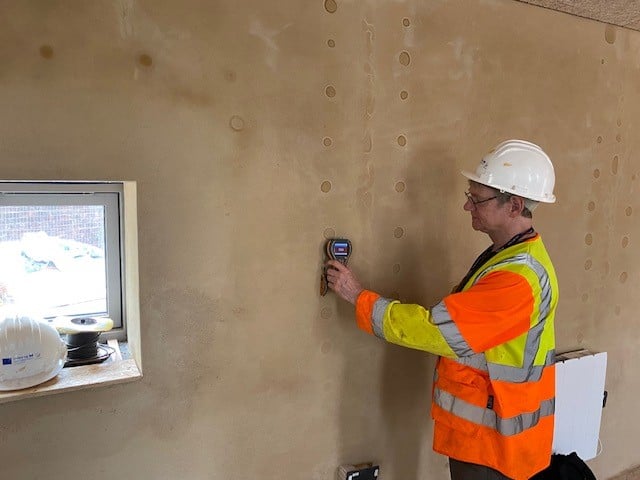
Step 1: Moisture Detection
Before installing any equipment, professionals use:
- Moisture meters
- Thermal imaging cameras
- Visual inspections
These tools identify exactly where moisture is located and how extensive it is.
Guesswork leads to incomplete drying.
Step 2: Controlled Access Creation
Small access holes are sometimes drilled near the base of affected walls.
This allows:
- Air injection into cavities
- Pressure-controlled airflow
- Moisture escape pathways
In more severe cases, sections of drywall may need to be removed entirely.
This step is critical. Simply blowing air against a wall surface does not dry what’s inside.
Step 3: Strategic Air Blower Placement
Specialized wall cavity drying systems or directional air movers are positioned to:
- Push air into wall cavities
- Pull moist air out
- Circulate airflow behind insulation
- Prevent moisture pockets
Equipment is angled and calibrated based on wall layout and moisture readings.
This is not random fan placement — it’s engineered airflow.
Step 4: Dehumidification Support
Air blowers evaporate moisture from materials.
Commercial dehumidifiers remove that evaporated moisture from the indoor air.
Without dehumidification, humid air remains trapped inside the home, slowing drying progress.
In Merritt Island’s climate, dehumidification is essential for effective wall drying.
Step 5: Daily Monitoring
Moisture levels are measured daily until they return to safe baseline readings.
In coastal Florida, drying may take longer due to humidity and insulation density.
Stopping equipment too early is one of the main causes of recurring problems.
Why DIY Drying Often Fails
Homeowners sometimes try to handle wall moisture by:
- Running box fans
- Using small dehumidifiers
- Opening windows
Unfortunately:
- Surface airflow does not reach wall cavities
- Household dehumidifiers lack capacity
- Outdoor humidity reduces drying effectiveness
Without creating airflow inside the wall, moisture remains trapped.
In Merritt Island homes, that trapped moisture often leads to mold growth behind drywall within days.
The Mold Risk Behind Interior Walls
Wall cavities provide ideal mold conditions:
- Limited airflow
- Consistent warmth
- Organic drywall backing
- Moisture retention
Once mold develops inside walls, remediation becomes more invasive.
Instead of simple drying, the process may require:
- Containment barriers
- Material removal
- HEPA air scrubbing
- Structural cleaning
Proper air blower installation immediately after moisture detection reduces the likelihood of reaching that stage.
Companies experienced in Merritt Island, like Inspections and More FL, emphasize rapid and controlled drying to prevent full remediation scenarios.
Common Situations in Merritt Island Homes
Local cases frequently involve:
- AC condensate leaks inside interior walls
- Bathroom plumbing drips
- Storm-driven rain entering window framing
- Water heater leaks adjacent to interior partitions
- Slab edge moisture traveling upward
Because these sources are often slow and hidden, homeowners may not realize drying is needed until odors develop.
Early evaluation makes drying simpler and less invasive.
Preventing Recurring Wall Moisture Issues
After wall drying is complete, prevention strategies may include:
- Inspecting AC drain lines regularly
- Improving window seals
- Sealing slab cracks
- Enhancing attic ventilation
- Monitoring indoor humidity (45–55%)
- Scheduling post-storm inspections
Merritt Island’s climate requires ongoing moisture awareness.
Wall cavities are not visible during daily living, but they remain vulnerable.
Why Local Experience Matters
Drying walls in Merritt Island requires understanding:
- Coastal humidity behavior
- Typical framing layouts in Florida homes
- How insulation reacts to prolonged moisture
- How quickly mold spreads in warm environments
- How slab foundations influence wall moisture
Technicians unfamiliar with Florida conditions may underestimate drying time or miss hidden damp zones.
Local knowledge improves accuracy and reduces repeat issues.
When to Schedule Professional Evaluation
If you notice:
- Paint bubbling
- Musty odors
- Soft drywall
- Discoloration near baseboards
- AC drainage issues
- Recent plumbing leaks
…it’s important to have the walls evaluated quickly.
Behind-the-wall moisture does not resolve on its own in Florida’s climate.
Protecting Merritt Island Homes from Hidden Moisture
Air blower installation behind interior walls is not just about moving air — it’s about controlling moisture in an enclosed structural space.
In Merritt Island, where humidity remains high and storms are frequent, hidden wall moisture becomes a serious concern quickly.
Proper assessment, controlled access, strategic airflow, and consistent monitoring are what make the difference between simple drying and full mold remediation.
When moisture is addressed early and thoroughly, homeowners protect:
- Structural framing
- Insulation
- Indoor air quality
- Wall integrity
- Long-term property value
In Florida’s environment, what you can’t see behind the wall matters just as much as what you can.
