Palm Bay homes dealing with moisture detection in coastal properties — the science behind the solution
Palm Bay homes near the coast face a constant battle with moisture. Even when there is no visible leak, coastal air, elevated humidity, and temperature fluctuations create subtle but persistent damp conditions inside walls, attics, and crawl spaces. When homeowners begin noticing a musty smell or uneven humidity indoors, moisture detection becomes more than a precaution — it becomes essential protection.
In Palm Bay, especially in neighborhoods closer to the Indian River Lagoon and coastal inlets, moisture behaves differently than it does inland. Salt air accelerates material breakdown. High humidity prevents natural drying. Storm-driven rain finds its way into even minor structural gaps. Understanding the science behind moisture detection helps property owners recognize why professional evaluation is so important in coastal Florida.
What Moisture Detection Actually Means
Moisture detection is not simply looking for wet spots. It involves identifying hidden water intrusion, elevated humidity within building materials, and temperature differences that indicate trapped moisture.
In Palm Bay coastal properties, moisture may enter through:
- Roofing systems during heavy wind-driven rain
- Exterior wall penetrations
- Window seals affected by salt exposure
- Crawl spaces influenced by a high water table
- HVAC systems producing condensation
The science behind detection focuses on understanding how water moves through porous materials and how environmental conditions affect drying.
Why Coastal Palm Bay Homes Are More Vulnerable
Coastal properties face unique stress factors:
Persistent Humidity: Outdoor humidity often remains high even outside storm season.
Salt Air Exposure: Salt accelerates corrosion of fasteners, flashing, and exterior components, increasing vulnerability.
Frequent Storm Activity: Tropical systems and afternoon storms drive rain horizontally against structures.
Temperature Swings: Warm days and cooler evenings create condensation cycles.
In coastal Palm Bay, moisture does not simply evaporate quickly. It lingers in insulation, drywall, wood framing, and subfloor systems.
The Science of Moisture Movement
Water moves through buildings in several ways:
- Liquid Intrusion – Direct leaks from roofs, windows, or plumbing.
- Capillary Action – Water traveling through porous materials like wood and concrete.
- Vapor Diffusion – Humidity moving through materials from areas of high concentration to low concentration.
- Air Movement – Moist air traveling through gaps and openings.
In coastal homes, vapor diffusion and air movement are often the most overlooked causes of elevated moisture levels.
When humid coastal air enters wall cavities or attic spaces, it condenses on cooler surfaces. Over time, this repeated cycle raises internal moisture content even without a visible leak.
Common Signs Palm Bay Homeowners Notice
Before calling for professional evaluation, homeowners often report:
- Indoor air feeling sticky despite AC running
- Musty or earthy odors
- Minor drywall bubbling
- Warped trim or baseboards
- Increased allergy-like irritation
- Hot or humid upper floors
These signs suggest moisture is present within materials, not just in the air.
Hidden Areas Where Moisture Builds Up
In Palm Bay coastal properties, moisture frequently accumulates in:
- Attic insulation beneath roof decking
- Exterior-facing wall cavities
- Behind kitchen and bathroom cabinetry
- Around window frames exposed to salt air
- Crawl spaces without proper vapor barriers
- Ductwork running through hot attic environments
Without detection tools, these areas remain concealed until damage progresses.
How Professional Moisture Detection Works
Moisture detection combines technology with environmental knowledge. A structured inspection typically includes:
Visual Assessment
Inspectors evaluate roofing, flashing, exterior penetrations, and drainage patterns.
Thermal Imaging
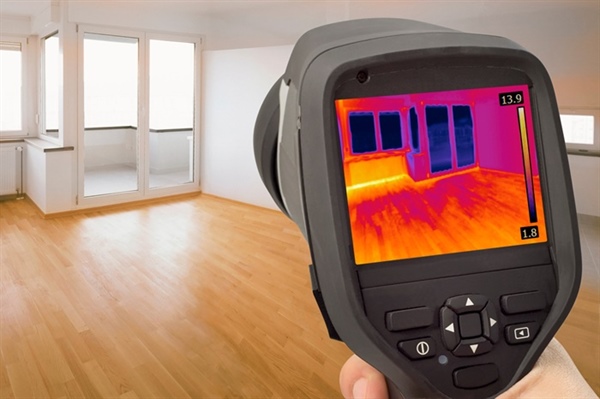
Infrared cameras detect temperature differences that suggest damp materials behind walls or ceilings.
Moisture Meters
Calibrated meters measure moisture content within wood, drywall, and other materials.
Humidity Readings
Indoor and attic humidity levels are analyzed to determine imbalance.
HVAC Evaluation
Air handlers, ducts, and condensation lines are checked for hidden moisture contribution.
In Palm Bay’s coastal environment, understanding how humidity behaves inside structures is just as important as finding visible leaks.
Why Surface Dryness Can Be Misleading
A common misconception is that if a surface feels dry, it must be dry internally. In reality, materials like drywall and wood can appear dry on the surface while retaining moisture inside.
Coastal humidity slows evaporation. Even when AC systems run continuously, trapped moisture may persist deep within insulation or framing.
Thermal imaging and moisture meters allow inspectors to see beyond what is visible or touchable.
The Role of Attics in Coastal Moisture Problems
In Palm Bay homes, attics often become moisture collection points.
Warm, humid air rises. If ventilation is inadequate, condensation forms beneath roof decking. Salt-exposed roofing materials may also degrade faster, allowing minor seepage.
Over time, attic moisture can migrate downward into living spaces.
Early detection in attic environments prevents widespread contamination and structural weakening.
Correcting the Problem: The Science-Based Solution
Once moisture is identified, the solution must address both removal and prevention.
Professional processes may include:
- Targeted removal of damaged materials
- Mold remediation where necessary
- Air scrubbing to improve air quality
- Anti-microbial treatments
- Industrial dehumidification
- Structural dryouts
- Vapor barrier improvements
- Sealing exterior penetrations
- Improving attic ventilation
The key is eliminating both the moisture source and the environmental imbalance that allowed it to persist.
Inspections and More FL approaches coastal moisture detection with a focus on long-term stability rather than temporary fixes.
Why DIY Moisture Checks Fall Short
Portable consumer moisture meters can help identify obvious wet spots, but they often lack depth calibration for Florida materials.
DIY attempts also miss:
- Vapor-related moisture
- Condensation cycling
- Elevated attic humidity
- Hidden wall cavity dampness
Without correcting underlying environmental factors, minor moisture issues frequently return.
Preventing Future Coastal Moisture Issues
Palm Bay homeowners can reduce risks by:
- Scheduling routine roof and flashing inspections
- Maintaining proper attic ventilation
- Monitoring indoor humidity (ideal range: 45–55%)
- Servicing HVAC systems regularly
- Installing or repairing crawl space vapor barriers
- Inspecting properties after storms
Coastal properties require more frequent evaluations than inland homes.
Why Local Coastal Experience Matters
Florida coastal construction faces conditions that differ from other regions. High humidity, salt air corrosion, and frequent storms create a unique moisture profile.
Working with professionals familiar with:
- Palm Bay coastal weather patterns
- Local building styles
- Ventilation challenges
- Common moisture migration paths
improves detection accuracy and speeds corrective action.
Inspections and More FL has experience evaluating properties throughout Palm Bay and nearby coastal communities, identifying moisture patterns specific to this region.
A Practical Approach to Protecting Your Home
If your Palm Bay coastal home feels persistently humid or develops unexplained odors, moisture detection should not be delayed. The science behind it is straightforward: moisture travels, lingers, and spreads in Florida’s climate.
Early detection protects:
- Structural framing
- Insulation performance
- Indoor air quality
- Property value
When handled with the right tools and local knowledge, moisture problems can be resolved efficiently and prevented from returning.