
Understanding Dehumidification Challenges in Palm Bay Under Hardwood Flooring
Hardwood flooring adds warmth and character to homes throughout Palm Bay. It’s a popular choice in both newer construction and older Florida properties. But beneath that beautiful surface lies a hidden vulnerability — moisture.
In Palm Bay’s humid coastal climate, dehumidification under hardwood flooring isn’t always straightforward. In fact, it’s one of the more challenging moisture control situations we encounter. High humidity, slab foundations, storm activity, and air conditioning cycles all play a role in how moisture moves beneath flooring materials.
When moisture becomes trapped under hardwood, the signs may start small — slight cupping, subtle warping, or minor discoloration. But without proper dehumidification and moisture correction, the damage can escalate quickly.
What Makes Hardwood Flooring So Moisture-Sensitive?
Hardwood is a natural material. It expands and contracts depending on humidity levels. In a climate like Palm Bay’s, where humidity can hover above 70% for much of the year, that expansion pressure increases.
Under normal conditions, hardwood adjusts gradually. But when excess moisture accumulates underneath — whether from slab seepage, leaks, or storm-related intrusion — the wood absorbs that moisture from below.
This leads to:
- Cupping (edges higher than the center)
- Crowning (center higher than edges)
- Buckling
- Gaps between boards
- Surface finish breakdown
The real challenge isn’t the visible damage. It’s the moisture trapped beneath the flooring that continues feeding the problem.
Why Palm Bay Homes Face Unique Dehumidification Challenges
Palm Bay’s coastal environment creates specific moisture conditions that affect flooring systems.
High Water Tables
In certain Palm Bay neighborhoods, groundwater sits relatively close to the surface. Slab foundations can absorb ground moisture, which then migrates upward.
Even without visible flooding, moisture vapor transmission through concrete can impact hardwood flooring.
Storm Activity and Heavy Rain
Hurricanes and seasonal storms increase ground saturation. Water intrusion near exterior walls can travel inward and beneath flooring surfaces.
Air Conditioning Cycles
AC systems run frequently in Palm Bay. When indoor humidity isn’t properly balanced, temperature differences between cooled air and warm subfloor surfaces can create condensation underneath hardwood.
Salt-Laden Coastal Air
Salt exposure accelerates wear on exterior seals and building materials, allowing subtle moisture infiltration around doors and windows.
Common Warning Signs Homeowners Notice
Homeowners often describe subtle changes before realizing moisture is the root cause.
You might notice:
- Slight lifting along plank edges
- Floors that feel uneven underfoot
- Musty odors in certain rooms
- Dark staining near baseboards
- Increased indoor humidity
In some cases, the surface may look normal while moisture builds underneath.
Hidden Moisture Sources Under Hardwood Floors
Under-floor moisture can originate from multiple sources.
Slab Foundation Moisture
Concrete is porous. In Palm Bay’s humid conditions, moisture vapor can rise through slabs if vapor barriers are compromised or insufficient.
Plumbing Leaks
Small pipe leaks inside walls can saturate subfloor areas without obvious signs.
Storm-Driven Rain Intrusion
Wind-driven rain during hurricanes can enter through minor exterior vulnerabilities and travel under flooring.
Past Water Damage
If prior water intrusion wasn’t properly dried, residual moisture may remain trapped beneath the hardwood.
Why Dehumidification Under Hardwood Is Complex
Dehumidifying open air is one thing. Dehumidifying beneath hardwood flooring is another.
Wood flooring limits airflow to the subfloor area. Moisture trapped beneath boards can remain for extended periods.
Common challenges include:
- Limited air circulation
- Moisture absorbed into subfloor materials
- Adhesive systems trapping water
- Insufficient drying equipment
Simply running a household dehumidifier in the room won’t draw moisture out from beneath tightly installed hardwood planks.
Why DIY Attempts Often Fall Short
Homeowners sometimes attempt to:
- Increase AC usage
- Place portable dehumidifiers in affected rooms
- Use fans
- Clean surface staining
While these steps may reduce surface humidity temporarily, they rarely address moisture embedded beneath flooring systems.
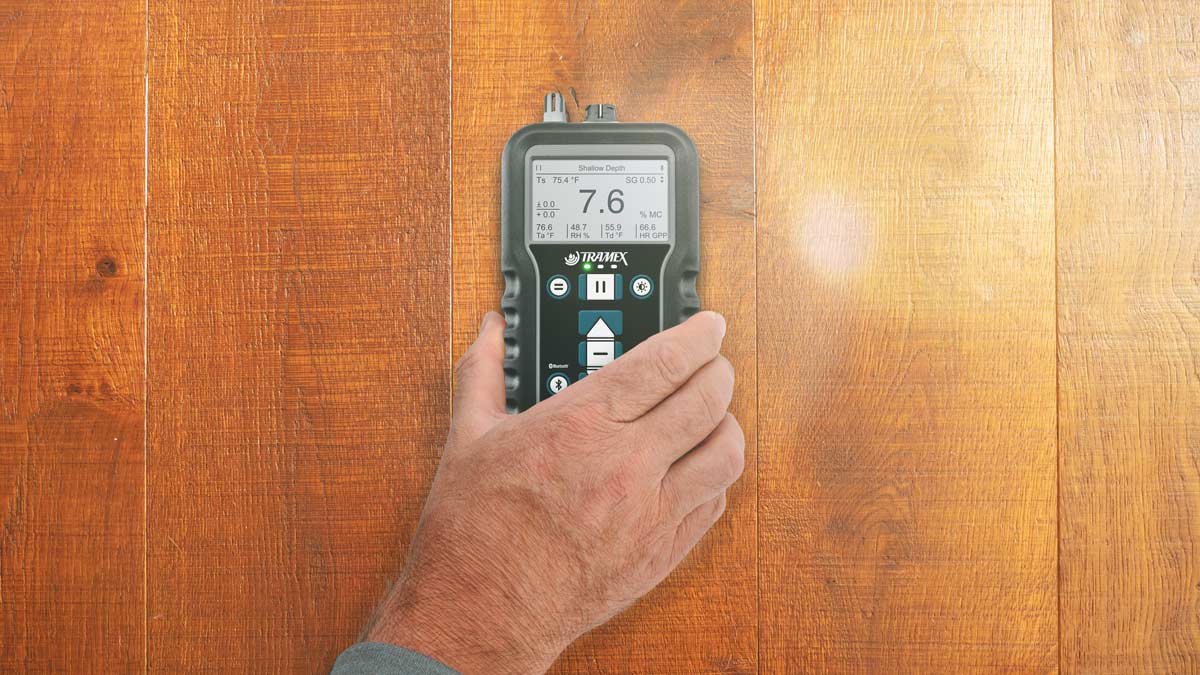
Without measuring subfloor moisture content, it’s impossible to know whether drying is actually occurring below the surface.
Professional Dehumidification Process Explained
Addressing moisture under hardwood in Palm Bay requires a systematic approach.
1. Moisture Mapping
Professionals begin with:
- Moisture meter testing across flooring surfaces
- Thermal imaging scans to detect hidden damp zones
- Subfloor moisture content evaluation
This identifies the extent of moisture intrusion.
2. Determining the Source
Before drying begins, the moisture source must be corrected. This may involve:
- Exterior sealing
- Plumbing repairs
- Slab moisture mitigation
- HVAC adjustments
Drying without source correction leads to recurring issues.
3. Controlled Drying Techniques
In some cases, small sections of flooring may need to be lifted to allow airflow.
Industrial dehumidifiers and air movers are strategically placed to:
- Reduce ambient humidity
- Increase air circulation at floor level
- Draw moisture from subfloor materials
Specialized drying mats may also be used to pull moisture upward through flooring.
4. Monitoring and Stabilization
Moisture levels are monitored daily until readings return to safe levels. Hardwood must reach equilibrium moisture content before repairs or refinishing.
Preventing Moisture Problems Under Hardwood in Palm Bay
Prevention is especially important in coastal Florida.
Homeowners can reduce risk by:
- Keeping indoor humidity between 45–55%
- Installing vapor barriers when appropriate
- Sealing exterior cracks and gaps
- Inspecting plumbing annually
- Addressing roof damage immediately after storms
- Scheduling periodic moisture inspections
After hurricane season, a proactive moisture check can catch hidden issues before visible flooring damage develops.
The Cost of Ignoring Subfloor Moisture
Delaying professional evaluation can result in:
- Extensive board replacement
- Subfloor deterioration
- Mold growth beneath flooring
- Structural framing damage
- Increased remediation costs
Hardwood flooring is an investment. Protecting it requires managing moisture at its source.
Why Local Experience in Palm Bay Matters
Dehumidification under hardwood behaves differently in Palm Bay than in inland areas like Sanford. Coastal humidity, slab foundation styles, and storm exposure all influence how moisture moves through materials.
Professionals with local experience understand:
- Common slab construction methods in Palm Bay
- How ground moisture affects flooring systems
- Typical storm-related intrusion points
- Appropriate drying timelines for Florida conditions
Inspections and More FL has worked throughout Palm Bay, Cocoa, and Melbourne addressing moisture challenges unique to Florida homes. Local knowledge allows for faster diagnosis and more effective drying solutions.
A Practical Next Step
If your hardwood floors show signs of warping or you’ve experienced recent storm exposure, don’t assume it will resolve on its own.
Moisture under hardwood flooring rarely disappears without intervention. Early detection and controlled dehumidification prevent structural damage and costly replacement.
A professional moisture evaluation can determine:
- Whether moisture is present beneath flooring
- How widespread the issue is
- What drying strategy is required
- Whether flooring removal is necessary
In Palm Bay’s humid climate, proactive moisture control protects both your flooring and your home’s long-term stability.
