

Air Scrubbing in Melbourne After Roof Failures: A Step-by-Step Explanation
If you’ve owned a home in Melbourne long enough, you’ve probably dealt with at least one roof-related scare. It might be a shingle blow-off after a storm, a small flashing failure, or that slow leak that only shows up when the rain hits just right. In coastal Florida (and yes, Melbourne counts), roof problems don’t always announce themselves with a waterfall in the living room. A lot of the time, the water slips in quietly, soaks insulation, saturates drywall, and sets up the perfect environment for mold and lingering odors.
That’s where air scrubbing comes in.
Air scrubbing is one of those things homeowners hear about during remediation and think, “Okay… is this actually necessary, or is it just extra equipment?” In many post-roof-failure situations around Melbourne, Palm Bay, Cocoa, Merritt Island, and nearby areas, it’s not optional. It’s part of doing the job correctly.
Here’s a clear, step-by-step breakdown of how air scrubbing works after roof failures, what it does, and why it matters in Florida’s humidity-heavy climate.
What the Issue Is
After a roof failure, the obvious concern is water damage. The less obvious problem is what that water does to the indoor environment once it gets inside.
Roof leaks often affect:
- Attic insulation (which holds moisture like a sponge)
- Drywall ceilings and upper walls
- Wood framing and truss areas
- HVAC return pathways (especially if returns are in hall ceilings)
When water stays trapped in porous materials, it creates conditions for microbial growth. Even before you see visible mold, you can get:
- Musty odors that persist
- Elevated airborne particles from disturbed insulation
- Dusty, “heavy” indoor air after demolition
- Irritation from general debris (not medical claims — just that “my house smells like wet attic” feeling)
Air scrubbing is used to reduce airborne contaminants during drying, removal, and cleanup.
Why This Happens So Often in Melbourne and Nearby Areas
Melbourne homes deal with roof-related moisture problems for a few very Florida reasons:
Storm frequency and wind-driven rain
Even a small weakness in flashing can become a leak during heavy rain.
High humidity slows drying
Materials don’t dry naturally in humid air. Moisture lingers longer.
Attic heat creates condensation patterns
Hot attics + wet insulation can lead to prolonged dampness.
Salt air and corrosion (especially closer to the water)
Coastal exposure can shorten the life of roof fasteners and metal components.
Older roof systems and repairs stacked over time
Some homes have layered patchwork repairs that fail in heavy storms.
In other words, it’s not just the roof. It’s the environment the roof is sitting in.
Common Signs Property Owners Notice
After a roof failure, Melbourne homeowners often spot:
- Water stains spreading on ceilings
- Damp drywall that feels soft to the touch
- A musty smell that gets stronger in the afternoon
- Peeling paint or bubbling texture on ceilings
- Warped trim near upper walls
- Dust or insulation debris around attic access areas
- A “stale” indoor air feeling after demo starts
If the attic insulation was wet, the odor can stick around even after the visible stain dries.
Hidden or Overlooked Sources After Roof Leaks
Roof failures are sneaky because water rarely drops straight down. It travels.
Common hidden areas include:
- Along trusses and rafters before dripping
- On top of ceiling drywall where you can’t see it
- Into recessed light cans and ceiling penetrations
- Around exhaust fan housings
- Into wall cavities at exterior corners
- Through insulation into HVAC pathways
This is where air scrubbing becomes important — because once disturbed, dust and debris can become airborne.
Why DIY Attempts Usually Fail
A lot of homeowners try to “dry it out” with box fans and open windows. In Melbourne, that often backfires.
Why?
- Open windows bring in more humid air
- Fans move air but don’t remove moisture (humidity stays high)
- Wet insulation continues releasing odor
- Disturbing materials without containment can spread debris
DIY efforts can help with small, surface-only issues. But after roof failures that impact attic insulation and ceiling materials, professional drying and filtration are usually needed.
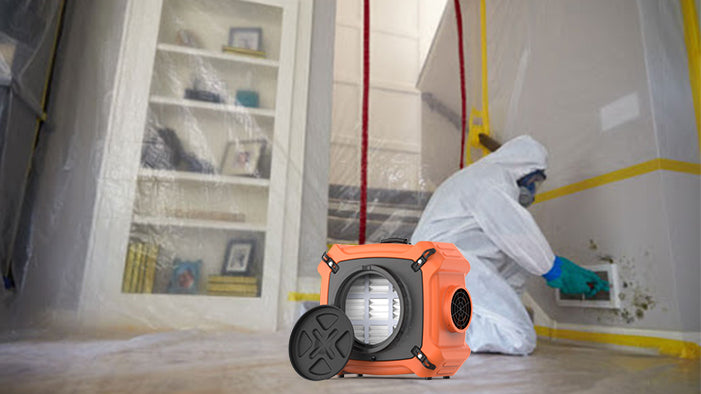
What Air Scrubbing Actually Is
An air scrubber is a portable filtration machine. It pulls air in, filters it, and exhausts cleaner air back into the space (or vents it outside).
Most professional air scrubbers use:
- Pre-filters for large debris
- HEPA filtration for fine particles
- Sometimes activated carbon for odors (depending on the setup)
In roof-leak scenarios, air scrubbers help reduce airborne particles created by:
- Removing wet drywall
- Handling insulation
- Cutting out ceiling sections
- Cleaning framing
- Running air movers that can stir dust
Think of it as controlling what gets stirred up while the structure is being dried and repaired.
Step-by-Step: Air Scrubbing in Melbourne After Roof Failures
Step 1: Confirm the Extent of Moisture and Damage
Before any equipment is placed, the affected footprint needs to be mapped.
This often includes:
- Moisture meter readings on ceilings/walls
- Thermal imaging to spot damp insulation zones
- Visual checks in the attic (especially around penetrations)
This step prevents guessing and avoids treating the wrong area.
Step 2: Correct the Roof Failure First
This part seems obvious, but it’s frequently skipped or delayed.
Air scrubbing and drying are wasted effort if water continues entering.
Roof repair, flashing correction, and sealing come first.
Step 3: Set Up Containment (If Needed)
If demolition is required, containment helps prevent spreading debris throughout the home.
Containment may include:
- Plastic sheeting around the affected room
- Sealed doorways or zipper doors
- Floor protection
The goal is simple: keep the mess in one area.
Step 4: Place the Air Scrubber Correctly
Placement matters. Putting an air scrubber in the wrong corner is like putting a smoke detector in the garage and hoping it hears the kitchen.
A proper setup considers:
- Airflow paths
- Where demolition will occur
- Return air locations
- Doorways and leakage points
Sometimes the unit exhausts into the same room. Other times it’s ducted outside to create negative pressure.
Step 5: Run Air Scrubbing During Demo and Removal
This is when air scrubbing does the most work.
During removal of wet drywall or insulation, the air scrubber continuously captures airborne particles and helps reduce the spread.
This is especially useful when:
- Cutting ceiling drywall
- Pulling wet attic insulation
- Cleaning truss surfaces
- Removing damaged vent boots
Step 6: Continue Air Scrubbing During Drying
Drying equipment (air movers and dehumidifiers) can stir up dust and particles.
Running an air scrubber during drying helps keep the space cleaner while moisture is removed.
In Melbourne’s humidity, drying can take longer than expected, so consistent filtration helps maintain indoor air quality during the process.
Step 7: Clean and Verify Before Rebuild
After drying and cleaning:
- Remaining surfaces are HEPA vacuumed
- Moisture readings confirm dryness
- Odor sources are reassessed (wet insulation is a frequent culprit)
Air scrubbing may continue for a short period after cleanup to help capture residual particles.
Proper Moisture Control Process That Supports Air Scrubbing
Air scrubbing works best when paired with the full moisture control process:
- Containment
- Safe removal of wet porous materials
- Structural cleaning
- Dehumidification
- Structural dryouts
- Moisture source correction
Air scrubbing is not a replacement for drying or removal. It supports those steps by controlling airborne contamination.
How to Prevent Roof-Leak Fallout in Florida Homes
You can’t control storm season, but you can reduce the chances of roof failure becoming an indoor air problem.
Practical prevention tips for Melbourne homeowners:
- Inspect roofs after major storms (even if you don’t see stains)
- Check attic insulation for dampness and matting
- Maintain proper attic ventilation
- Keep gutters clear to prevent water backing up under edges
- Address small ceiling stains immediately
- Schedule routine moisture evaluations, especially in older homes
If you’re in Melbourne, Palm Bay, Cocoa, or Merritt Island, a “small” roof leak can become a bigger indoor issue because moisture doesn’t dry quickly here.
Why Local Florida Experience Matters
Roof failures in Florida behave differently than roof leaks in dry climates.
Local experience matters because:
- Humidity slows drying and increases recurrence risk
- Wind-driven rain changes where water travels
- Attic heat accelerates material breakdown
- Coastal corrosion affects fasteners and flashing
- Older Florida construction styles have common weak points
Inspections and More FL works in these exact conditions, so the focus stays on practical diagnosis: where the moisture entered, where it traveled, and what needs to be dried or removed to prevent ongoing issues.
Calm, Trust-Based Next Step
If your Melbourne home has had a roof leak — even one that “didn’t seem that bad” — it’s smart to evaluate the attic and ceiling materials sooner rather than later.
Air scrubbing isn’t about drama. It’s about control.
When you’re cutting into wet drywall or moving damp insulation, you want filtration running so airborne debris doesn’t spread through the home. Combined with proper drying and moisture correction, air scrubbing helps keep remediation cleaner, more contained, and more predictable.
