
Air Scrubbing in Merritt Island in Older Florida Homes: How to Prevent Recurring Damage
Older homes in Merritt Island carry history. Solid framing, established neighborhoods, mature trees, and construction styles that have survived decades of Florida storms. But with that age comes a reality many homeowners don’t immediately consider: older Florida homes breathe differently. They allow more air exchange, more humidity infiltration, and in many cases, more opportunity for moisture-related damage to return.
When moisture issues occur—whether from hurricane exposure, roof leaks, plumbing failures, or long-term humidity buildup—air scrubbing often becomes a necessary part of the recovery process. Not because it’s a flashy add-on, but because it helps control what you can’t see: airborne particles, mold spores, and fine debris stirred up during remediation and drying.
In Merritt Island’s coastal environment, preventing recurring damage requires more than drying surfaces. It requires controlling the air itself.
Let’s walk through why air scrubbing matters in older Florida homes and how it plays a role in long-term protection.
Why Older Merritt Island Homes Are More Vulnerable
Many homes in Merritt Island were built before modern moisture-control standards became common. These properties often have:
- Older insulation materials
- Less efficient attic ventilation
- Original ductwork systems
- Aging window and door seals
- Slab-on-grade construction
- Crawl spaces in certain areas
Over time, even small moisture events can accumulate inside wall cavities, attic spaces, and HVAC systems. Add in Florida’s persistent humidity and salt-air exposure, and building materials face constant environmental stress.
When remediation or drying occurs, particles that have settled for years can become airborne. Without proper air control, those particles redistribute and contribute to recurring issues.
What Air Scrubbing Actually Does
Air scrubbing involves the use of high-efficiency particulate air (HEPA) filtration systems designed to remove microscopic airborne particles.
Professional air scrubbers:
- Capture mold spores
- Remove fine dust and debris
- Filter microscopic contaminants
- Reduce airborne particulate load
- Support containment during remediation
In older homes, where materials may already be porous or aged, controlling airborne spread becomes especially important.
Air scrubbing is not a substitute for fixing moisture sources—but it is a critical support tool during and after remediation.
What Most Homeowners Overlook
1. Airborne Spread During Drying
When structural dryouts begin, air blowers increase airflow. That airflow helps evaporate moisture—but it can also disturb settled particles.
In older homes with attic dust, aging insulation, or past minor leaks, spores may already exist in small concentrations. Once disturbed, they can circulate through return air systems.
Air scrubbing captures these particles before they redistribute.
2. HVAC Circulation
Older duct systems in Merritt Island homes may:
- Have minor gaps or loose joints
- Contain accumulated dust
- Pull air from attic or wall cavities
If airborne particles increase during drying or remediation, HVAC systems can circulate them throughout the home.
Air scrubbing reduces this risk by filtering the air continuously during the process.
3. Lingering Odors
Musty odors often persist after moisture events—not always because mold remains active, but because microscopic particles linger in the air.
Air scrubbing helps reduce odor-causing particles while humidity and structural moisture levels stabilize.
Why Air Scrubbing Matters After Water Damage
After events such as:
- Hurricane-driven rain intrusion
- Roof leaks
- Plumbing line failures
- AC drain overflows
- Hidden wall cavity moisture discovery
air scrubbing helps prevent secondary contamination during remediation.
In older homes, materials may have absorbed moisture more deeply than in newer builds. When those materials are opened or dried, particles release into the air.
Air scrubbing provides a layer of control during that transition.
The Connection Between Air Scrubbing and Recurring Damage
Recurring moisture damage often stems from incomplete processes.
If drying occurs but airborne spores remain high, and humidity rises again later, conditions may support renewed growth.
Preventing recurrence involves:
- Removing moisture
- Correcting intrusion sources
- Controlling indoor humidity
- Filtering airborne particles
Air scrubbing supports that last component.
In Merritt Island’s high-humidity climate, maintaining stable indoor air conditions reduces long-term risk.
When Air Scrubbing Is Typically Recommended
Air scrubbing may be appropriate in older Merritt Island homes when:
- Visible mold remediation is underway
- Structural drying disturbs affected materials
- HVAC systems may have been exposed
- Odors persist after moisture correction
- Attic contamination is suspected
- Multiple rooms experienced water intrusion
It is particularly useful during containment setups to maintain clean air outside work zones.
How Professionals Set Up Air Scrubbing Systems
Effective air scrubbing requires proper placement and airflow control.
Professionals:
- Calculate room volume
- Position scrubbers to optimize circulation
- Ensure negative air pressure when needed
- Replace filters as required
- Pair scrubbers with dehumidification and airflow systems
Improper placement can reduce efficiency, so experience matters.
The Role of Dehumidification and Airflow
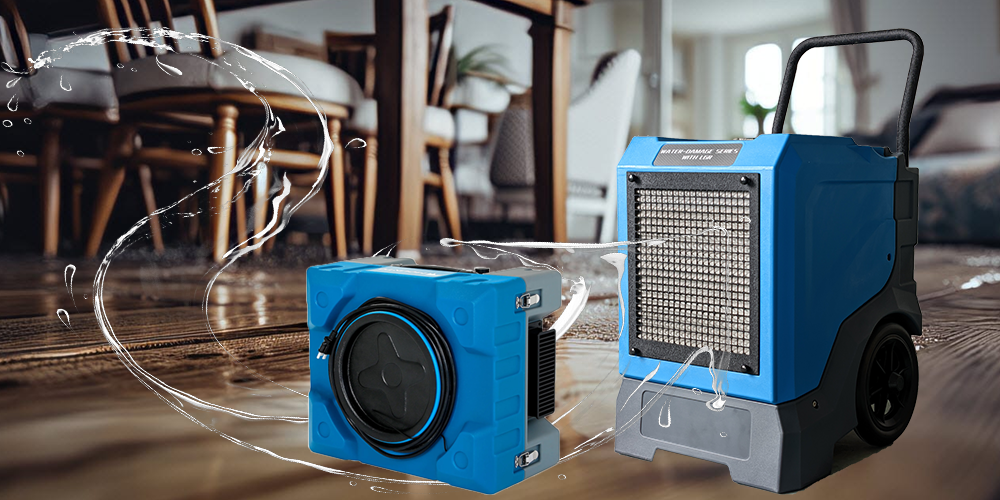
Air scrubbing alone does not remove moisture. It works alongside:
- Dehumidifiers
- Air blower installations
- Structural drying systems
In Merritt Island homes, balancing airflow, humidity, and filtration creates the most stable recovery environment.
Dehumidifiers pull moisture from the air.
Air blowers accelerate evaporation.
Air scrubbers remove airborne particles.
Together, they form a coordinated response.
Preventing Recurring Moisture Problems in Older Homes
Long-term prevention in older Florida homes includes:
- Maintaining AC systems regularly
- Cleaning and inspecting ductwork
- Checking attic ventilation
- Repairing minor roof vulnerabilities promptly
- Monitoring indoor humidity levels
- Inspecting after major storms
Because older homes may not have modern moisture barriers, routine monitoring becomes even more important.
Why Local Experience in Merritt Island Makes a Difference
Merritt Island’s coastal location creates unique environmental pressures:
- Salt air accelerates material degradation
- Hurricanes drive rain into small openings
- High humidity slows drying
- Afternoon storms increase moisture load
Professionals familiar with these local conditions understand when air scrubbing is necessary and when it is not.
Inspections and More FL approaches air quality control with a practical, measured process—focusing on moisture correction first, then supporting air stability to prevent recurrence.
A Balanced Approach to Protecting Older Homes
Air scrubbing is not about overreacting. It is about preventing small issues from repeating.
If your Merritt Island home has experienced water intrusion or mold remediation—especially in an older property—proper air control may help stabilize conditions and reduce future risk.
Preventing recurring damage requires addressing moisture, airflow, and air quality together. In Florida’s climate, overlooking one of those elements often leads to repeat problems.
Taking a comprehensive, locally informed approach helps ensure your home remains dry, stable, and protected long after the visible signs of damage are gone.
