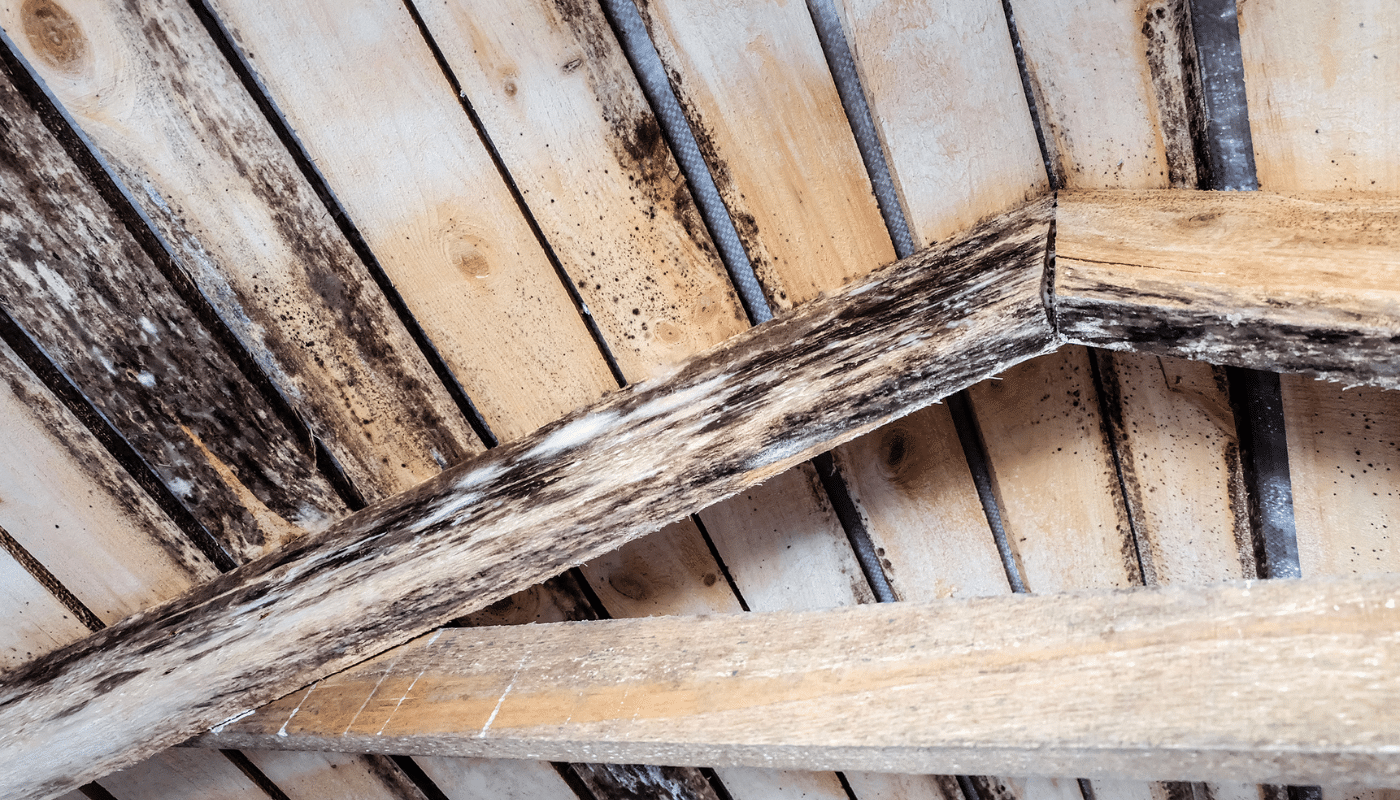
How Mold Remediation Protects Properties in Cocoa After Roof Failures
In Cocoa, roof failures aren’t rare. Between heavy summer storms, hurricane-season winds, and years of sun exposure, roofing systems take a beating. When shingles lift or flashing fails, water doesn’t just drip into a bucket — it seeps into insulation, travels down wall cavities, and settles into framing.
By the time a ceiling stain appears, moisture has often already spread.
That’s why mold remediation becomes so important after roof failures in Cocoa. It’s not just about drying a wet spot. It’s about protecting structural integrity, indoor air quality, and long-term property value in a Florida climate that accelerates microbial growth.
What Happens After a Roof Failure in Florida
When a roof leak develops in Cocoa, water typically enters in one of three ways:
- Wind-driven rain under shingles
- Damaged flashing around vents or chimneys
- Aging underlayment failure
Once inside, water follows gravity — but not always in a straight line.
It can:
- Soak attic insulation
- Travel along rafters
- Drip behind drywall
- Pool above ceilings
- Migrate into exterior walls
Because Cocoa experiences intense, fast-moving storms, even short-duration leaks can introduce significant moisture.
In Florida’s humidity, mold can begin developing within 24 to 48 hours if materials remain damp.
Why Cocoa Homes Are Especially Vulnerable
Cocoa’s coastal proximity and storm exposure create specific risk factors.
High Humidity Levels
Even after rainfall stops, humid air slows evaporation inside attics and wall cavities.
Storm Intensity
Sudden downpours overwhelm compromised roofing quickly.
Older Construction
Many Cocoa properties have aging roof systems that may not withstand repeated storm cycles.
Attic Heat and Condensation
Warm attic air combined with moisture intrusion creates ideal conditions for microbial growth.
These factors make roof-related mold issues more common than many property owners expect.
Common Signs After a Roof Leak
After roof failures, homeowners often notice:
- Water stains on ceilings
- Sagging drywall
- Damp attic insulation
- Musty odors
- Paint bubbling
- Warped trim
But visible damage doesn’t always reveal the full picture.
In many Cocoa cases, mold growth begins in attic sheathing or inside wall cavities long before it’s visible in living spaces.
Where Mold Typically Develops After Roof Damage
Professional inspections in Cocoa homes frequently identify mold growth in:
Attic Sheathing
Plywood or OSB roof decking absorbs moisture quickly.
Insulation Layers
Wet insulation retains moisture long after surface drying.
Ceiling Cavities
Water pooling above drywall promotes hidden contamination.
Exterior Wall Framing
Water running down rafters may collect in wall structures.
HVAC Ductwork
Attic moisture can affect ducts, spreading particles throughout the home.
Without proper remediation, these areas continue to harbor moisture and microbial growth.
Why Surface Drying Is Not Enough
After a roof leak, many homeowners:
- Patch the roof
- Replace stained drywall
- Run fans
- Use small dehumidifiers
While roof repair stops new water intrusion, it does not address existing contamination.
Mold remediation becomes necessary when:
- Materials remained damp for extended periods
- Musty odors persist
- Visible growth appears
- Moisture readings remain elevated
Simply repainting a stained ceiling does not remove mold inside attic structures.
How Mold Remediation Protects the Property
Professional mold remediation after roof failure focuses on protection and stabilization.
Step 1: Thorough Inspection
Professionals assess:
- Extent of water intrusion
- Moisture content in structural materials
- Presence of visible or hidden mold
Thermal imaging and moisture meters help identify affected areas beyond what’s visible.
Step 2: Containment
If contamination is present, affected areas are isolated to prevent spore spread during removal.
Step 3: Removal of Damaged Materials
Compromised insulation and drywall may need to be removed.
Step 4: Cleaning and Treatment
Structural framing and sheathing are cleaned using appropriate remediation methods.
Step 5: Structural Drying
Air movers and dehumidifiers reduce moisture levels to safe ranges.
Step 6: Mold Encapsulation (When Necessary)
In attic areas, encapsulation may be applied after cleaning to protect structural wood from future moisture exposure.
Step 7: Air Scrubbing
HEPA filtration systems remove airborne particles during remediation.
Companies experienced in Brevard County, such as Inspections and More FL, understand how Cocoa’s coastal climate affects attic drying timelines and moisture migration patterns.
Long-Term Property Protection
Mold remediation protects Cocoa homes in several ways.
Structural Integrity
Removing moisture prevents wood rot and weakening of roof decking.
Indoor Air Quality
Cleaning contaminated attic spaces reduces airborne particles entering living areas.
Property Value
Addressing mold issues properly prevents future disclosure complications.
Preventing Recurrence
Correcting ventilation issues and improving attic airflow reduces future moisture buildup.
In Florida’s climate, ignoring attic mold after roof failure can lead to recurring problems.
Preventing Mold After Roof Repairs
After a roof repair in Cocoa, property owners should:
- Inspect attic insulation for dampness
- Check sheathing for staining
- Monitor indoor humidity levels
- Ensure attic ventilation is functioning
- Schedule a professional moisture evaluation
- Address leaks immediately
Homes in nearby Merritt Island and Melbourne face similar storm exposure, but Cocoa properties often experience fast-moving inland storms that can overwhelm aging roofs.
Proactive inspection after repairs prevents long-term complications.
Why Local Experience Matters
Roof-related moisture behaves differently in Florida than in drier climates.
Professionals familiar with Cocoa understand:
- Storm-driven rain intrusion patterns
- Attic ventilation challenges in coastal homes
- Humidity’s effect on drying speed
- Hydrostatic pressure near foundation edges
- How quickly mold develops in warm climates
Accurate remediation requires understanding these regional factors.
Local knowledge improves detection, shortens drying timelines, and reduces unnecessary demolition.
A Practical Approach After Roof Failure
When roof failures occur in Cocoa, immediate repair is critical — but it’s only the first step.
Moisture detection and mold remediation protect the property by:
- Identifying hidden contamination
- Removing affected materials safely
- Drying structural components
- Improving ventilation
- Stabilizing indoor air quality
In Florida’s humid environment, roof leaks can create hidden damage quickly.
With timely inspection, proper remediation, and localized expertise, Cocoa homes can recover fully after roof failures — preserving structural strength and maintaining a healthy indoor environment.