
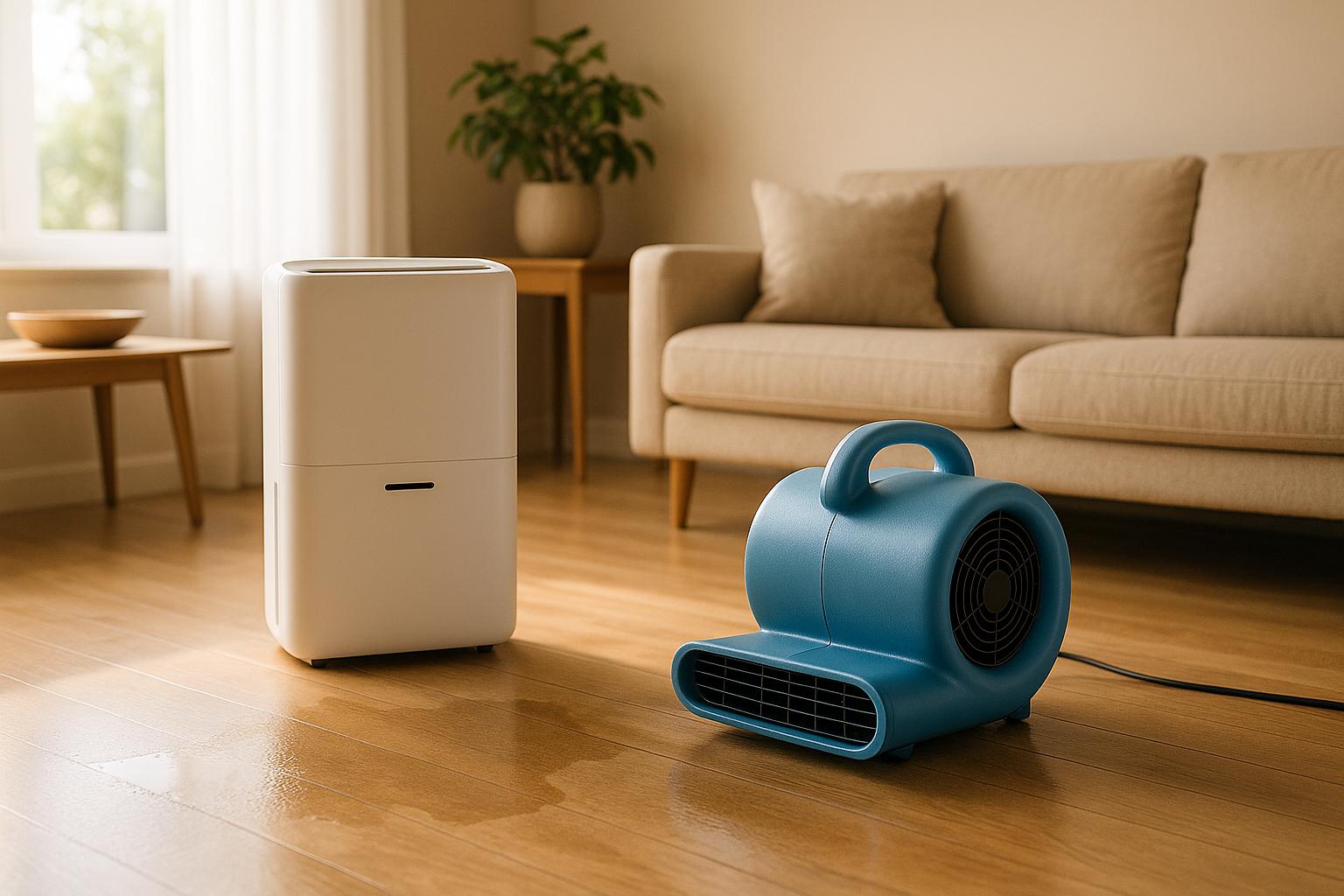
How Structural Dryouts Protect Properties in Melbourne During Extreme Humidity
Extreme humidity in Melbourne isn’t unusual — it’s expected.
From late spring through early fall, humidity levels across Brevard County stay elevated for weeks at a time. Add afternoon thunderstorms, warm coastal breezes, and constant AC operation, and homes are placed under steady moisture pressure.
Most homeowners think of structural dryouts as something that happens after flooding or a plumbing leak.
But in Melbourne’s climate, extreme humidity alone can create conditions that require controlled structural drying.
When moisture accumulates quietly inside walls, attics, or crawl spaces, structural dryouts protect the property before mold growth or wood damage develops.
What Extreme Humidity Does to a Home
When indoor relative humidity stays above 60% for extended periods, building materials begin to absorb moisture from the air.
This affects:
• Wood framing
• Subflooring
• Insulation
• Drywall
• Cabinet bases
• Door frames
Unlike sudden water intrusion, humidity-related moisture builds gradually.
Homeowners may notice:
• A constant damp feeling
• Musty odors
• Doors sticking
• Slightly warped flooring
• Increased AC runtime
But behind walls and beneath floors, materials may already be absorbing more moisture than they should.
Why Melbourne Homes Are Especially Vulnerable
Melbourne’s location along Florida’s east coast creates unique humidity challenges.
Homes here experience:
• Persistent coastal humidity
• Salt-laden air exposure
• Elevated groundwater levels
• High attic temperatures
• Extended summer rainy seasons
In neighborhoods near the Indian River Lagoon and throughout West Melbourne, humidity can remain elevated even when it’s not raining.
When extreme humidity persists, natural drying rarely occurs.
Moisture becomes trapped inside structural cavities.
Crawl Spaces Under Humidity Stress
Crawl spaces are particularly sensitive during humid months.
Warm, moist outdoor air entering through vents can condense on cooler framing beneath the home.
Over time, this leads to:
• Elevated wood moisture content
• Surface mold growth
• Damp insulation
• Odors rising into living spaces
Structural dryouts in crawl spaces may involve:
• Commercial dehumidifiers
• Controlled airflow
• Vapor barrier evaluation
• Moisture monitoring
Drying framing back to safe levels protects the integrity of the floor system above.
Ignoring humidity allows slow deterioration.
Attic Moisture During Humid Conditions
Attics in Melbourne experience extreme heat combined with high humidity.
When cool AC air runs through ductwork in hot attic spaces, condensation can form on duct exteriors.
If insulation absorbs humidity, roof decking and trusses may begin retaining moisture.
Structural dryouts in attic spaces may include:
• Removing damp insulation
• Installing dehumidifiers
• Positioning air movers strategically
• Monitoring wood moisture content
Addressing attic humidity early prevents mold development and wood rot.
Slab Foundations and Ground Moisture
Many Melbourne homes are built on slab foundations.
During prolonged humid conditions, especially after heavy rain, groundwater levels rise.
Moisture can migrate upward through concrete slabs, increasing indoor humidity.
Homeowners may notice:
• Darkened grout lines
• Slight floor cupping
• Persistent musty smells
• Damp-feeling tile
Structural drying may involve dehumidification and moisture monitoring to stabilize subfloor conditions.
Replacing flooring without drying the slab often results in repeat damage.
Why Fans Alone Don’t Work
A common reaction to humidity is to run fans or lower the thermostat.
While airflow helps with comfort, it does not remove moisture from materials.
Fans alone:
• Circulate humid air
• Fail to extract trapped moisture
• May spread spores if mold is present
Structural dryouts rely on coordinated dehumidification and airflow.
Air movers increase evaporation from damp materials.
Dehumidifiers remove that moisture from the air.
Both must operate together for effective results.
The Role of Professional Moisture Monitoring
In extreme humidity conditions, guessing isn’t enough.
Professional structural dryouts involve:
• Moisture meter readings in wood and drywall
• Relative humidity measurements
• Thermal imaging to identify damp zones
• Daily monitoring to track drying progress
Drying continues until materials return to safe moisture thresholds.
Stopping too early allows humidity to remain inside structural components.
Companies like Inspections and More FL use moisture mapping to determine when drying is complete.
Verification protects long-term results.
Preventing Mold Before It Starts
Extreme humidity is one of the primary drivers of mold growth in Florida homes.
When moisture content in wood stays elevated:
• Microbial growth becomes more likely
• Insulation loses effectiveness
• Odors develop
• Structural materials weaken
Structural dryouts interrupt this cycle.
By restoring safe moisture levels, they reduce the conditions that allow mold to form.
In Melbourne’s climate, prevention is far easier than remediation.
Long-Term Humidity Management
After structural dryouts, maintaining stable humidity levels becomes the priority.
Melbourne homeowners can reduce risk by:
• Monitoring indoor humidity year-round
• Installing whole-home dehumidifiers
• Sealing crawl space vents when appropriate
• Improving attic ventilation
• Servicing HVAC systems regularly
• Addressing minor leaks immediately
Extreme humidity may be seasonal, but moisture control should be ongoing.
Layered protection reduces repeat drying needs.
Why Local Experience Matters
Humidity behaves differently in Melbourne than in inland areas like Sanford.
Coastal wind patterns, salt exposure, and tidal influences create sustained moisture pressure on homes.
Professionals familiar with:
• Melbourne construction styles
• Typical crawl space layouts
• Slab foundation behavior
• Seasonal humidity cycles
can determine when structural dryouts are necessary and when simpler humidity adjustments are sufficient.
Localized knowledge prevents over-treatment while protecting structural integrity.
A Practical and Preventative Step
If your Melbourne home feels persistently damp during humid months — even without visible leaks — it’s worth having moisture levels evaluated.
Structural dryouts aren’t just emergency responses to flooding.
In Florida’s climate, they are sometimes preventative measures that protect framing, subflooring, and air quality before problems escalate.
Extreme humidity may be unavoidable in coastal Florida.
Structural damage isn’t.
With proper monitoring and controlled drying when needed, your property can remain stable — even during the most humid months of the year.
