In Rental Properties in Melbourne: A Closer Look at Mold Remediation
Rental properties in Melbourne operate under a different kind of pressure.
High tenant turnover, varying maintenance habits, long AC run cycles, and Florida’s constant humidity create an environment where moisture problems can quietly develop. In coastal Brevard County, it doesn’t take major flooding to trigger mold growth. Sometimes it’s something as simple as poor ventilation, a slow plumbing leak, or a clogged AC condensate line.
When mold develops in a rental property, remediation becomes about more than cleanup. It becomes about protecting structure, stabilizing indoor air quality, and preventing recurring issues that affect both tenants and long-term property value.
Why Rental Properties in Melbourne Face Higher Mold Risk
Rental homes and apartments experience conditions that differ from owner-occupied properties.
Varying HVAC Usage
Tenants may set thermostats high to save energy, increasing humidity levels indoors.
Blocked Vents & Furniture Placement
Restricted airflow allows moisture pockets to form.
Delayed Reporting
Small leaks may go unreported until visible staining appears.
High Turnover
Between tenants, minor moisture damage may be overlooked.
Coastal Humidity
Melbourne’s proximity to the Atlantic keeps ambient moisture elevated year-round.
Add summer storms, hurricane season rainfall, and slab foundations into the mix, and hidden moisture becomes common.
Without early detection, mold follows.
Common Sources of Mold in Rental Properties
In Melbourne rental homes and apartments, mold often begins in concealed areas.
HVAC Condensation Leaks
Clogged drain lines allow water to overflow into walls or closets.
Bathroom Ventilation Gaps
Poor exhaust leads to elevated humidity after showers.
Minor Roof Leaks
Wind-driven rain may enter attic spaces.
Plumbing Seepage
Slow leaks behind cabinets or walls remain unnoticed.
Crawl Space Humidity
Ground moisture rises into living areas.
Because tenants may not inspect crawl spaces or attics, these areas can remain damp for weeks.
Early Warning Signs Property Owners Should Watch For
Landlords and property managers often notice subtle patterns before major issues develop.
- Repeated musty odor complaints
- Ceiling discoloration
- Warped baseboards
- Peeling paint
- Increased HVAC strain
- Elevated indoor humidity readings
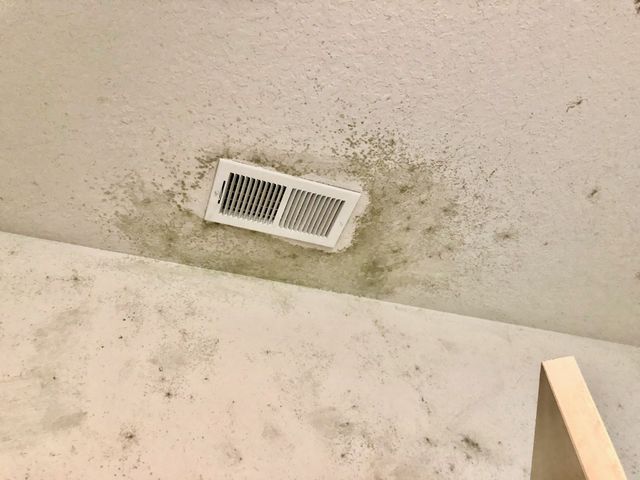
- Visible staining near vents
Addressing these warning signs early reduces remediation scope.
Why DIY Mold Cleanup Often Fails in Rentals
In rental properties, surface cleaning is sometimes attempted between tenant turnovers.
Common attempts include:
- Painting over stains
- Wiping visible mold
- Replacing small drywall sections
- Using household dehumidifiers
These measures rarely correct the underlying moisture source.
Mold thrives on damp materials, not surface stains. Without moisture detection and correction, growth returns — often in a larger area.
Bleach does not penetrate porous drywall or wood framing. Cosmetic repairs may temporarily hide contamination but do not eliminate it.
Professional Mold Remediation Process in Melbourne Rentals
A structured remediation plan protects both property and occupants.
1. Moisture Detection
Using moisture meters and thermal imaging to identify hidden damp areas.
2. Source Correction
Repairing HVAC leaks, plumbing issues, or roof damage.
3. Containment
Isolating affected zones to prevent spore spread during cleanup.
4. Air Scrubbing
Filtering airborne contaminants during remediation.
5. Removal of Contaminated Materials
Safely removing saturated drywall or insulation when necessary.
6. Structural Drying
Using industrial dehumidifiers and air movers to restore safe moisture levels.
7. Anti-Microbial Treatment
Applying treatments to reduce regrowth risk.
8. Post-Remediation Verification
Confirming moisture levels have stabilized.
Companies like Inspections and More FL understand how Melbourne’s humidity impacts rental properties and focus on long-term prevention rather than temporary fixes.
Why Mold Problems Return in Rental Properties
Recurring mold often results from:
- Uncorrected humidity imbalance
- HVAC maintenance gaps
- Inadequate ventilation
- Crawl space moisture
- Delayed repair reporting
- Slab moisture migration
Melbourne’s coastal humidity intensifies these vulnerabilities.
If moisture control is not part of remediation, mold can reappear within months.
Structural Risks of Delayed Remediation
Hidden mold growth inside rental properties can eventually cause:
- Subfloor deterioration
- Framing rot
- Ceiling sagging
- Insulation collapse
- Fastener corrosion
- Expanded contamination
In Florida’s humid climate, deterioration accelerates quickly once materials are damp.
Early remediation protects structural components and reduces repair costs.
Preventing Mold in Melbourne Rental Properties
Property owners can reduce mold risk by implementing proactive strategies.
Schedule Annual HVAC Inspections
Ensure condensate lines drain properly.
Monitor Indoor Humidity
Maintain levels between 45–55%.
Inspect After Major Storms
Even minor roof damage can allow moisture intrusion.
Improve Bathroom Ventilation
Ensure exhaust fans function correctly.
Evaluate Crawl Spaces Annually
Look for ground moisture or insulation issues.
Conduct Move-Out Moisture Checks
Detect problems before new tenants move in.
Homes in Palm Bay, Cocoa, Merritt Island, and Sanford face similar climate pressures, but Melbourne’s coastal exposure increases moisture intensity.
Why Local Experience Matters
Mold remediation in Florida rental properties requires understanding regional building behavior.
Professionals familiar with Melbourne understand:
- Coastal humidity cycles
- Slab foundation moisture patterns
- HVAC condensation risks
- Storm-driven rain intrusion
- Ventilation limitations in older properties
Inspections and More FL approaches rental property mold issues with a prevention-focused mindset — identifying root causes and stabilizing moisture levels before final repairs.
That approach protects long-term property value.
Protecting Rental Properties the Right Way
Mold in rental properties is rarely just a surface problem.
In Melbourne’s humid climate, hidden moisture often drives recurring growth.
Proper mold remediation involves:
- Accurate moisture detection
- Source correction
- Structural drying
- Controlled cleanup
- Ongoing humidity management
When handled correctly, remediation protects both tenants and structure — and prevents recurring issues between lease cycles.
In Florida, proactive moisture management is the most effective way to protect rental investments long term.