
Attic spaces in Merritt Island homes rarely get much attention — until something feels off.
Maybe there’s a faint musty odor that won’t go away. Maybe the AC seems to struggle during humid months. Maybe a small ceiling stain appeared after a summer storm. In many cases, what’s happening above the ceiling line isn’t immediately visible.
That’s where thermal imaging inspections become incredibly valuable.
In a coastal environment like Merritt Island, attic spaces face constant humidity pressure, storm exposure, and extreme temperature swings. Hidden moisture can sit in roof decking, framing, or insulation long before obvious damage appears. Thermal imaging helps identify those problems early — without tearing open large sections of the home.
Why Attics in Merritt Island Are So Vulnerable
Merritt Island’s location between the Indian River Lagoon and the Atlantic Ocean means high ambient humidity is part of daily life. Attics absorb that humidity more than most homeowners realize.
During summer, attic temperatures can exceed 120°F. When hot, humid air meets cooler surfaces — such as ductwork or shaded roof decking — condensation forms. Add heavy rain, wind-driven moisture, and occasional hurricane exposure, and attic spaces become high-risk areas.
Common contributors include:
- Minor roof leaks after storms
- Salt air corrosion affecting flashing
- Improperly vented bathroom fans
- Leaky HVAC ducts
- Poor attic ventilation balance
- High indoor humidity migrating upward
Because attic spaces are rarely visited, moisture problems can develop quietly over time.
What Thermal Imaging Inspections Actually Do
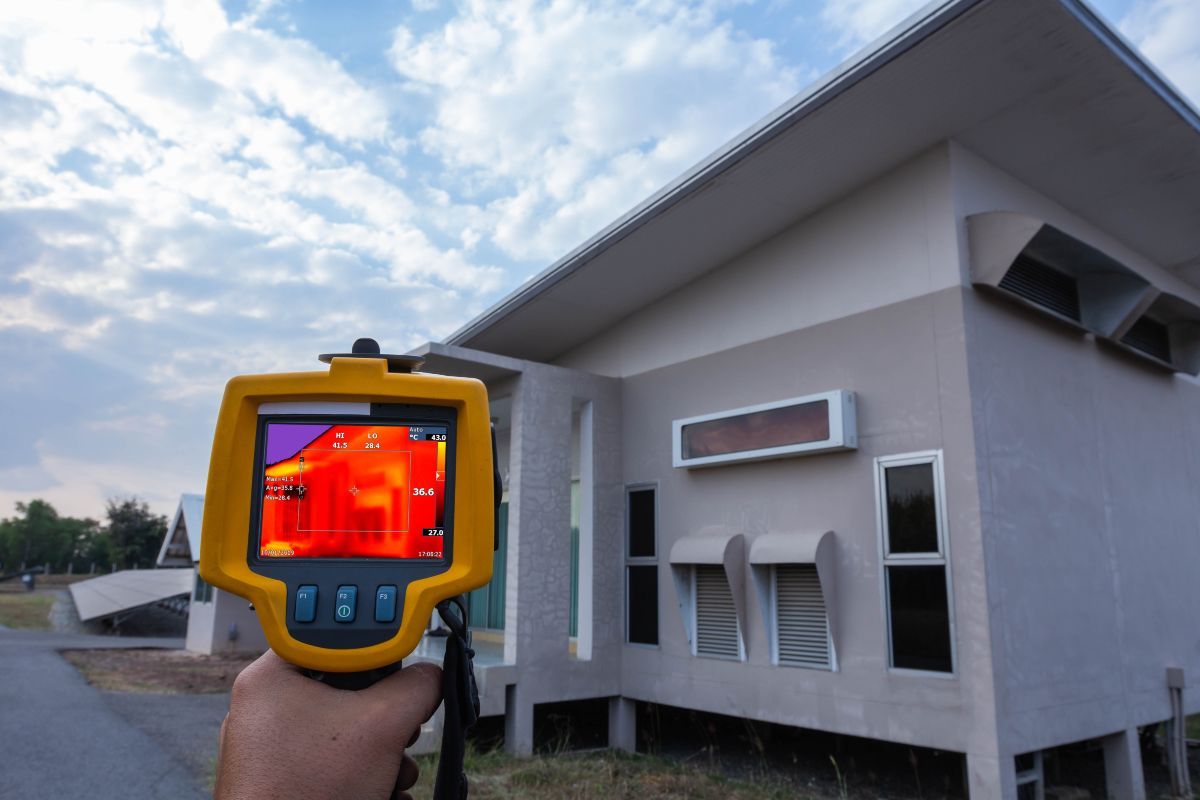
Thermal imaging cameras detect surface temperature variations.
Moisture affects how materials absorb and release heat. Damp wood, insulation, or drywall often appears cooler than surrounding dry areas on an infrared camera.
Thermal imaging does not “see through” materials. Instead, it identifies temperature patterns that suggest hidden moisture.
In Merritt Island attic spaces, thermal imaging can reveal:
- Damp roof decking after storm intrusion
- Wet insulation pockets
- Condensation zones around ductwork
- Moisture migration along trusses
- Hidden leaks near flashing or roof penetrations
Once anomalies are detected, moisture meters confirm whether materials are actively wet.
Without thermal imaging, inspectors must rely solely on visible staining — which often appears late in the process.
Why This Is Especially Important in Coastal Homes
Coastal homes in Merritt Island face ongoing humidity cycles.
Even small leaks can remain damp longer because outdoor humidity slows evaporation. Attics, being enclosed and heat-intensive environments, can trap that moisture.
High water tables and coastal air exposure also contribute to elevated indoor humidity levels. That humidity often rises into attic spaces.
Because drying windows are shorter in Florida’s climate, early detection becomes critical.
Thermal imaging allows non-invasive assessment before mold growth becomes widespread.
Common Signs Homeowners Notice
Often, attic moisture problems reveal themselves indirectly.
Merritt Island homeowners may notice:
- Musty odors indoors
- Increased indoor humidity
- Ceiling discoloration
- Uneven cooling between rooms
- AC running continuously
- Higher energy bills
Sometimes there are no obvious signs at all.
Routine attic inspections with thermal imaging often uncover small moisture issues before they cause structural damage.
Hidden or Overlooked Moisture Pathways
Water and humidity rarely travel in straight lines.
In attic spaces, moisture often spreads through:
Roof decking seams
Water entering near flashing may travel along plywood before dripping.
Truss connections
Condensation forms where wood meets metal fasteners.
HVAC penetrations
Cold air ducts create temperature differentials.
Soffit areas
Blocked vents reduce airflow, trapping humid air.
Past storm damage
Minor damage from previous seasons may have gone unnoticed.
Thermal imaging helps map these pathways without unnecessary demolition.
Why DIY Inspection Often Misses Problems
Many homeowners visually inspect their attic with a flashlight.
While useful, this approach has limitations.
Moisture may not leave visible staining until significant damage occurs.
Insulation can hide damp decking underneath.
Condensation may evaporate during the day, leaving little visible trace.
Without moisture detection tools, it’s difficult to confirm whether framing is wet or dry.
Disturbing suspected mold without containment can also spread spores into living spaces.
Professional thermal imaging provides broader insight with minimal disruption.
Professional Inspection Process Explained
A proper thermal imaging inspection in a Merritt Island attic typically includes:
Visual assessment of roof decking, flashing, and ventilation
Infrared scanning across roof surfaces and framing
Moisture meter verification of suspected damp areas
Evaluation of insulation condition
Inspection of ductwork insulation and airflow
Indoor humidity measurement
If microbial growth is suspected, containment procedures and air scrubbing may be recommended before invasive work begins.
Inspections and More FL uses thermal imaging as part of a comprehensive attic moisture evaluation — not as a standalone tool.
What Happens If Moisture Is Confirmed
If thermal imaging reveals active moisture, the next steps depend on the source.
The process may include:
Roof repairs or flashing correction
Removal of wet insulation
Structural dryouts using air movers and dehumidifiers
Air blower installation to improve attic airflow
Mold remediation if growth is present
Mold encapsulation if structural wood remains sound
Humidity stabilization with dehumidification systems
The goal is not just drying — it’s preventing recurrence.
Preventing Attic Moisture in Merritt Island
Homeowners can reduce risk by:
- Scheduling roof inspections before and after hurricane season
- Ensuring bathroom fans vent outdoors
- Keeping soffit vents clear
- Maintaining balanced attic ventilation
- Monitoring indoor humidity
- Addressing minor leaks promptly
- Scheduling routine attic evaluations
In coastal Florida, proactive inspection is more effective than reactive repair.
Why Local Experience Matters
Attic moisture patterns in Merritt Island differ from inland areas like Sanford.
Coastal wind patterns, salt air exposure, and high groundwater influence how moisture behaves in homes.
Local professionals understand:
- How storm-driven rain enters roof systems
- How attic ventilation should function in humid climates
- How condensation forms around HVAC systems
- How to interpret thermal imaging accurately in Florida heat
This knowledge reduces guesswork and avoids unnecessary demolition.
When to Schedule an Attic Evaluation
If your Merritt Island home has experienced recent storms, persistent humidity, or unexplained odors, an attic thermal imaging inspection may provide clarity.
Moisture hidden above the ceiling line often develops long before visible signs appear.
Early detection minimizes repair costs and reduces mold risk.
Attics may be out of sight — but in Florida’s coastal climate, they should never be out of mind.
With proper thermal imaging inspections, hidden moisture can be identified and corrected before it turns into structural damage.
Keeping your home dry starts at the top.
And in Merritt Island, that means paying close attention to what’s happening inside your attic space.
