Merritt Island Homes Dealing with Moisture Detection After Flooding Events — How Professionals Approach the Issue
Flooding on Merritt Island doesn’t always mean dramatic damage. Sometimes it’s storm surge pushing water into canal-front neighborhoods near Sykes Creek. Other times it’s days of steady rain saturating soil around Banana River properties. And in many cases, the visible water recedes quickly — leaving homeowners thinking cleanup is complete.
But on Merritt Island, especially in waterfront and lagoon-adjacent communities, hidden moisture is often the real issue.
Professional moisture detection after flooding events is not about overreacting. It’s about confirming whether structural materials are truly dry in a coastal environment where humidity slows evaporation and groundwater levels remain high.
What Moisture Detection Means After Flooding
Moisture detection goes far beyond checking whether carpet feels damp.
It’s a structured evaluation process designed to identify water intrusion inside:
- Drywall and insulation
- Subflooring and hardwood
- Concrete slab foundations
- Wall cavities
- Crawl spaces
- HVAC systems
In Merritt Island homes, floodwater may move laterally through soil, migrate upward through slabs, or settle in crawl spaces long after standing water disappears.
Surface dryness does not equal structural dryness.
Why Merritt Island Flooding Requires Careful Detection
Flood-related moisture behaves differently in coastal Brevard County compared to inland Florida areas like Sanford.
Proximity to the Indian River Lagoon
Homes near the lagoon, Sykes Creek, and Banana River face tidal influence and storm surge risks. Even moderate weather systems can introduce water through low entry points.
High Water Tables
Groundwater sits close to the surface in many Merritt Island neighborhoods. After prolonged rainfall, hydrostatic pressure pushes moisture upward through foundations.
Elevated and Raised Homes
Crawl spaces beneath raised homes trap humid air and damp soil conditions after flooding.
Without airflow and professional drying, these areas remain wet long after visible water is gone.
Persistent Coastal Humidity
Salt air and coastal humidity slow evaporation. Even small amounts of water intrusion linger in building materials.
These conditions make structured moisture detection essential following any flood event.
Common Signs After Flooding
Homeowners often notice:
- A lingering musty odor
- Increased indoor humidity
- Soft drywall near floor level
- Flooring that feels uneven or slightly raised
- Baseboards separating from walls
- AC running longer than normal
In many cases, no visible signs appear at all. That’s why relying on appearance alone can be misleading.
Where Hidden Moisture Typically Lingers
Professionals consistently find moisture in overlooked areas after Merritt Island flood events.
Behind Drywall
Gypsum board absorbs water quickly. Even if the outer surface dries, interior material may remain saturated.
Beneath Flooring
Tile and laminate flooring can conceal damp subfloors. Hardwood can trap water between planks and concrete slabs.
Inside Insulation
Wet insulation holds moisture for extended periods, especially in coastal climates.
Crawl Spaces
Ground saturation after flooding creates prolonged humidity beneath the home.
HVAC Systems
Flood-related humidity can affect duct interiors and air handlers, circulating contaminated air.
Without testing, these areas often go unchecked.
Why DIY Inspection Methods Fall Short
After flooding, many homeowners:
- Use household fans
- Mop visible water
- Lower thermostat settings
- Replace carpet
While helpful for surface cleanup, these steps do not measure moisture content inside structural materials.
Without professional tools, there’s no reliable way to confirm whether:
- Wall cavities are dry
- Subfloors are stable
- Framing moisture levels are safe
- Crawl spaces have stabilized
Florida’s warm temperatures allow mold to develop quickly when moisture remains trapped.
How Professionals Approach Moisture Detection
Structured evaluation is key in Merritt Island homes.
Step 1: Visual and Structural Assessment
Professionals identify:
- Likely water entry points
- Foundation vulnerabilities
- Roof or window intrusion patterns
- Soil saturation indicators
Understanding how water entered helps predict its path.
Step 2: Moisture Mapping
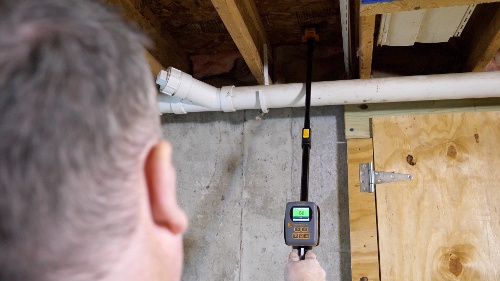
Moisture meters are used to measure water content in:
- Drywall
- Wood framing
- Subfloors
- Base plates
Readings are compared against normal baseline levels.
Step 3: Thermal Imaging
Infrared cameras reveal temperature differences behind walls or under flooring, indicating hidden damp areas.
This step is especially valuable in slab foundation homes common throughout Merritt Island.
Step 4: Humidity and Air Evaluation
Indoor humidity is measured to determine if industrial dehumidification is necessary.
Step 5: Crawl Space and Attic Inspection
These zones are frequently overlooked but often retain moisture longest.
Professionals experienced in coastal Brevard County, such as Inspections and More FL, understand how lagoon-side soil conditions and storm surge patterns influence moisture migration.
What Happens If Elevated Moisture Is Found
Detection guides the next steps.
Structural Dryouts
High-capacity air movers and dehumidifiers remove moisture from framing and subfloors.
Air Blower Installation
Strategic airflow targets saturated wall cavities and flooring edges.
Dehumidification
Industrial systems lower indoor humidity to safe levels.
Containment and Remediation
If mold growth is present, affected areas are isolated and cleaned.
Air Scrubbing
HEPA filtration removes airborne contaminants during drying or remediation.
Every Merritt Island property responds differently depending on elevation, construction type, and severity of flooding.
Preventing Long-Term Damage After Flood Events
Based on local experience, the most effective strategy includes:
- Scheduling moisture detection within 24–48 hours
- Avoiding cosmetic repairs before structural drying
- Monitoring indoor humidity daily
- Inspecting crawl spaces thoroughly
- Servicing HVAC systems after flooding
- Confirming safe moisture levels before reinstalling flooring
Properties in Cocoa and Melbourne experience similar storms, but Merritt Island’s lagoon exposure increases groundwater impact.
Early detection consistently reduces repair costs and prevents structural complications.
Why Local Coastal Experience Matters
Moisture behaves differently in Merritt Island than in inland Florida communities.
Professionals with local experience understand:
- Hydrostatic pressure from saturated soil
- Slab moisture migration patterns
- Salt air’s impact on materials
- Storm surge entry pathways
- Evaporation delays caused by humidity
Accurate moisture detection depends on knowing where to look in this specific coastal environment.
A Practical Approach for Merritt Island Homeowners
Moisture detection after flooding events is about confirmation — not assumption.
Water may disappear quickly, but hidden moisture often remains inside:
- Walls
- Subfloors
- Crawl spaces
- HVAC systems
Professional evaluation ensures structural components are properly dried and stabilized before repairs begin.
In Florida’s coastal climate, moisture control is ongoing. With early detection, targeted drying, and experienced local assessment, Merritt Island homes can recover safely and efficiently after flooding events.