
Moisture Detection in Melbourne after Hidden Water Intrusion: A Step-by-Step Explanation
Hidden water intrusion in Melbourne rarely makes a dramatic entrance. It doesn’t usually pour through the ceiling in buckets. More often, it seeps quietly through a window frame during a wind-driven storm, drips slowly from an AC drain line, or leaks inside a wall where no one can see it. Weeks later, you notice a musty odor, warped baseboards, or a faint stain on drywall—and that’s when the real questions begin.
In Florida’s humid climate, moisture doesn’t just dry up and disappear. It lingers. It spreads. And if no one tracks it properly, it can lead to structural damage and mold growth. That’s why professional moisture detection is so important in Melbourne, Palm Bay, Cocoa, Merritt Island, Sanford, and surrounding areas. It’s not guesswork. It’s a systematic process designed to find where the water traveled and stop problems before they escalate.
Below is a clear, step-by-step explanation of how moisture detection works after hidden water intrusion.
Step 1: Understand the Source of Intrusion
Every moisture investigation starts with one basic question: Where did the water come from?
In Melbourne homes, hidden water intrusion often stems from:
- Roof leaks after heavy rainstorms
- Wind-driven rain entering around windows or sliding doors
- AC drain line backups or clogged condensate lines
- Slow plumbing leaks inside walls
- Dishwasher or washing machine supply line failures
- Slab leaks beneath tile or laminate flooring
Water rarely stays in one place. It follows gravity, building materials, and airflow patterns. A small leak behind a bathroom wall can migrate into a hallway, a closet, or even beneath flooring before it becomes visible.
Understanding the likely source helps narrow down the inspection area and prevents wasted time.
Step 2: Conduct a Detailed Visual Inspection
Before advanced tools come out, a professional starts with a careful walkthrough.
We look for:
- Discoloration or staining on drywall and ceilings
- Bubbling paint or peeling texture
- Soft or swollen baseboards
- Warped door frames
- Loose tile or lifting laminate flooring
- Rust on metal corner beads or fasteners
- Persistent musty odors
Certain areas in Melbourne homes require special attention:
- AC closets and air handler compartments
- Laundry rooms
- Exterior-facing walls under windows
- Garage-adjacent walls
- Cabinets under sinks
- Attics after heavy rain events
Visual inspection provides the first clues and guides where deeper testing should occur.
Step 3: Establish a Moisture Baseline
Florida humidity can complicate readings. A professional does not assume every elevated reading means a leak. Instead, we establish a dry baseline inside the same property.
We compare:
- A suspected wet wall to a confirmed dry interior wall
- Flooring near the stain to flooring in another room
- Baseboards in affected areas to baseboards elsewhere
This comparison helps determine what is normal for that specific home. Melbourne’s climate often raises background humidity levels slightly, so context matters.
Step 4: Scan with a Non-Invasive Moisture Meter
Non-invasive moisture meters allow professionals to scan drywall, ceilings, and flooring without creating holes or damage.
This step helps:
- Identify the highest moisture concentration
- Outline the perimeter of the wet zone
- Detect secondary areas where water may have migrated
Water often travels farther than expected. It can move down wall cavities, along drywall seams, under flooring materials, or into adjacent closets where airflow is limited.
By scanning methodically in a grid pattern, we create a clear moisture map.
Step 5: Confirm Findings with Pin Meters (When Necessary)
In certain situations—especially with wood materials—pin-type moisture meters provide precise readings.
These tools are commonly used on:
- Baseboards
- Door frames
- Window framing
- Exposed structural wood
- Subfloor edges (when accessible)
Pin readings help determine whether moisture is surface-level or deeply absorbed into materials. This distinction guides drying decisions.
Step 6: Use Thermal Imaging to Detect Hidden Patterns
Thermal imaging cameras detect temperature differences across surfaces. Wet materials often appear cooler because evaporation lowers surface temperature.
Thermal imaging helps identify:
- Damp wall cavities behind drywall
- Ceiling moisture from roof leaks
- Insulation pockets holding water
- Moisture migration under flooring
Thermal anomalies are always confirmed with moisture meters to ensure accuracy. This two-step approach prevents misinterpretation of temperature variations caused by air leaks or plumbing lines.
Step 7: Measure Indoor Humidity and Air Conditions
In Melbourne’s climate, humidity plays a major role in how moisture behaves.
Professionals measure:
- Relative humidity
- Ambient temperature
- Dew point
If indoor humidity remains high, materials can re-absorb moisture even after the leak stops. AC systems that fail to dehumidify properly often contribute to prolonged dampness.
Understanding air conditions allows for proper drying strategies.
Step 8: Define the Full Scope of Affected Areas
Hidden intrusion is rarely limited to one visible stain.
A professional defines:
- Primary wet zone (highest readings)
- Secondary wet zone (moisture migration areas)
- Borderline areas needing monitoring
In slab-on-grade homes common in Melbourne and Palm Bay, moisture can travel under tile and laminate flooring before signs appear. In older homes around Cocoa or Merritt Island, intrusion may reach crawl spaces or rim joists.
Accurate mapping ensures drying equipment targets the entire affected area—not just what is visible.
Step 9: Confirm the Source Has Stopped
Drying efforts fail if water intrusion continues.
We verify:
- No active leak remains
- Moisture readings are not rising
- Thermal patterns remain stable
- Staining is not expanding
If the source remains active, drying becomes ineffective and costly.
Step 10: Implement Proper Drying and Control Measures
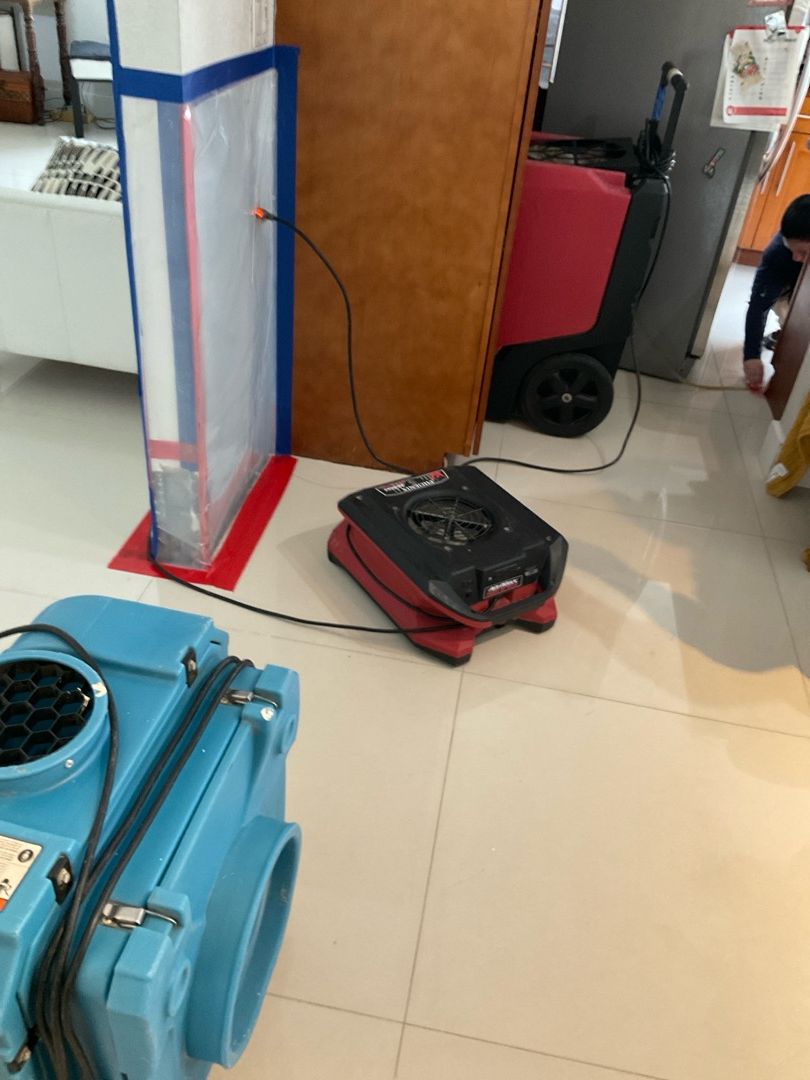
Once moisture detection confirms the scope, drying and corrective steps may include:
- Dehumidification to extract moisture from air and materials
- Air blower installation to increase airflow
- Structural dryouts for wall cavities and flooring systems
- Containment if mold risk is present
- Air scrubbing when necessary
- Anti-microbial fogging in appropriate scenarios
- Mold remediation if active growth is discovered
- Mold encapsulation where required after cleaning
- Correction of the original moisture source
Each home requires a tailored response based on materials, severity, and environmental conditions.
Step 11: Re-Monitor and Verify Drying Progress
Drying is not a one-time event. Moisture levels must be rechecked consistently to confirm:
- Readings steadily decrease
- Humidity levels remain controlled
- No hidden pockets remain damp
Stopping too early often leads to recurring musty odors or renewed damage.
Step 12: Prevent Future Hidden Intrusion
Long-term protection matters in Melbourne’s climate.
Practical prevention strategies include:
- Regular AC drain maintenance
- Prompt repair of minor plumbing leaks
- Inspecting roof and flashing after storms
- Sealing windows and doors properly
- Monitoring indoor humidity levels
- Improving ventilation in bathrooms and closets
- Conducting routine property evaluations
Coastal air and high water tables add stress to building materials. Ongoing awareness reduces risk.
Why Local Florida Experience Makes a Difference
Moisture detection in a humid coastal environment requires specific expertise. Professionals familiar with Melbourne and surrounding Brevard County communities understand:
- How high humidity affects readings
- How slab foundations behave during intrusion
- How AC systems influence indoor moisture
- How wind-driven rain enters homes
- How building styles differ between coastal and inland areas
Inspections and More FL applies a calm, systematic approach rooted in local experience. The goal is not alarm—it is clarity.
A Measured, Professional Next Step
If you notice unexplained humidity, staining, warped materials, or persistent odors, early moisture detection can prevent more serious damage. Hidden intrusion rarely resolves on its own in Florida’s climate. A thorough, step-by-step evaluation ensures your Melbourne property remains structurally sound and properly protected.
