
Plumbing leaks in Sanford homes rarely look serious at first.
It might start as a small drip under a sink. A slow pipe leak behind a bathroom wall. A supply line crack inside a slab foundation. By the time water stains appear or a musty odor develops, moisture has often been present for days — sometimes weeks.
In Florida’s humid climate, that delay matters.
When moisture lingers in enclosed spaces, mold growth can begin quickly. Mold removal after plumbing leaks isn’t just about cleaning what’s visible. It requires identifying hidden moisture, stabilizing humidity, and preventing recurrence.
Let’s take a closer look at how professionals approach mold removal in Sanford after plumbing leaks.
Why Plumbing Leaks Lead to Mold in Sanford
Sanford’s environment creates ideal conditions for mold development after water events.
Warm temperatures accelerate microbial growth. High ambient humidity slows natural drying. Slab foundations can trap moisture beneath flooring systems.
Even minor plumbing leaks can:
- Soak drywall from inside wall cavities
- Saturate insulation
- Spread along framing
- Wick upward through baseboards
- Travel beneath tile or laminate flooring
Because water moves through porous materials quickly, the affected area is often larger than it appears.
Once moisture content rises and remains elevated, mold can begin developing within 24–48 hours.
Common Signs Mold May Be Present
Homeowners in Sanford often notice:
- Musty odors that persist
- Dark spotting on walls or ceilings
- Peeling or bubbling paint
- Soft drywall
- Warped flooring
- Elevated indoor humidity
- Allergy-like irritation during humid periods
Sometimes mold remains hidden inside wall cavities even after visible leaks are repaired.
That’s why a professional approach focuses on both visible and concealed areas.
Hidden Areas Most Affected by Plumbing Leaks
After plumbing leaks, mold often develops in:
Wall cavities
Wet insulation and framing create ideal growth conditions.
Subflooring
Moisture spreads beneath flooring materials.
Cabinet backing
Water from sink leaks can remain trapped behind cabinets.
Concrete slabs
Leaks under slabs allow moisture to migrate upward.
HVAC systems
Elevated humidity increases condensation inside ducts.
Because these areas are concealed, specialized tools are used to detect hidden moisture before removal begins.
Why DIY Mold Cleanup Often Falls Short
When mold appears after a plumbing leak, homeowners may attempt to clean surfaces themselves.
Common challenges with DIY cleanup include:
Using bleach on porous materials
Bleach does not penetrate drywall or wood effectively.
Disturbing mold without containment
Spores can spread into unaffected areas.
Ignoring hidden moisture
Surface cleaning does not address damp framing or insulation.
Failing to stabilize humidity
Without moisture correction, mold can return quickly.
Professional mold removal requires containment, moisture detection, and structured remediation steps.
How Professionals Approach Mold Removal
In Sanford homes, professional mold removal typically follows a systematic process.
- Inspection and Moisture Detection
Visual assessment, moisture meter readings, and thermal imaging identify the full extent of damage. - Source Correction
The plumbing leak must be fully repaired before remediation begins. - Containment
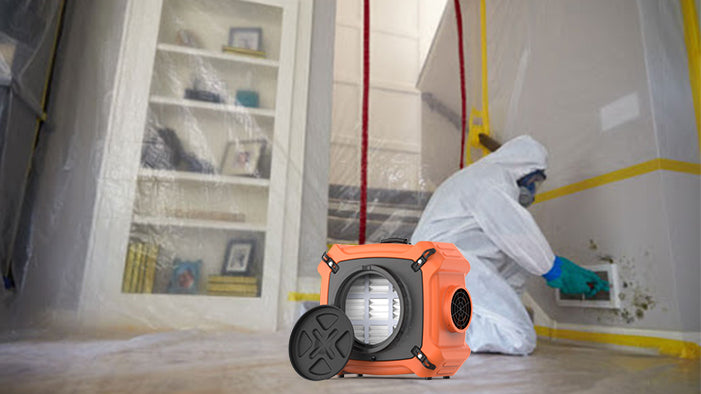
Affected areas are isolated to prevent cross-contamination. - HEPA Air Scrubbing
Air scrubbers help maintain indoor air quality during removal. - Removal of Contaminated Materials
Wet drywall, insulation, and other porous materials may be removed. - Cleaning of Structural Surfaces
Framing and subflooring are cleaned using appropriate remediation techniques. - Structural Dryouts
Air movers and dehumidifiers reduce moisture levels in building materials. - Humidity Stabilization
Indoor humidity is lowered to safe levels to prevent recurrence. - Mold Encapsulation (when appropriate)
Structurally sound wood may be sealed after cleaning if staining remains.
Each step ensures the environment is fully stabilized before rebuilding begins.
The Role of Dehumidification in Sanford Homes
Dehumidification plays a central role in successful mold removal.
Sanford’s humidity remains elevated much of the year. Without mechanical dehumidification, drying timelines extend significantly.
Professional-grade dehumidifiers remove moisture from the air while air movers encourage evaporation from wet materials.
Maintaining indoor relative humidity between 45% and 55% helps prevent mold from returning.
Why Speed Is Critical
In Florida’s climate, delays increase damage.
The longer moisture remains:
- The greater the spread of contamination
- The more materials require removal
- The higher the risk of structural deterioration
- The more likely odors will persist
Prompt inspection and controlled drying significantly reduce remediation scope.
Preventing Future Mold After Plumbing Leaks
Homeowners in Sanford can reduce risk by:
- Addressing plumbing drips immediately
- Installing leak detection devices
- Scheduling routine plumbing inspections
- Monitoring indoor humidity
- Maintaining HVAC systems
- Inspecting cabinets and baseboards periodically
- Scheduling post-leak moisture evaluations
Early action prevents minor leaks from becoming major remediation projects.
Why Local Experience Matters
Sanford homes vary — from historic properties near downtown to newer slab foundation construction.
Local professionals understand:
- How high groundwater affects slab moisture
- How Florida humidity impacts drying
- How storm season increases humidity load
- How moisture travels through local building styles
This knowledge allows accurate diagnosis and efficient mold removal strategies.
Inspections and More FL works with Sanford homeowners and property managers to approach mold removal methodically — focusing on moisture correction, containment, and long-term stability rather than surface cleaning alone.
When to Schedule an Evaluation
If your Sanford home recently experienced a plumbing leak and you notice persistent odors, staining, or humidity changes, it’s important to confirm that structural materials are fully dry.
Mold removal becomes more complex the longer moisture remains unaddressed.
Plumbing leaks may seem small.
In Florida’s humid climate, what happens after the leak determines the long-term outcome.
With proper inspection, structured remediation, and humidity stabilization, mold can be removed safely — and recurrence can be prevented.
Drying the structure thoroughly is what protects it long term.
And in Sanford, that step is never optional.
