
Palm Bay Homes Dealing With Mold Removal Inside Commercial Buildings — Common Mistakes Homeowners Make
In Palm Bay, mold issues aren’t limited to residential homes. Many property owners who live locally also own or manage commercial buildings — office suites, retail storefronts, warehouses, or mixed-use properties. When mold shows up inside these commercial spaces, the approach must be different from a typical single-family home.
Unfortunately, one of the biggest challenges we see in Palm Bay is not the mold itself — it’s the mistakes made during removal.
Florida’s high humidity, coastal air exposure, heavy rain seasons, and AC-driven indoor environments create conditions where mold can develop quickly and spread silently. When removal isn’t handled properly, problems return — often worse than before.
Let’s walk through the common mistakes property owners make when dealing with mold removal inside commercial buildings in Palm Bay, and what should happen instead.
Understanding Mold in Commercial Environments
Commercial buildings in Palm Bay operate differently than homes. They often have:
- Larger HVAC systems
- Flat or low-slope roofing
- Higher occupancy traffic
- Frequent door openings
- Shared air circulation zones
- Larger open interior spaces
These differences mean mold behaves differently inside commercial structures.
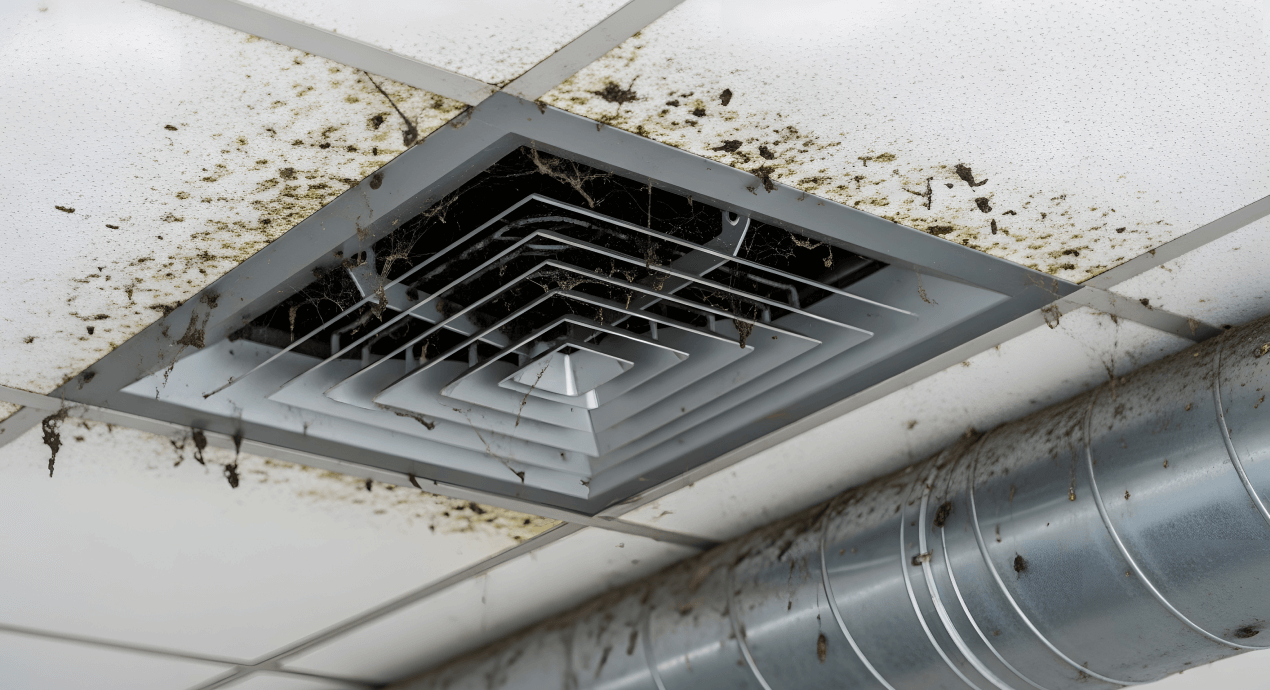
Mold doesn’t just grow on drywall. It can develop inside ductwork, above drop ceilings, inside insulation, behind cabinetry, and within structural framing. Because commercial spaces often have suspended ceilings and hidden mechanical systems, mold can spread across larger areas before it’s detected.
Why Mold Is Common in Palm Bay Commercial Buildings
Palm Bay’s environment contributes to mold risk in several ways:
High Humidity Year-Round
Indoor humidity often stays elevated if HVAC systems aren’t balanced correctly.
Storm-Driven Rain
Wind-driven rain can penetrate roof seams and flashing.
AC Condensation
Commercial HVAC systems produce significant condensate. If drain lines clog, moisture accumulates.
Slab Foundations
Many commercial properties are built on slabs, allowing ground moisture to wick upward.
Salt Air Exposure
Coastal air accelerates corrosion around flashing, vents, and seals, increasing vulnerability to leaks.
When these factors combine, mold growth becomes more likely — especially in buildings with deferred maintenance.
Common Mistake #1: Treating It Like a Small Residential Issue
One of the biggest mistakes is assuming mold inside a commercial building can be handled the same way as a small bathroom issue at home.
In commercial properties:
- Air circulation zones are larger
- HVAC systems connect multiple rooms
- Occupancy increases contamination risk
- Building materials vary significantly
Cleaning a visible patch of mold on drywall without evaluating connected systems often allows spores to remain inside ductwork or adjacent walls.
Mold removal in commercial environments requires broader evaluation.
Common Mistake #2: Using Surface Cleaners Only
Bleach and over-the-counter mold sprays are often used as a first attempt.
This approach rarely works in commercial settings.
Bleach does not penetrate porous materials like drywall, wood framing, or insulation. It may lighten surface staining, but mold roots can remain embedded.
In Florida’s humidity, that mold returns quickly.
True mold removal requires:
- Proper containment
- Removal of contaminated materials
- Air filtration
- Source moisture correction
Surface cleaning alone is not remediation.
Common Mistake #3: Ignoring the Moisture Source
Mold is a symptom. Moisture is the cause.
If roof leaks, AC drain issues, plumbing failures, or humidity imbalances are not corrected, removal efforts fail.
In Palm Bay commercial buildings, common overlooked moisture sources include:
- Rooftop HVAC unit leaks
- Poorly sealed skylights
- Condensation inside ductwork
- Unbalanced air returns
- Bathroom exhaust failures
Removing mold without fixing moisture guarantees recurrence.
Common Mistake #4: Skipping Containment
In commercial environments, skipping containment is a serious error.
Without proper isolation:
- Spores spread into adjacent areas
- HVAC systems distribute contamination
- Occupied spaces become affected
- Cleanup becomes more expensive
Containment involves sealing affected areas with plastic barriers and using negative air pressure systems to prevent cross-contamination.
Commercial mold removal must protect unaffected areas.
Common Mistake #5: Not Testing Indoor Air Quality
In larger buildings, mold spores may circulate even if visible growth is limited.
Air scrubbing and HEPA filtration are often required during remediation.
Failing to evaluate indoor air quality can leave behind elevated spore levels, leading to continued odor and tenant complaints.
Commercial buildings require broader air assessment than typical residential properties.
Common Mistake #6: Delaying Professional Evaluation
Many property owners wait, hoping minor staining won’t worsen.
But Palm Bay’s climate works against delay.
High humidity accelerates mold colonization. What begins as a small damp patch after a roof leak can spread inside insulation and framing within days.
Early evaluation reduces removal scope and cost.
Companies like Inspections and More FL focus on identifying hidden moisture patterns before remediation begins — preventing incomplete repairs.
What Proper Mold Removal Looks Like in Commercial Buildings
When handled correctly, mold removal follows a structured process:
1. Full Inspection
Visual assessment, moisture detection, thermal imaging, and humidity measurement.
2. Moisture Source Correction
Fixing roof, plumbing, or HVAC-related causes first.
3. Containment Setup
Isolating affected areas to protect the rest of the building.
4. Safe Removal of Contaminated Materials
Removing drywall, insulation, or ceiling tiles that cannot be salvaged.
5. HEPA Air Scrubbing
Filtering airborne spores during and after removal.
6. Cleaning and Surface Treatment
Professional cleaning methods applied to structural materials.
7. Controlled Drying
Using dehumidifiers and air movers to stabilize humidity.
8. Prevention Planning
Ensuring ventilation and moisture control systems are optimized.
This process protects the building, occupants, and long-term property value.
Cost Considerations in Palm Bay Commercial Mold Removal
Costs vary depending on:
- Size of affected area
- Type of materials involved
- HVAC contamination level
- Whether structural drying is required
- Roof or plumbing repairs needed
- Duration of containment
Attempting partial removal to save money often increases long-term expenses.
Comprehensive evaluation upfront usually reduces repeat remediation costs.
Prevention for Commercial Property Owners
To reduce mold risk in Palm Bay commercial buildings:
- Inspect roofing systems annually
- Clean HVAC drain lines regularly
- Monitor indoor humidity (target 45–55%)
- Maintain balanced airflow
- Inspect ceiling tiles after storms
- Address small leaks immediately
- Schedule routine moisture evaluations
Preventative maintenance is far less disruptive than emergency remediation.
Why Local Palm Bay Experience Matters
Palm Bay’s mix of inland humidity and coastal exposure creates unique building challenges.
Professionals familiar with local conditions understand:
- How wind-driven rain enters flat roofs
- How slab foundations retain moisture
- How AC-heavy buildings accumulate condensation
- How Florida humidity slows natural drying
Experience in this environment allows for faster diagnosis and more accurate remediation planning.
A Calm, Informed Approach
Mold inside commercial buildings in Palm Bay is manageable — when approached correctly.
The key is avoiding shortcuts.
If you suspect mold inside a commercial property, focus on:
Identifying moisture
Correcting the source
Containing the area
Removing contamination properly
Stabilizing humidity
Monitoring for recurrence
Taking a structured, professional approach ensures the issue is resolved thoroughly — not temporarily.
In Florida’s climate, mold removal isn’t just about cleaning surfaces. It’s about understanding moisture behavior and preventing the same conditions from returning.
Handled correctly, commercial properties in Palm Bay can remain dry, safe, and structurally sound year-round.
