Understanding Air Scrubbing Challenges in Palm Bay After Plumbing Leaks
Plumbing leaks are common in Palm Bay. Between aging pipes, slab foundations, shifting soil, and constant humidity, even small plumbing failures can create big moisture problems.
What many homeowners don’t realize is this:
the water you see is only part of the issue.
After a plumbing leak, especially inside walls or under flooring, the real concern often becomes airborne contamination. In Florida’s humid climate, that’s where air scrubbing plays a critical role — but it also comes with challenges.
Let’s walk through what happens, why air scrubbing is necessary after plumbing leaks, and what makes it more complicated in Palm Bay and surrounding areas like Melbourne, Cocoa, Merritt Island, and Sanford.
What Happens After a Plumbing Leak in Florida Homes
When a pipe leaks behind a wall or under a slab, water spreads quickly.
In Palm Bay homes, especially slab foundation properties, moisture can:
- Soak into drywall
- Saturate insulation
- Spread into framing
- Travel beneath flooring
- Rise into wall cavities
Because Florida stays warm year-round, wet materials don’t stay wet quietly — they create conditions where mold spores activate fast.
Even within 24–48 hours, microbial growth can begin.
But here’s where many property owners misunderstand the process:
removing wet drywall doesn’t automatically solve the air quality problem.
Why Airborne Contamination Becomes a Concern
When materials are disturbed during drying or demolition, microscopic particles become airborne.
These can include:
- Mold spores
- Bacteria from contaminated water
- Dust from drywall removal
- Insulation fibers
In humid areas like Palm Bay and Melbourne, airborne spores remain active longer because the moisture in the air supports them.
Without proper air scrubbing, those particles circulate through:
- HVAC systems
- Open doorways
- Shared ductwork
- Adjacent rooms
That’s how a single plumbing leak can quietly affect multiple areas of a property.
Why Air Scrubbing Is Necessary After Plumbing Leaks
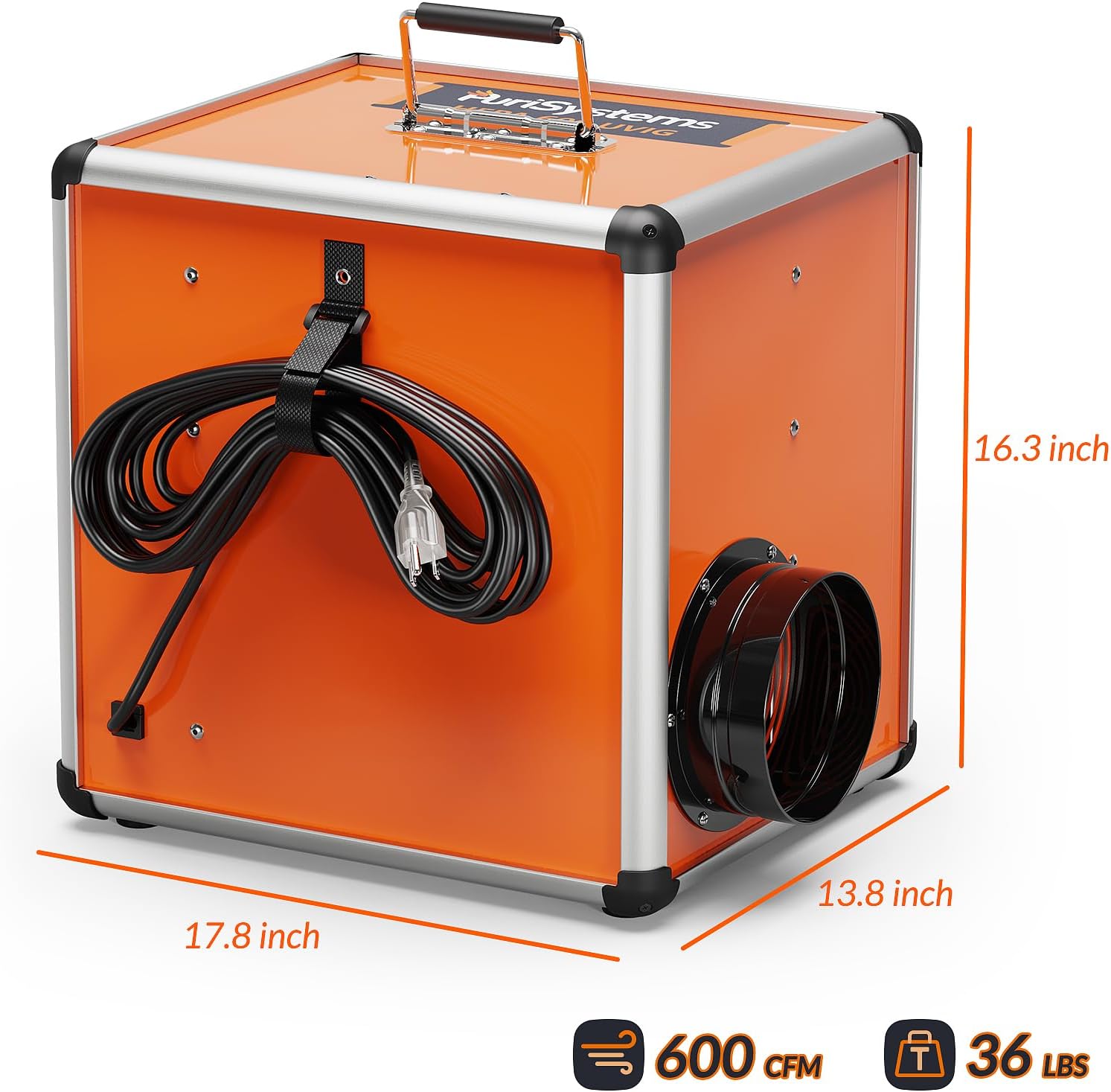
Professional air scrubbers use HEPA filtration to capture microscopic particles that standard HVAC filters cannot.
After a plumbing leak, air scrubbing helps:
- Capture airborne spores during demolition
- Reduce particle spread to clean areas
- Improve indoor air quality
- Support containment efforts
- Lower airborne moisture-related contaminants
In Palm Bay homes, where humidity is already high, this filtration becomes even more important.
But air scrubbing is not always straightforward.
The Unique Challenges in Palm Bay Properties
Florida conditions add layers of complexity to air scrubbing.
1. High Ambient Humidity
Palm Bay’s natural humidity means indoor air often holds excess moisture even before a leak occurs.
When air scrubbers run, they circulate air rapidly.
If humidity isn’t controlled at the same time, airborne particles can remain active longer.
That’s why air scrubbing must be paired with dehumidification.
2. HVAC Systems Running Constantly
In Cocoa and Melbourne, AC systems operate nearly year-round.
After a plumbing leak, contaminated air can already be circulating through ductwork before remediation begins.
Air scrubbing must account for:
- HVAC shutoff or isolation
- Duct cleaning evaluation
- Pressure balance within containment zones
If not handled correctly, spores can move beyond the affected room.
3. Slab Foundations and Hidden Moisture
Many Palm Bay homes sit on slab foundations.
Plumbing leaks beneath slabs create moisture that rises slowly and invisibly.
Even after visible water is addressed, trapped moisture can continue releasing particles into the air.
Air scrubbing without thorough moisture detection can give a false sense of resolution.
4. Wall Cavity Contamination
Leaks inside walls create internal microbial growth.
When drywall is removed, spores become airborne instantly.
Proper containment and negative air pressure are essential before air scrubbers are activated.
Without containment, air scrubbing alone cannot prevent cross-contamination.
Why DIY Air Purifiers Don’t Solve the Problem
After plumbing leaks, some homeowners purchase portable air purifiers.
While helpful for basic dust control, they:
- Do not create negative air pressure
- Do not isolate contaminated areas
- Often lack true HEPA filtration standards
- Cannot manage heavy particle loads
Professional air scrubbers are designed specifically for restoration environments.
They operate at higher airflow volumes and are built to handle post-leak contamination levels.
How Professionals Approach Air Scrubbing After Plumbing Leaks
A structured process is critical.
Step 1: Inspection and Moisture Detection
Moisture meters and thermal imaging identify how far water traveled.
Without this step, air scrubbing may not address the true contamination zone.
Step 2: Containment Setup
Plastic barriers isolate affected areas.
Negative air machines prevent contaminated air from spreading.
This is especially important in occupied homes in Merritt Island and Sanford.
Step 3: Controlled Demolition
Damaged drywall and insulation are removed carefully.
Air scrubbers run continuously during this process to capture airborne debris.
Step 4: HEPA Filtration and Air Cycling
Air scrubbers circulate indoor air multiple times per hour.
This significantly reduces airborne spore concentration.
Step 5: Dehumidification Integration
Air scrubbing alone does not remove moisture.
Dehumidifiers are deployed simultaneously to:
- Lower indoor humidity
- Stabilize building materials
- Reduce spore activity
This combination is essential in Palm Bay’s humid environment.
The Role of Air Scrubbing in Preventing Secondary Mold Growth
One of the biggest risks after plumbing leaks in Florida is secondary mold growth.
If airborne spores settle in new damp areas, new colonies can form.
Air scrubbing:
- Reduces airborne spore counts
- Limits cross-room contamination
- Supports cleaner rebuilding conditions
Local experience matters here. Companies familiar with Palm Bay’s humidity patterns, like Inspections and More FL, understand that moisture and air quality must be handled together — not separately.
Common Mistakes Property Owners Make
After plumbing leaks, it’s common to:
- Focus only on visible water damage
- Skip air quality evaluation
- Restart HVAC systems too early
- Avoid containment setup
- Assume drying equals cleanliness
In Florida climates, moisture spreads differently than in dry states.
Air scrubbing is not just about comfort — it’s about preventing ongoing microbial circulation.
Preventing Air Quality Issues After Plumbing Leaks
Property owners in Palm Bay and nearby areas can reduce risk by:
- Addressing plumbing leaks immediately
- Avoiding DIY demolition without containment
- Scheduling professional moisture evaluations
- Monitoring indoor humidity levels
- Having HVAC systems checked after water incidents
Rental properties and older homes in Cocoa and Melbourne may require extra vigilance due to aging infrastructure.
Why Local Experience in Palm Bay Matters
Air scrubbing strategies must account for:
- Coastal humidity
- Salt air corrosion
- Slab construction
- Year-round AC usage
- Storm-related moisture history
A property in Palm Bay behaves differently than one in a dry inland climate.
Understanding these environmental factors ensures air scrubbing isn’t used as a standalone fix but as part of a comprehensive moisture control plan.
A Practical Perspective After a Leak
Plumbing leaks are stressful. But the long-term impact depends on how the response is handled.
In Palm Bay, simply drying visible water is not enough.
Airborne contamination must be addressed — carefully and methodically.
When air scrubbing is combined with containment, moisture detection, dehumidification, and source repair, indoor air can return to stable, healthy conditions.
Florida humidity makes the process more challenging — but with the right approach, those challenges can be managed effectively.