
Understanding Moisture Detection Challenges in Merritt Island After Plumbing Leaks
Plumbing leaks in Merritt Island homes don’t always show themselves clearly. Sometimes it’s a slow drip inside a wall. Sometimes it’s a small supply line failure under a sink. Other times, it’s a drain line that backs up just enough to dampen surrounding materials.
The pipe gets repaired. The visible water is cleaned up. The area looks dry.
But in Florida’s coastal climate, what looks dry and what is dry are often two very different things.
Moisture detection after plumbing leaks in Merritt Island comes with unique challenges. High humidity, slab foundations, salt air exposure, and long AC operating seasons all affect how moisture behaves — and how difficult it can be to track.
Let’s break down why detecting hidden moisture in this area requires a careful, measured approach.
Why Plumbing Leaks Are More Complicated in Coastal Florida
Merritt Island properties face environmental conditions that slow natural drying:
- High year-round humidity
- Warm evenings that prevent evaporation
- Frequent afternoon storms
- Slab-on-grade construction
- Elevated groundwater in certain areas
- Long cooling seasons with steady AC operation
When a plumbing leak occurs, building materials absorb moisture quickly. But releasing that moisture takes time — especially when outdoor humidity remains high.
That’s where detection becomes critical.
The Problem With “It Looks Dry”
After a plumbing repair, many homeowners rely on visual inspection.
If the wall no longer feels wet and the stain appears lighter, it’s easy to assume the issue has resolved.
But moisture can remain trapped in:
- Insulation inside the wall cavity
- Wood framing behind drywall
- Subflooring beneath tile or hardwood
- Slab edges
- Ceiling cavities below upstairs plumbing
In Merritt Island’s humidity, these areas may stay damp long enough to create recurring issues if not identified early.
Common Moisture Detection Challenges in Merritt Island
1. High Ambient Humidity Masks Readings
Because indoor humidity is often elevated in coastal Florida, distinguishing between environmental moisture and leak-related moisture can be tricky.
Technicians must compare baseline readings from unaffected areas to suspected zones.
Without this comparison, it’s easy to misinterpret data.
2. Slab Moisture Interference
Many Merritt Island homes are built on concrete slabs.
After a plumbing leak near the floor, moisture can migrate downward and combine with natural slab vapor transmission.
Separating plumbing-related moisture from slab vapor requires experience and multiple measurement techniques.
3. Moisture Migration Along Framing
Water doesn’t always stay where it begins.
It can travel horizontally along framing members or vertically through wall cavities.
A small leak behind a bathroom wall may affect adjacent rooms before visible symptoms appear.
Thermal imaging helps trace these patterns — but interpretation matters.
4. AC Condensation Complicates Diagnosis
In some cases, what appears to be a plumbing leak may actually involve AC condensation or drain line issues.
Merritt Island’s long AC cycles increase the likelihood of overlapping moisture sources.
Professionals must confirm the true origin before beginning drying.
5. Multi-Level Moisture Spread
In two-story homes, plumbing leaks upstairs can impact:
- Ceiling cavities below
- Insulation layers
- Light fixtures
- Wall intersections
Thermal imaging must include adjacent rooms and lower levels.
How Professional Moisture Detection Works
Step 1: Visual Assessment
Inspectors look for:
- Staining
- Warping
- Paint bubbling
- Baseboard swelling
- Soft drywall
This establishes visible boundaries.
Step 2: Thermal Imaging Scan
Infrared cameras identify temperature differences that suggest evaporative cooling.
These cooler patterns indicate possible damp areas.
Thermal imaging guides further testing — it does not confirm moisture alone.
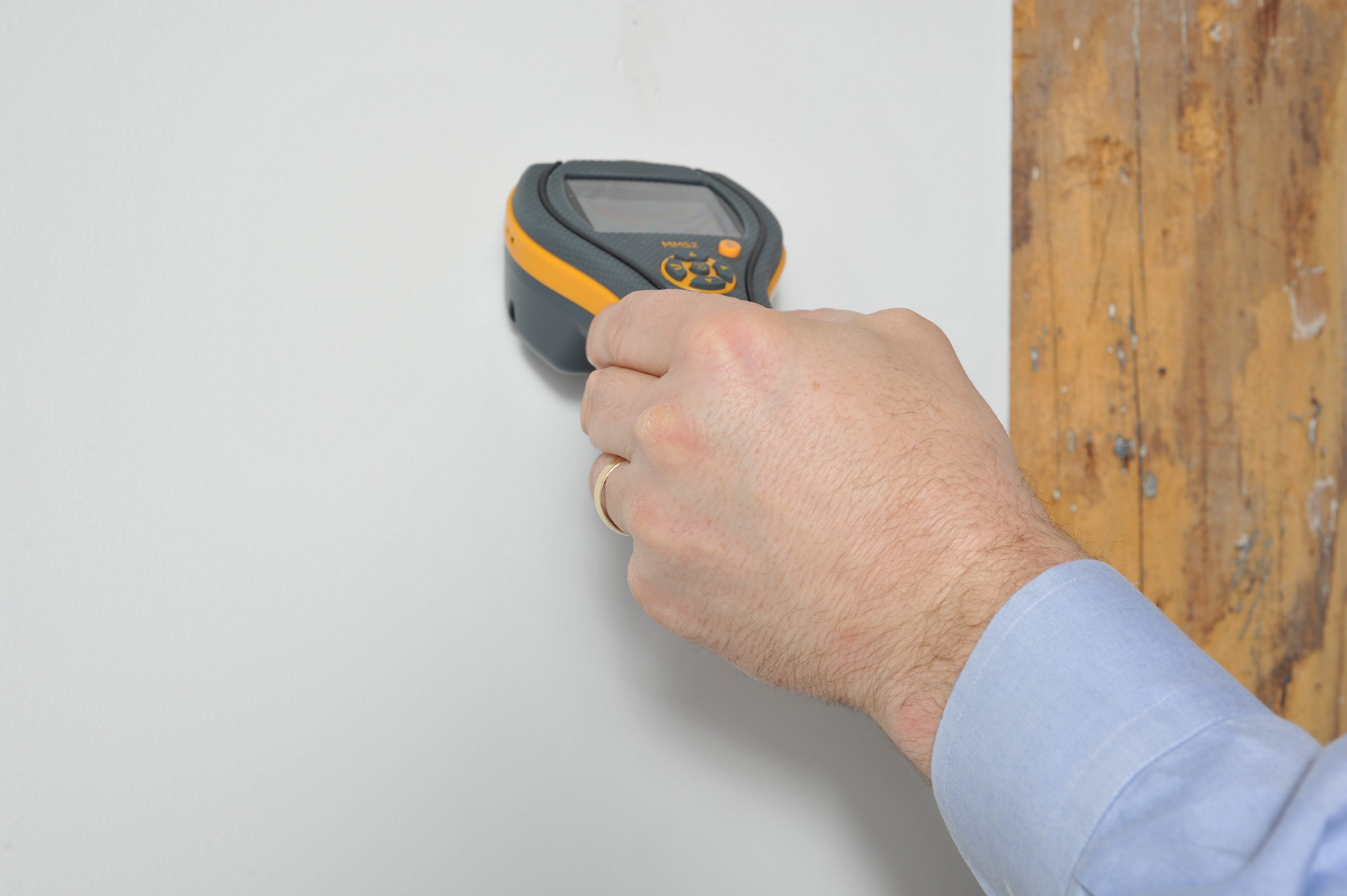
Step 3: Moisture Meter Verification
Suspected areas are tested with moisture meters.
Both pin-type and non-invasive meters may be used to confirm elevated readings.
This step distinguishes between temperature variation and actual moisture presence.
Step 4: Baseline Comparison
Technicians compare readings from unaffected areas to determine what is abnormal.
Because Florida homes naturally hold more ambient moisture, baseline comparison is essential.
Step 5: Full Scope Mapping
Walls, ceilings, flooring, and adjacent rooms are tested.
Mapping defines the true footprint of moisture.
Companies like Inspections and More FL emphasize comprehensive mapping because partial inspections often miss hidden spread in Florida’s climate.
Why Early Detection Prevents Larger Problems
When moisture remains active:
- Insulation compresses
- Drywall weakens
- Wood framing stays damp
- Musty odors develop
- Mold growth becomes possible
Early detection allows controlled drying before materials deteriorate.
In Merritt Island, delays increase both scope and cost.
What Happens After Moisture Is Confirmed
Source Verification
Plumbing systems are checked to ensure the leak is fully resolved.
Without confirmation, drying efforts may be wasted.
Targeted Drying
Dehumidifiers and air movers are installed strategically.
Indoor environments are sealed to prevent humid outdoor air from re-entering.
Monitoring
Moisture readings are tracked daily.
Drying continues until levels return to acceptable ranges.
Stopping equipment too soon increases recurrence risk.
Final Verification
Before closing walls or replacing materials, moisture levels are documented.
This step protects against repeat issues.
Why DIY Approaches Often Fall Short
Common mistakes after plumbing leaks include:
- Using household fans only
- Opening windows in humid weather
- Assuming tile floors are waterproof
- Ignoring adjacent rooms
- Skipping moisture testing
In coastal Florida, these shortcuts often lead to recurring damage.
Long-Term Prevention in Merritt Island
After resolving a plumbing leak, homeowners should:
- Monitor indoor humidity
- Inspect baseboards periodically
- Maintain AC systems annually
- Flush condensate drain lines
- Inspect plumbing connections regularly
- Schedule follow-up moisture readings if unsure
Proactive monitoring reduces long-term risk.
Why Local Experience Matters
Moisture detection in Merritt Island requires understanding:
- Coastal humidity patterns
- Slab-on-grade construction behavior
- AC condensation overlap
- Storm-driven moisture intrusion
- Realistic drying timelines in marine environments
Local professionals recognize how these factors affect interpretation and drying strategy.
A Practical Next Step
If your Merritt Island home has experienced a plumbing leak — even a minor one — don’t rely solely on surface dryness.
Professional moisture detection ensures hidden damp areas are identified and properly addressed.
In Florida’s coastal climate, early detection protects structural integrity, prevents mold development, and keeps repair costs manageable.
The plumbing repair stops the leak.
Moisture detection confirms the structure is truly stable.
