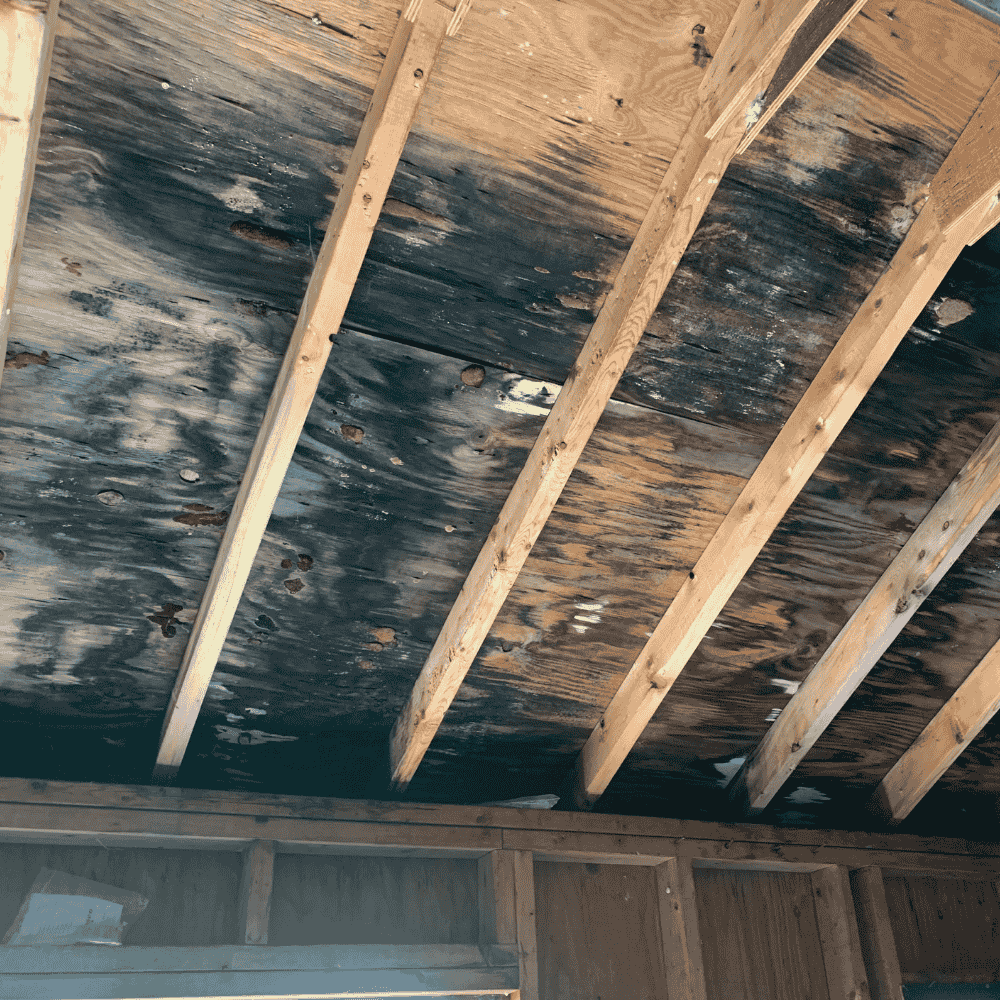
Understanding Mold Encapsulation Challenges in Merritt Island in Waterfront Homes
Waterfront living in Merritt Island comes with incredible views of the Banana River, Sykes Creek, and the Indian River Lagoon. But with that coastal lifestyle comes a constant reality — moisture is never far away.
In waterfront homes, mold issues don’t always stop once visible growth is removed. Even after proper cleaning and drying, structural materials may remain vulnerable. That’s where mold encapsulation comes in.
But encapsulation in Merritt Island waterfront homes presents unique challenges. Coastal humidity, salt air, high water tables, and storm exposure all influence how and when encapsulation should be used.
What Mold Encapsulation Actually Is
Mold encapsulation is a protective step used after proper mold remediation and structural drying.
It involves applying a specialized coating to structural surfaces such as:
- Roof decking
- Wooden framing
- Subfloor components
- Crawl space joists
The purpose is to:
- Seal treated surfaces
- Lock down residual staining
- Add a moisture-resistant barrier
- Reduce the chance of future microbial reactivation
Encapsulation is not a substitute for mold removal. It is used only after contamination has been properly addressed.
In Merritt Island waterfront homes, it often becomes part of long-term moisture management.
Why Waterfront Homes in Merritt Island Present Added Challenges
Merritt Island properties face consistent moisture pressure from multiple directions.
Constant Coastal Humidity
Even on dry days, lagoon-side homes experience elevated ambient moisture. Attics, crawl spaces, and wall cavities rarely stay completely dry year-round.
Encapsulated surfaces must withstand ongoing humidity exposure.
High Water Tables
Groundwater levels remain high in many waterfront neighborhoods. Crawl spaces and slab edges absorb moisture upward, increasing humidity beneath flooring systems.
If moisture sources are not fully corrected, encapsulation alone will not prevent recurrence.
Salt Air Exposure
Salt accelerates corrosion of fasteners, vents, and mechanical systems. Over time, salt exposure may affect ventilation balance, increasing interior moisture levels.
Storm-Driven Rain
Wind-driven rain during hurricane season can introduce moisture into attics and exterior walls.
Encapsulation applied without correcting intrusion points will not solve ongoing water entry.
These environmental pressures make careful preparation critical.
Where Encapsulation Is Commonly Used in Waterfront Homes
In Merritt Island properties, encapsulation is often applied in:
Attics
After roof leaks or long-term condensation issues, roof decking and trusses may be cleaned and sealed.
Crawl Spaces
Raised waterfront homes often benefit from encapsulated joists and subfloor framing after moisture issues are corrected.
Slab-Adjacent Framing
Perimeter wall bases exposed to groundwater migration may require protective sealing after remediation.
Exterior-Facing Walls
Storm intrusion can affect framing behind siding or stucco systems.
Each area presents different humidity and ventilation conditions that influence encapsulation performance.
Common Challenges During Encapsulation
Encapsulation sounds straightforward, but several obstacles frequently arise in waterfront homes.
Moisture Not Fully Stabilized
If structural materials still contain elevated moisture levels, encapsulant coatings may fail to bond properly.
In Merritt Island’s humid climate, drying timelines are often longer than expected.
Ongoing Humidity Exposure
If attic or crawl space ventilation remains inadequate, humidity will continue to stress sealed surfaces.
Encapsulation without ventilation improvement can lead to trapped moisture elsewhere.
Hidden Intrusion Points
Small roof flashing gaps or exterior seal failures may continue introducing moisture after encapsulation is completed.
Without correcting entry points, recurrence remains possible.
Surface Preparation
Salt air exposure can leave residue on structural wood. Surfaces must be properly cleaned before encapsulant application.
Skipping this step reduces long-term effectiveness.
How Professionals Address These Challenges
Proper encapsulation in Merritt Island waterfront homes follows a structured process.
Step 1: Thorough Moisture Detection
Professionals measure:
- Wood moisture content
- Humidity levels in attic or crawl space
- Evidence of active intrusion
Encapsulation only proceeds once moisture levels fall within safe ranges.
Step 2: Correcting the Source
Roof repairs, ventilation adjustments, plumbing corrections, or drainage improvements are completed before sealing surfaces.
Step 3: Cleaning and Remediation
Contaminated materials are removed when necessary. Structural framing is cleaned using professional methods.
Step 4: Structural Drying
Air movers and dehumidifiers reduce moisture content to stable levels.
Step 5: Encapsulant Application
Protective coatings are applied evenly to cleaned and dried surfaces.
Step 6: Ventilation and Monitoring
Attic or crawl space airflow is reviewed to ensure long-term stability.
Professionals experienced in Merritt Island coastal conditions, such as Inspections and More FL, understand how lagoon proximity influences humidity control and drying expectations.
Why Encapsulation Protects Waterfront Properties
When done correctly, encapsulation offers several protective benefits.
Stabilizes Structural Surfaces
Sealed wood framing resists future moisture absorption.
Improves Indoor Air Quality
Reducing exposed porous surfaces lowers the chance of airborne contamination.
Supports Long-Term Moisture Management
Encapsulation works alongside ventilation and dehumidification systems.
Preserves Property Value
Waterfront homes represent major investments. Structural protection maintains long-term integrity.
In Florida’s coastal climate, preventative measures often matter more than reactive ones.
Preventing Recurring Issues After Encapsulation
For Merritt Island homeowners, encapsulation should be part of a broader plan.
Recommended steps include:
- Monitoring indoor humidity (45–55% target range)
- Ensuring attic and crawl space ventilation is functioning properly
- Inspecting roofs after storms
- Servicing HVAC systems regularly
- Checking exterior seals near windows and doors
- Scheduling periodic moisture evaluations
Homes in nearby Cocoa and Melbourne face similar humidity exposure, but Merritt Island’s waterfront location increases groundwater influence and air moisture levels.
Proactive monitoring reduces repeat issues.
Why Local Coastal Experience Matters
Encapsulation in dry climates behaves differently than in humid coastal Florida.
Professionals familiar with Merritt Island understand:
- Tidal moisture patterns
- Hydrostatic pressure effects
- Salt air corrosion impact
- Storm-driven intrusion behavior
- Extended drying timelines
Without local knowledge, encapsulation may be applied prematurely or without addressing underlying causes.
Experience ensures the process protects rather than masks problems.
A Practical Perspective for Waterfront Homeowners
Mold encapsulation in Merritt Island waterfront homes can be an effective protective step — but only when used correctly.
It must follow:
- Accurate moisture detection
- Source correction
- Proper cleaning
- Thorough structural drying
In a coastal climate where humidity is constant and storms are seasonal realities, moisture control is ongoing.
With structured inspection, informed encapsulation, and continued humidity management, Merritt Island waterfront homes can remain structurally stable and protected — even in one of Florida’s most moisture-prone environments.