Understanding Mold Encapsulation Challenges in Merritt Island When Indoor Air Feels Damp
If indoor air feels damp in your Merritt Island home, that sensation is usually telling you something important. It may not be visible yet. There may be no obvious leak. But the air feels heavy. Closets smell slightly musty. AC runs longer than usual. Wood trim feels swollen.
In coastal communities like Merritt Island — and nearby Cocoa, Melbourne, Palm Bay, and even inland toward Sanford — persistent humidity creates conditions where mold can develop quietly. When mold appears on framing, attic sheathing, or crawl space joists, mold encapsulation is often recommended.
But encapsulation in a humid island environment comes with specific challenges. If indoor air still feels damp, simply coating surfaces is not enough. The moisture problem must be addressed first.
Understanding those challenges helps homeowners make informed decisions and avoid recurring issues.
What the Issue Really Is
Mold encapsulation involves cleaning affected structural surfaces and applying a specialized sealant designed to inhibit future mold growth. It is commonly used on:
- Crawl space floor joists
- Subflooring
- Attic roof decking
- Structural beams
- Framing members
Encapsulation is appropriate when mold has affected wood surfaces but structural integrity remains intact.
However, when indoor air feels damp, it often signals elevated humidity levels. If humidity remains high, encapsulation alone will not stop mold from returning.
Moisture is always the driving factor.
Why This Happens So Often in Merritt Island
Merritt Island’s environmental conditions make humidity control more complicated than in inland areas.
Surrounded by Water
The Indian River Lagoon and Banana River keep ambient humidity elevated year-round.
High Water Table
Ground moisture increases vapor pressure beneath slab foundations and crawl spaces.
Frequent Storms
Heavy rains saturate soil and keep moisture levels elevated long after weather clears.
Warm Temperatures
Heat accelerates microbial growth when moisture is present.
AC Duct Condensation
Cold ducts in hot attics create condensation when insulation is inadequate.
When indoor air feels damp, it often reflects a broader moisture imbalance throughout the structure.
Encapsulation without correcting humidity is a temporary measure.
Common Signs Property Owners Notice
Homeowners in Merritt Island often report:
- Musty indoor odors
- Slightly sticky air
- Visible mold on crawl space wood
- Dark staining on attic sheathing
- Increased indoor humidity readings
- Warped baseboards
- AC running constantly
These signs indicate excess moisture in the building envelope.
When damp air persists, mold encapsulation becomes more complex.
Hidden or Overlooked Moisture Sources
Before encapsulation is considered, moisture sources must be identified.
Common hidden contributors include:
- Ground vapor entering crawl spaces
- Poor attic ventilation
- Leaking duct connections
- Blocked AC drain lines
- Minor roof flashing failures
- Slab vapor migration
- Bathroom exhaust fans venting into attics
If these conditions remain unresolved, encapsulated surfaces may still be exposed to ongoing humidity.
Moisture detection is often necessary before encapsulation begins.
Why DIY Encapsulation Usually Fails
Some property owners attempt to apply mold-resistant paint or coatings themselves.
This often leads to recurring problems.
Surface Cleaning Is Not Enough
Mold roots can remain embedded in porous wood.
Moisture Is Not Corrected
Without dehumidification, humidity remains high.
Incomplete Coverage
Improper sealing leaves exposed surfaces.
Airflow Imbalance
Poor ventilation continues feeding damp conditions.
In Merritt Island’s climate, encapsulation must be part of a comprehensive moisture control plan.
Professional Inspection & Detection Explained
Before encapsulating mold-affected surfaces, a thorough evaluation is necessary.
In Merritt Island homes, this typically includes:
Visual Inspection
Assessing crawl spaces, attics, and structural framing.
Moisture Meter Testing
Measuring wood moisture content.
Hygrometer Readings
Monitoring indoor and crawl space humidity levels.
Thermal Imaging
Identifying hidden moisture pockets.
Ventilation Assessment
Ensuring proper airflow balance.
Inspections and More FL often identifies elevated humidity in areas homeowners were unaware of, especially beneath floors and inside attic insulation.
Encapsulation decisions should be based on measurable moisture data.
The Science Behind Mold Encapsulation
Encapsulation involves applying a protective coating to cleaned structural surfaces. These coatings:
- Seal porous wood
- Limit oxygen access
- Inhibit mold regrowth
- Create a moisture-resistant barrier
However, coatings do not remove moisture already present inside materials.
If wood moisture content remains elevated, mold may regrow beneath the sealant.
Proper encapsulation requires:
- Complete mold removal
- Structural drying
- Humidity stabilization
- Controlled sealing
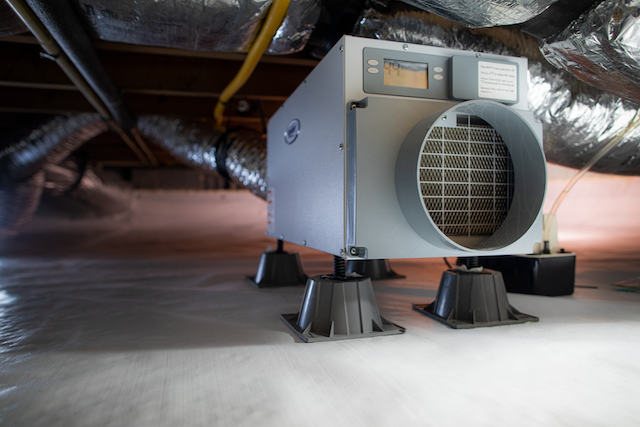
In Merritt Island’s damp climate, dehumidification is often required alongside encapsulation.
Proper Remediation & Moisture Control Process
An effective encapsulation project typically includes:
Source Correction
Fixing leaks, drainage issues, or ventilation failures.
Containment
Preventing spore spread during cleaning.
Safe Mold Removal
Cleaning affected structural surfaces.
Structural Dryouts
Using air movers and dehumidifiers to lower moisture content.
HEPA Air Scrubbing
Capturing airborne spores.
Encapsulation Coating Application
Sealing treated surfaces.
Dehumidifier Installation (if needed)
Maintaining humidity below 55%.
Ongoing Monitoring
Ensuring long-term moisture stability.
Encapsulation is most successful when humidity is consistently controlled.
How to Prevent Damp Indoor Air After Encapsulation
To prevent recurring issues, Merritt Island homeowners can:
- Install crawl space dehumidifiers
- Seal vapor barriers beneath homes
- Improve attic ventilation
- Insulate ductwork properly
- Maintain AC systems regularly
- Monitor indoor humidity with hygrometers
- Schedule annual moisture inspections
Homes in Cocoa, Melbourne, Palm Bay, and Sanford face similar humidity pressures, though coastal exposure intensifies Merritt Island’s moisture load.
Prevention is always more effective than repeat remediation.
Why Local Florida Experience Matters
Encapsulation in Florida is different than in dry climates.
Merritt Island’s:
- Elevated dew points
- Coastal exposure
- High groundwater
- Frequent storms
- Warm temperatures year-round
… create sustained moisture pressure on structural materials.
Professionals familiar with local building styles understand how crawl spaces, slab foundations, and attic systems interact with humidity.
Inspections and More FL approaches mold encapsulation with this localized awareness — focusing on long-term moisture balance rather than surface treatment alone.
Experience ensures encapsulation remains effective.
A Calm, Practical Next Step
If indoor air feels damp in your Merritt Island home and you suspect mold in structural areas, the first step is evaluating moisture levels.
Encapsulation can be highly effective — but only when humidity is under control.
Addressing moisture first prevents recurring growth and protects structural integrity.
Island living means constant exposure to humidity.
But with proper detection, drying, and encapsulation, your home can remain stable and protected year-round.
x