
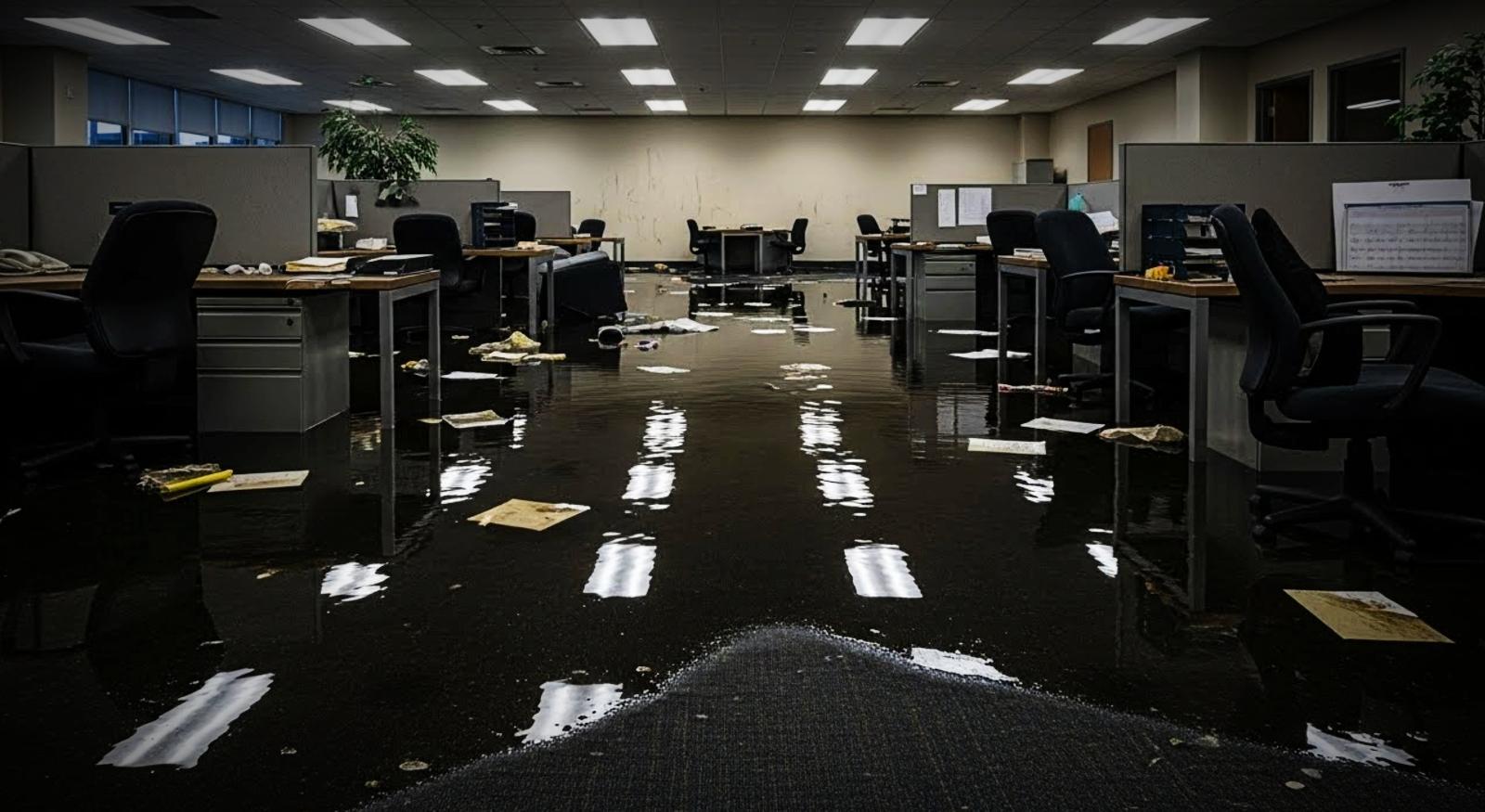
Understanding Structural Dryout Challenges in Sanford Inside Commercial Buildings
Structural dryouts inside commercial buildings in Sanford are rarely simple.
Unlike single-family homes, commercial spaces involve larger square footage, multiple tenants, complex HVAC systems, and tighter operational timelines. When water intrusion occurs — whether from roof failures, plumbing breaks, storm damage, or HVAC condensation — the drying process must be thorough, measured, and carefully managed.
In Central Florida’s humid climate, drying commercial structures becomes even more challenging.
Let’s take a closer look at why structural dryouts in Sanford commercial properties require a specialized approach and what building owners and property managers should understand.
Why Commercial Buildings in Sanford Face Unique Moisture Risks
Sanford’s environment includes:
- High year-round humidity
- Heavy seasonal rain
- Frequent afternoon storms
- Long cooling seasons
- Warm nighttime temperatures
Commercial properties add additional factors:
- Flat or low-slope roofing systems
- Rooftop HVAC units
- Large open ceiling cavities
- Shared plumbing lines
- Multiple occupancy schedules
- Limited downtime for repairs
Water intrusion in commercial settings often spreads farther and affects more systems than in residential properties.
Common Causes of Commercial Structural Moisture
Structural dryouts are typically triggered by:
1. Roof Failures on Flat Roofing Systems
Flat or low-slope roofs are common in Sanford commercial buildings.
Minor membrane breaches or clogged drains can allow water to pool and eventually penetrate insulation and ceiling cavities.
Because these systems often sit above large open areas, moisture can spread widely before detection.
2. HVAC Condensation and Drain Line Failures
Large commercial HVAC systems generate significant condensation.
Clogged drain lines or rusted pans can introduce moisture into ceiling plenums and wall cavities.
3. Plumbing Failures
Shared plumbing stacks in multi-unit spaces can affect multiple suites.
Water often travels through framing and drops into lower levels before being discovered.
4. Storm-Driven Intrusion
Wind-driven rain during Florida storms may enter around storefront windows, roof edges, or mechanical penetrations.
Repeated minor intrusion creates cumulative moisture impact.
5. Slab Moisture in Ground-Level Units
Older commercial slabs may allow vapor transmission, especially after heavy rain events.
Flooring adhesives and subfloor materials can be affected.
Why Structural Dryouts Are More Complicated in Commercial Buildings
Larger Drying Footprints
Commercial spaces often have expansive open areas.
Moisture spreads across ceiling cavities and floor systems more easily.
Mapping the full extent takes careful inspection.
Operational Constraints
Businesses may remain open during drying.
Noise, equipment placement, and containment must be managed around employees and customers.
HVAC Complexity
Commercial HVAC systems may circulate air across multiple zones.
Drying plans must account for airflow patterns to prevent cross-contamination.
Ceiling Plenums and Drop Ceilings
Moisture trapped above drop ceilings is common.
Water may pool on ceiling tiles while insulation and structural decking remain damp.
Removing ceiling sections for inspection is often necessary.
Extended Drying Timelines
Sanford’s humidity slows evaporation.
Larger structures require more equipment and longer monitoring periods.
Step-by-Step: How Structural Dryouts Are Handled in Commercial Spaces
Step 1: Comprehensive Moisture Mapping
Professionals identify:
- Wet drywall and insulation
- Ceiling plenum moisture
- Structural steel or wood saturation
- Slab vapor influence
- HVAC-related moisture
Thermal imaging, moisture meters, and humidity readings define the full footprint.
Accurate mapping prevents incomplete drying.
Step 2: Source Correction
Roof repairs, plumbing fixes, or HVAC adjustments must occur first.
Drying without correcting the source leads to repeat issues.
Step 3: Targeted Material Removal
Saturated ceiling tiles, insulation, or drywall may require removal.
Selective demolition improves airflow and prevents hidden moisture retention.
Early action limits broader disruption.
Step 4: Equipment Deployment
Commercial-grade dehumidifiers and air movers are placed strategically.
In larger spaces, equipment numbers increase significantly.
Negative air setups may be used when contamination is involved.
Indoor environments are sealed to prevent humid outdoor air from entering.
Step 5: Continuous Monitoring
Moisture readings are tracked daily.
Sanford’s humidity means drying cannot rely on time alone.
Verification ensures materials reach acceptable levels before reconstruction.
Companies like Inspections and More FL emphasize measurement-based drying because Florida’s climate demands precision.
Step 6: Final Verification Before Rebuild
Moisture levels are documented prior to replacing ceiling tiles, drywall, or flooring.
Skipping verification increases the chance of recurrence and operational disruption later.
The Financial Impact of Delayed Drying
If structural drying is delayed in a commercial building:
- Mold growth may develop
- Ceiling systems may require full replacement
- Flooring adhesives may fail
- Business operations may be disrupted longer
- Insurance claims may expand
Quick response reduces overall downtime and cost.
Why Early Detection Saves Commercial Properties
Early moisture detection:
- Limits demolition
- Shortens drying timelines
- Reduces equipment needs
- Minimizes business interruption
- Protects structural components
In Sanford’s humid environment, proactive inspections after storms or plumbing events prevent larger remediation projects.
Long-Term Prevention for Commercial Properties
Building owners can reduce structural moisture risk by:
- Inspecting roofs quarterly
- Cleaning roof drains regularly
- Maintaining HVAC systems
- Monitoring indoor humidity
- Inspecting ceiling plenums periodically
- Scheduling moisture evaluations after major storms
Routine inspections cost far less than emergency structural dryouts.
Why Local Experience Matters
Structural dryouts in Sanford commercial buildings require understanding:
- Central Florida humidity cycles
- Flat-roof moisture behavior
- Commercial HVAC airflow dynamics
- Slab-on-grade vapor transmission
- Realistic drying timelines in humid air
Local professionals recognize patterns specific to this region and adjust drying strategies accordingly.
A Practical Next Step
If your Sanford commercial building has experienced water intrusion — even minor roof leaks or condensation issues — don’t assume visible drying is sufficient.
A professional structural moisture evaluation ensures hidden areas are identified and properly dried.
In Florida’s climate, moisture doesn’t resolve quickly on its own.
Early action protects your building’s structure, reduces downtime, and keeps operational disruptions manageable.
