
Why Mold Remediation Becomes Necessary in Palm Bay After Roof Failures
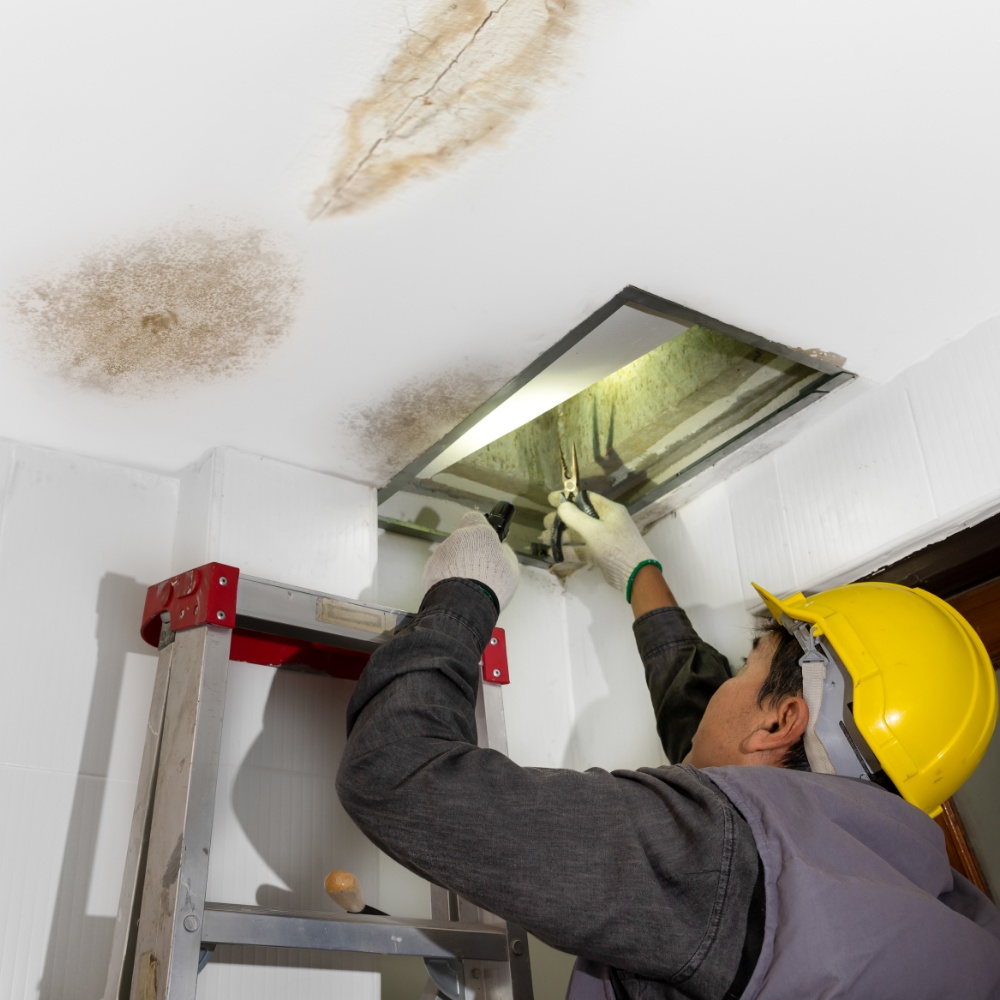
Roof failures in Palm Bay rarely stay confined to the roof.
What begins as lifted shingles during a storm, a cracked flashing seal, or ponding water on a low-slope section often turns into something much larger inside the home. In Florida’s humid coastal climate, even a short period of roof leakage can create the perfect conditions for mold growth.
That’s why mold remediation frequently becomes necessary after roof failures in Palm Bay. It’s not just about fixing shingles — it’s about correcting the moisture intrusion that follows.
Let’s break down why roof failures in Palm Bay often lead to mold issues and what homeowners should understand about the remediation process.
Why Roof Failures Are So Common in Palm Bay
Palm Bay properties face unique roofing stressors:
- Heavy rainstorms
- Tropical systems
- High winds
- Intense UV exposure
- Salt-heavy coastal air
- Rapid temperature fluctuations
Over time, these conditions weaken roofing materials. Even well-installed systems can develop vulnerabilities.
Common roof-related failures include:
- Missing or lifted shingles
- Cracked flashing around vents
- Damaged roof penetrations
- Flat roof membrane punctures
- Clogged gutters causing backup
When water penetrates through the roofing system, it rarely drips straight down and stops.
It spreads.
How Water Spreads After a Roof Failure
After a leak begins, water can travel:
- Across attic decking
- Along rafters
- Down wall cavities
- Into ceiling insulation
- Behind drywall
- Toward slab edges
By the time a ceiling stain appears in one room, moisture may already be present in adjacent areas.
In Palm Bay’s humid environment, that moisture doesn’t dry quickly.
And when materials remain damp for 24–72 hours, mold growth can begin.
Attic Spaces: The First Area Affected
In many Palm Bay homes, attic spaces show the earliest signs of mold after roof failures.
Moisture saturates:
- Roof decking
- Rafters
- Insulation
- Ventilation areas
Attics are warm — especially during Florida summers. Warmth combined with moisture creates ideal conditions for mold colonization.
Because attic spaces are rarely inspected daily, mold can spread across decking before homeowners realize there’s a problem.
Fixing the roof alone does not eliminate mold growth that has already developed.
Ceiling and Wall Contamination
Once attic materials are saturated, moisture moves downward.
Common interior impacts include:
- Ceiling drywall softening
- Peeling paint
- Sagging drywall joints
- Wall cavity moisture
- Musty odors
In slab foundation homes common in Palm Bay, moisture may settle along lower walls as well.
If left untreated, mold can grow behind drywall long before it becomes visible.
Remediation becomes necessary to address hidden contamination.
Why Palm Bay’s Climate Makes Mold Growth Faster
Palm Bay’s coastal environment accelerates mold development.
Contributing factors include:
- High year-round humidity
- Warm temperatures
- Salt air retaining surface moisture
- Limited natural evaporation
Even after roof repairs are completed, humidity may remain elevated.
That lingering moisture continues feeding mold colonies inside walls or attic spaces.
This is why remediation must focus on both removal and humidity stabilization.
Why Surface Cleaning Isn’t Enough
Some homeowners attempt to clean visible mold with household products.
But after roof failures, contamination often extends beyond what is visible.
Surface cleaning does not address:
- Saturated insulation
- Moisture behind drywall
- Airborne spore spread
- Damp framing materials
Without containment and proper drying, mold can return even after cosmetic repairs.
Professional remediation targets both visible and hidden contamination.
What Proper Mold Remediation Involves
In Palm Bay roof failure cases, remediation typically includes:
Moisture Detection
Identifying all affected areas using meters and thermal imaging.
Containment
Isolating contaminated zones to prevent spore spread.
HEPA Air Scrubbing
Filtering airborne mold particles during removal.
Removal of Damaged Materials
Saturated drywall and insulation may require removal.
Structural Dryouts
Using air movers and dehumidifiers to restore safe moisture levels.
Anti-Microbial Treatment
Treating exposed framing surfaces after cleaning.
Source Correction
Ensuring roof repairs are properly completed.
Each step is necessary to prevent recurrence.
Skipping drying or containment increases long-term risk.
Slab Foundations and Secondary Moisture
In Palm Bay homes built on slabs, roof leaks sometimes combine with slab vapor intrusion.
After heavy rain:
- Soil moisture rises
- Vapor pressure increases
- Lower drywall absorbs additional dampness
This creates a layered moisture problem.
Even after roof repairs, slab-related humidity may continue affecting interior walls.
Remediation must consider both sources.
Lessons from Local Palm Bay Cases
Common patterns seen after roof failures include:
- Minor attic leaks leading to widespread decking contamination
- Ceiling stains that masked larger wall cavity moisture
- Homes left closed up during storms, trapping humidity
- Delayed repairs leading to expanded mold growth
In several cases, early inspection and drying limited damage significantly.
Delayed action required broader remediation and drywall replacement.
Speed matters in Florida’s climate.
Preventing Mold After Roof Repairs
Once a roof failure is corrected, homeowners in Palm Bay should:
- Schedule moisture inspections
- Monitor attic spaces
- Check indoor humidity (keep below 55%)
- Ensure proper attic ventilation
- Inspect ceilings after heavy rain
- Service HVAC systems regularly
Roof repairs fix the source.
Moisture management prevents recurrence.
Why Local Experience Matters
Roof-related mold issues in Palm Bay are climate-specific.
Professionals familiar with Brevard County understand:
- Storm-season moisture behavior
- Salt air impact on roofing materials
- Slab vapor intrusion patterns
- Construction styles common in Palm Bay
- Drying challenges unique to coastal Florida
Accurate diagnosis ensures remediation addresses the full scope of contamination.
Inspections and More FL works with Palm Bay homeowners who need climate-aware mold remediation strategies tailored to Florida conditions.
When Mold Remediation Becomes Necessary
Mold remediation becomes necessary after roof failures when:
- Moisture remains in structural materials
- Visible mold growth appears
- Musty odors persist
- Insulation becomes saturated
- Humidity levels remain elevated
- Ceiling or wall staining develops
Roof failures in Palm Bay are not uncommon.
But hidden moisture left behind can create lasting damage if not properly addressed.
With timely inspection, controlled drying, containment, and professional remediation, homes can be restored safely and protected from recurring mold issues — even in Florida’s challenging coastal environment.
