Why Structural Dryouts Become Necessary in Melbourne in Older Florida Homes
Older homes in Melbourne carry character — original wood framing, established neighborhoods, mature landscaping, and solid construction. But they also carry something else: decades of exposure to Florida’s humidity, storms, and shifting groundwater.
When hidden water intrusion occurs in an older home, it rarely dries on its own. Materials that have already absorbed years of moisture become even more vulnerable. That’s when structural dryouts become necessary.
In Melbourne, as well as nearby Palm Bay, Cocoa, Merritt Island, and even inland toward Sanford, structural dryouts are not just a response to major flooding. They are often required after smaller leaks in homes built before modern moisture barriers and ventilation standards.
Understanding why dryouts are necessary in older Florida homes helps property owners protect their structure long-term.
What the Issue Really Is
A structural dryout is the controlled removal of moisture from building materials such as:
- Wood framing
- Subflooring
- Concrete slabs
- Drywall
- Insulation
- Roof decking
In older Melbourne homes, moisture may enter through:
- Roof flashing deterioration
- Plumbing leaks inside walls
- Slab vapor migration
- Window seal failures
- AC condensation
- Storm-driven rain
Unlike surface drying with household fans, structural dryouts use specialized equipment to remove moisture embedded deep inside materials.
Without this process, trapped moisture can lead to mold growth, wood rot, and insulation breakdown.
Why This Happens So Often in Older Melbourne Homes
Older Florida homes face moisture challenges for several reasons.
Aging Materials
Sealants, flashing, and roof systems deteriorate over time.
Limited Vapor Barriers
Many older slab foundations were built without modern moisture control systems.
Crawl Space Construction
Some properties have vented crawl spaces that trap humidity.
Inconsistent Insulation
Older duct systems may lack proper insulation, causing condensation.
Long-Term Humidity Exposure
Years of Florida humidity make materials more absorbent.
Homes in Merritt Island and Cocoa built decades ago experience similar conditions, particularly near coastal areas.
When moisture enters these older structures, it often spreads further and dries slower.
Common Signs Structural Dryout Is Needed
Older Melbourne homeowners may notice:
- Persistent musty odors
- Warped wood flooring
- Peeling paint
- Soft spots in subflooring
- Ceiling staining
- Increased indoor humidity
- AC struggling to maintain temperature
Sometimes visible water is no longer present — but materials remain damp inside.
Structural dryout becomes necessary when moisture readings remain elevated after the initial leak is addressed.
Hidden or Overlooked Moisture Zones in Older Homes
In older homes, moisture often accumulates in:
- Wall cavities near exterior siding
- Beneath hardwood flooring
- Along slab edges
- Inside attic insulation
- Around aging plumbing lines
- Under bathroom tile
- Inside crawl space framing
Because materials have absorbed moisture repeatedly over time, drying may take longer.
Professional moisture detection ensures no damp areas remain.
Why DIY Drying Usually Fails
Homeowners often try:
- Running box fans
- Opening windows
- Using small dehumidifiers
While helpful for surface moisture, these methods rarely remove moisture trapped inside framing or subflooring.
Limitations include:
- No measurement of internal moisture content
- No directional airflow into wall cavities
- Humid outdoor air slowing evaporation
- No controlled dehumidification
In Florida’s climate, uncontrolled drying may actually increase indoor humidity.
Structural dryouts require monitored airflow and moisture measurement.
Professional Inspection & Detection Explained
Before initiating a dryout, a structured evaluation is performed.
In Melbourne homes, this typically includes:
Visual Inspection
Checking rooflines, flashing, plumbing areas, and slab edges.
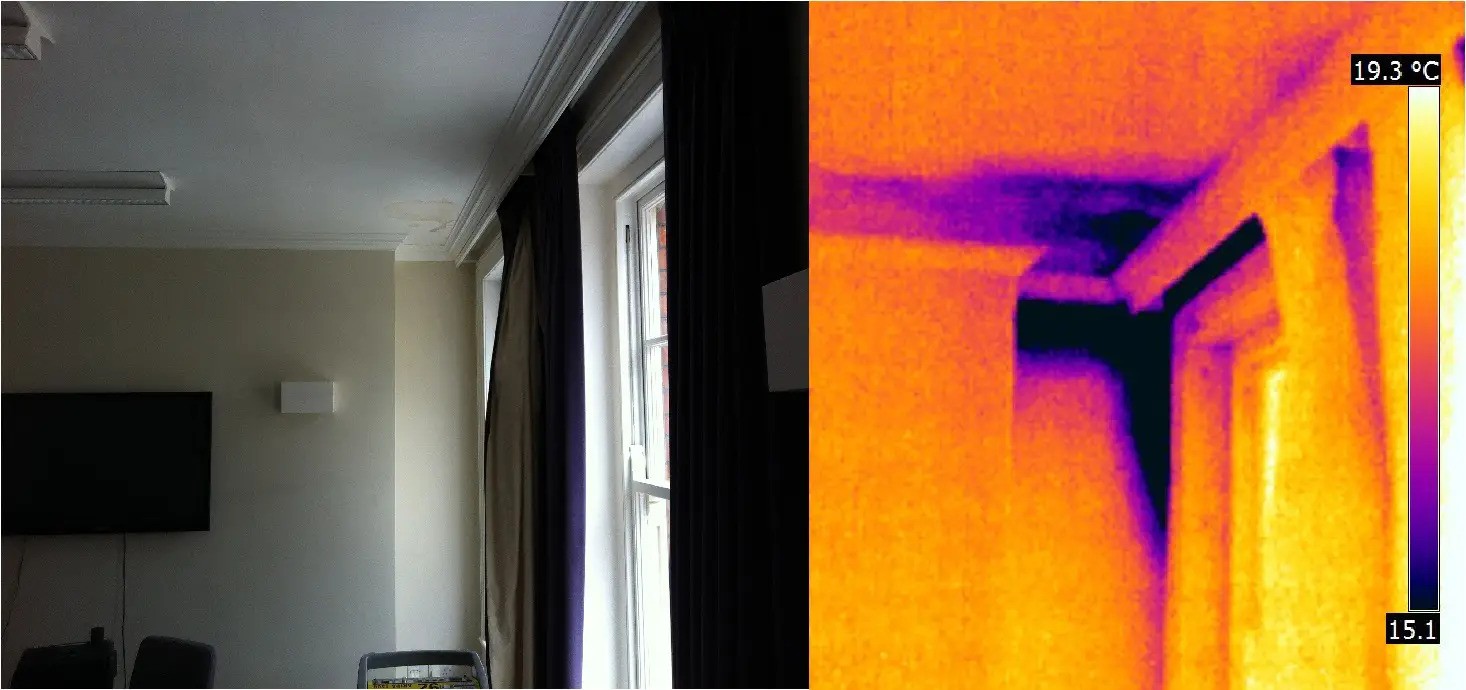
Thermal Imaging
Identifying hidden damp zones behind walls or under flooring.
Moisture Meter Testing
Measuring wood and drywall saturation levels.
Hygrometer Monitoring
Assessing indoor humidity.
HVAC Inspection
Ensuring ducts are not contributing to moisture buildup.
Inspections and More FL often finds elevated moisture inside structural materials long after visible water has dried.
Data determines the scope of the dryout.
The Science Behind Structural Dryouts
Structural drying is based on psychrometrics — the relationship between air temperature, humidity, and moisture evaporation.
The process involves:
- Increasing airflow across damp materials
- Lowering humidity using industrial dehumidifiers
- Creating pressure differences to promote evaporation
- Monitoring moisture content daily
Older wood framing absorbs moisture deeply. Without controlled evaporation, that moisture lingers.
Dryouts restore materials to safe equilibrium moisture content.
In Florida, that balance must be achieved carefully to prevent reabsorption.
What Happens If Structural Dryout Is Skipped
When moisture remains inside older materials, it can lead to:
- Mold growth
- Wood rot
- Fastener corrosion
- Insulation deterioration
- Reduced structural integrity
- Increased energy costs
- Recurring repairs
Older homes are especially vulnerable because materials may already have minor deterioration.
Ignoring embedded moisture often results in larger restoration costs later.
Preventing Future Structural Moisture Problems
Melbourne homeowners can reduce dryout needs by:
- Inspecting roof flashing annually
- Maintaining plumbing systems
- Sealing slab expansion joints
- Installing vapor barriers when possible
- Monitoring indoor humidity (45–55%)
- Inspecting attic insulation after storms
- Maintaining AC systems regularly
Homes in Palm Bay, Cocoa, Merritt Island, and Sanford benefit from similar preventive practices.
Routine moisture detection prevents repeated structural saturation.
Why Local Florida Experience Matters
Structural drying in Florida differs from drier climates.
Melbourne’s:
- Elevated humidity
- Frequent storms
- Coastal air exposure
- Slab and crawl space construction
- Warm temperatures year-round
… create ongoing moisture pressure.
Professionals familiar with Central Florida building styles understand how older materials respond to humidity and how moisture migrates through slabs and framing.
Inspections and More FL approaches structural dryouts with this local knowledge — focusing on complete drying rather than temporary surface fixes.
Experience ensures long-term stability.
A Calm, Practical Next Step
If your older Melbourne home has experienced a leak or persistent humidity and signs of dampness remain, a structured moisture evaluation can determine whether a structural dryout is necessary.
Dryouts are not about overreacting.
They are about ensuring that hidden moisture does not compromise the integrity of older building materials.
In Florida’s climate, moisture rarely disappears without proper intervention.
But with controlled drying and monitoring, older homes can remain stable, safe, and structurally sound for years to come.