
Understanding Anti-Microbial Fogging Challenges in Merritt Island Inside Attic Spaces
Attics in Merritt Island are often out of sight, out of mind—but they are prime locations for mold and microbial growth, especially in older homes or properties affected by roof leaks, high humidity, or storm damage. Anti-microbial fogging is a widely used remediation tool, but applying it effectively in attic spaces comes with unique challenges.
Florida’s coastal climate—with its high humidity, frequent storms, and salt-laden air—creates an environment where microbial growth can develop silently. Understanding the complexities of anti-microbial fogging in attic environments is essential for homeowners, property managers, and maintenance professionals aiming to protect both their structures and indoor air quality.
Why Attic Spaces Are Vulnerable
Attics are uniquely susceptible to mold growth for several reasons:
1. Hidden Moisture Accumulation
- Roof leaks and condensation can saturate insulation, rafters, and plywood sheathing.
- Even small leaks, if left untreated, provide moisture for prolonged periods, creating ideal conditions for mold and bacteria.
2. Poor Ventilation
- Older attic designs or improperly installed ventilation restrict airflow.
- Stagnant air combined with Florida’s high humidity allows spores to proliferate and settle in hidden corners.
3. Temperature Fluctuations
- Attics experience extreme temperature swings.
- Warm, moist air trapped inside can condense on cooler surfaces, accelerating microbial growth.
4. Limited Access
- Low ceilings, insulation, or cluttered storage can make fogger placement and thorough application difficult.
- Uneven surfaces may prevent even distribution of anti-microbial solutions.
What Anti-Microbial Fogging Does
Anti-microbial fogging disperses a fine mist of EPA-approved disinfectants into contaminated areas. Its primary purposes are:
- Eliminating mold and bacterial spores on surfaces
- Reaching hidden or hard-to-access areas where manual cleaning is impossible
- Preventing regrowth after remediation
- Supporting indoor air quality improvement
While fogging is effective for surface and airborne contamination, it cannot remove structural mold or fix moisture problems. Without proper preparation, fogging may have limited long-term impact.
Challenges of Fogging in Merritt Island Attics
Applying anti-microbial fogging in attic spaces presents several challenges, especially in coastal Florida homes:
1. Structural and Material Sensitivity
- Older homes may have wood rafters, plaster ceilings, and aged insulation that react differently to chemicals.
- Fogging solutions must be chosen carefully to avoid material degradation or staining.
2. Restricted Space
- Tight attics make it difficult to position foggers for even coverage.
- Technicians must navigate obstacles such as low beams, HVAC ductwork, and stored items.
3. Hidden Moisture and Mold
- Fogging alone cannot address hidden moisture inside insulation, wall cavities, or roof decking.
- Without drying and dehumidification, mold can regrow even after fogging.
4. Ventilation Challenges
- Proper airflow is critical for safe and effective fogging.
- Attics with blocked soffit vents or poorly designed ventilation may trap chemical mist, reducing efficacy and increasing safety risks.
5. Safety Concerns
- Chemicals used in fogging can irritate skin, eyes, and respiratory systems.
- Technicians and homeowners must ensure proper personal protective equipment (PPE) and evacuation procedures.
Recognizing When Attic Fogging Is Needed
Anti-microbial fogging is most appropriate in attics under specific conditions:
- Visible mold growth on rafters, decking, or insulation
- Water intrusion from roof leaks or storm damage
- Persistent musty odors in living areas below the attic
- High humidity combined with poor ventilation
- Part of post-remediation protocols to prevent mold regrowth
Fogging is not a replacement for removal of wet materials or structural repairs—it is a complement to a comprehensive mold management plan.
Professional Anti-Microbial Fogging Process
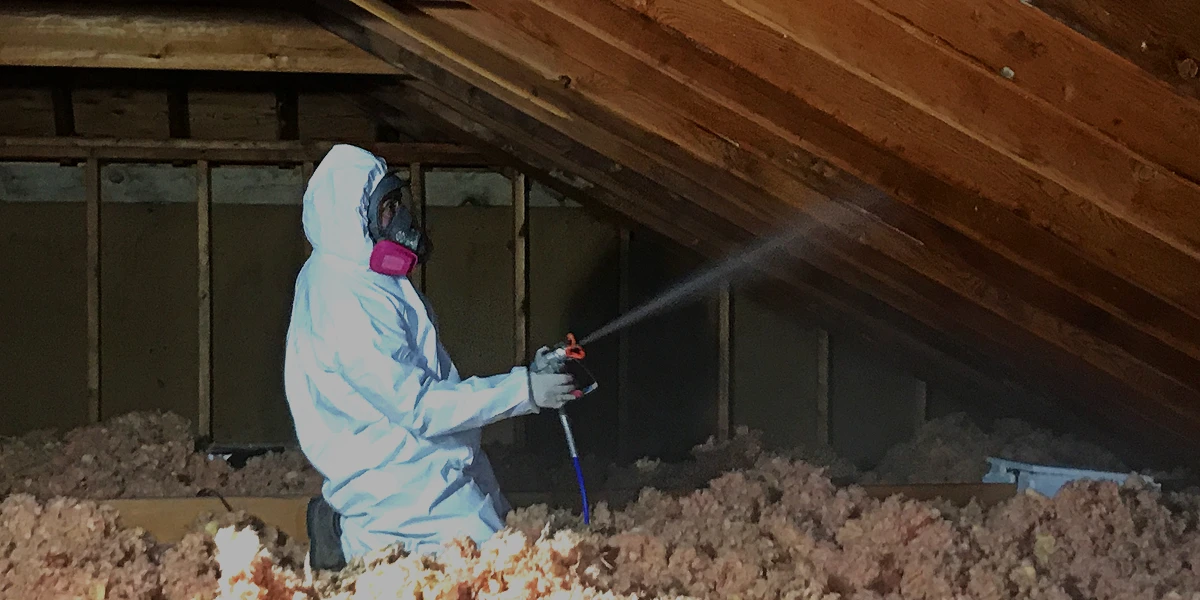
Professional fogging in attic spaces involves several coordinated steps:
Step 1: Inspection and Moisture Assessment
- Identify water intrusion, humidity levels, and structural vulnerabilities
- Test insulation, rafters, and decking for moisture content
- Assess HVAC ductwork or attic fans for contamination
Step 2: Containment and Preparation
- Remove stored items or cover sensitive surfaces
- Seal attic access points to prevent mist from spreading to living areas
Step 3: Fogging Application
- Apply fine mist using portable or industrial foggers
- Ensure coverage reaches corners, beams, and hidden surfaces
- May require multiple passes for larger or irregular attic layouts
Step 4: Ventilation and Air Scrubbing
- Ventilate the attic after treatment to disperse chemical residue
- Use HEPA air scrubbers to capture airborne spores released during application
Step 5: Monitoring and Follow-Up
- Measure moisture and particle levels to ensure efficacy
- Repeat treatment or implement additional remediation if necessary
Long-Term Protection Strategies
Fogging is most effective when combined with long-term preventive measures:
1. Attic Ventilation Improvements
- Install or repair ridge vents, soffit vents, or attic fans
- Maintain consistent airflow to reduce condensation and humidity
2. Roof Maintenance
- Regularly inspect shingles, flashing, and gutters
- Address minor leaks promptly to prevent hidden moisture buildup
3. Dehumidification and Moisture Monitoring
- Maintain indoor humidity between 45–55%
- Use digital sensors to detect early moisture accumulation
4. Structural Inspections
- Check rafters, decking, and insulation for signs of rot or mold
- Replace or treat compromised materials to prevent recurrence
5. HVAC Maintenance
- Clean and inspect ductwork and condensation lines
- Ensure airflow does not transport spores into living areas
Common Mistakes to Avoid
- Relying solely on fogging: Without moisture control, mold can regrow.
- Ignoring HVAC contamination: Attic fogging without duct cleaning may spread spores.
- Applying chemicals to wet surfaces: Fogging is ineffective if surfaces are saturated.
- Neglecting safety protocols: PPE and proper ventilation are essential to protect both technicians and occupants.
Importance of Local Expertise
Merritt Island professionals, such as Inspections and More FL, understand the unique conditions of coastal Florida attics:
- High humidity and salt air exposure
- Older home construction and insulation types
- Common ventilation challenges
- Storm-related water intrusion
Local expertise ensures that fogging is applied safely, effectively, and as part of a comprehensive moisture and mold control plan.
Cost and Time Considerations
- Early professional fogging reduces the risk of recurring contamination.
- Delaying treatment increases structural damage, indoor air quality issues, and overall remediation costs.
- Integrating fogging with moisture monitoring, ventilation improvements, and post-storm inspections ensures a more cost-effective long-term solution.
When to Call a Professional
Homeowners should seek expert intervention if they notice:
- Musty odors emanating from the attic
- Visible mold growth on rafters, insulation, or decking
- Water intrusion from roof leaks or storms
- Humidity hotspots or condensation in the attic
- Signs of mold spread into living areas below
Prompt evaluation ensures attic fogging is applied safely and effectively, reducing the risk of mold recurrence.
Conclusion
Attic spaces in Merritt Island homes are particularly vulnerable to mold due to Florida’s coastal humidity, storms, and aging roof structures. Anti-microbial fogging is a valuable tool for treating microbial contamination in these confined areas, but it comes with unique challenges: limited space, hidden moisture, sensitive materials, and ventilation limitations.
When fogging is applied professionally and combined with long-term moisture control, ventilation improvements, and structural inspections, homeowners can protect their attic spaces from recurring mold, maintain indoor air quality, and preserve the structural integrity of their homes. Early detection, proper remediation, and preventive strategies are essential to ensure attics remain dry, safe, and contamination-free.
