In Coastal Properties in Palm Bay: A Closer Look at Thermal Imaging Inspections
Coastal living in Palm Bay offers beautiful waterfront views, steady ocean breezes, and a relaxed Florida lifestyle. But homes located near the Indian River Lagoon, canals, or open water face a constant challenge—moisture. High humidity, salt air exposure, wind-driven rain, and frequent storm systems all create ongoing stress on building materials.
In these coastal environments, moisture rarely announces itself with dramatic leaks. Instead, it spreads quietly behind walls, above ceilings, beneath flooring, and inside attic spaces. By the time visible signs appear, damage may already be extensive.
That’s where thermal imaging inspections become essential.
Thermal imaging provides a non-invasive way to detect hidden moisture patterns in coastal Palm Bay properties before they turn into structural problems or mold growth. Understanding how thermal imaging works—and why it’s especially valuable in coastal homes—helps property owners protect their investment long term.
Why Coastal Palm Bay Homes Are More Vulnerable to Hidden Moisture
Palm Bay’s coastal properties are exposed to unique environmental pressures:
-
Lagoon-driven humidity cycles
-
Elevated dew points year-round
-
Wind-driven rain during storms
-
Salt air corrosion
-
Frequent summer thunderstorms
-
Hurricane-season rainfall
Even without visible flooding, moisture can enter through:
-
Roof flashing gaps
-
Window and door seals
-
Siding seams
-
Attic vents
-
Slab foundation edges
-
HVAC ductwork condensation
Because coastal humidity remains high even on dry days, moisture intrusion can linger and spread unnoticed.
What Thermal Imaging Inspections Actually Do
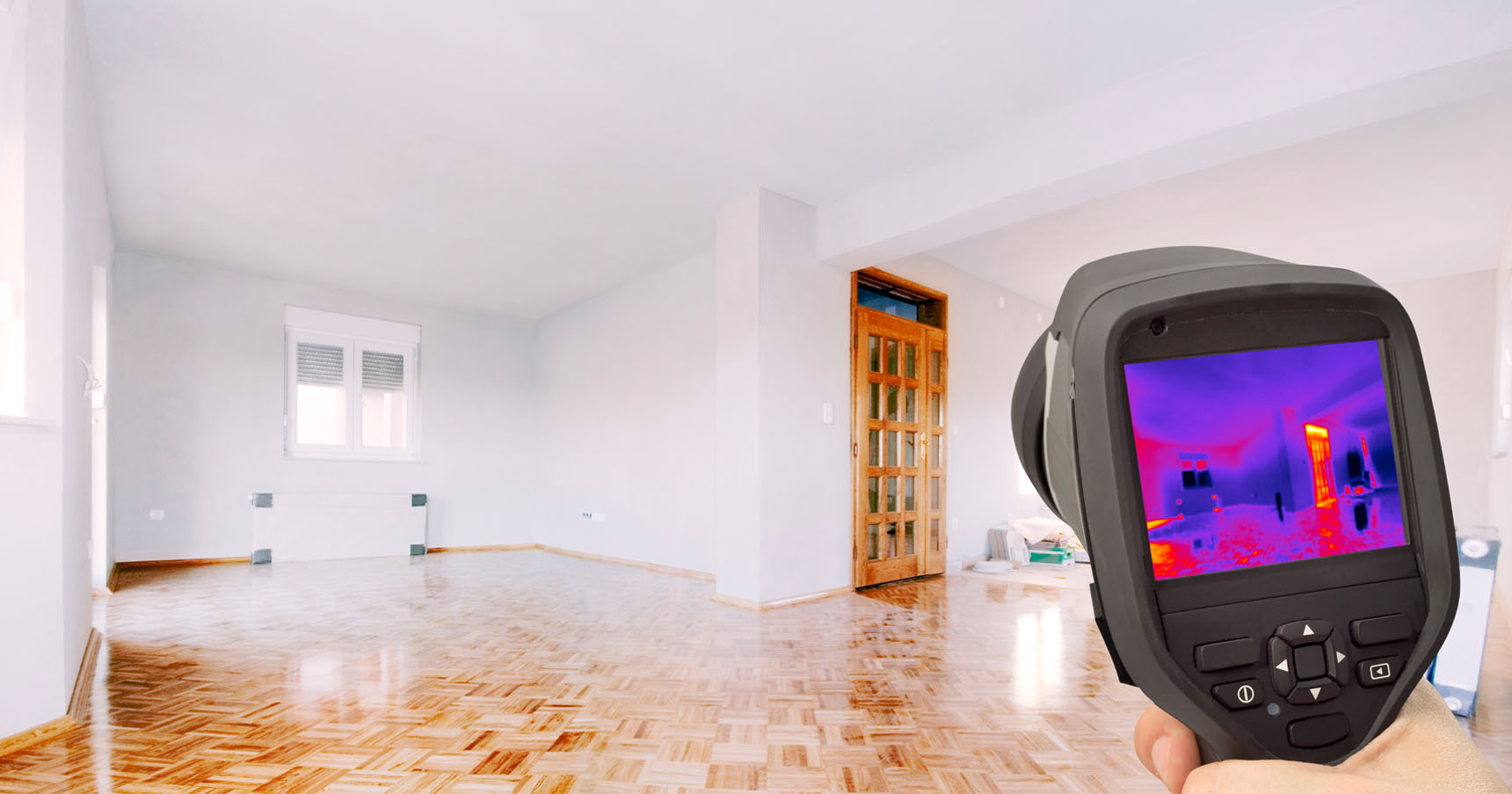
Thermal imaging cameras detect temperature differences across surfaces. They do not see water directly, but they identify patterns that suggest moisture presence.
Moist materials often appear cooler than dry ones due to evaporative cooling.
In coastal Palm Bay homes, thermal imaging can reveal:
-
Cooler areas behind drywall
-
Irregular patterns on ceilings
-
Damp insulation in attic spaces
-
Temperature anomalies near slab edges
-
Moisture intrusion around windows and doors
This technology allows inspectors to locate hidden dampness without unnecessary demolition.
Why Visual Inspections Are Not Enough in Coastal Homes
In Florida’s humid climate, visible signs of moisture may appear late.
Moisture can:
-
Travel along framing before staining drywall
-
Soak insulation without immediate ceiling damage
-
Spread laterally through slab foundations
-
Evaporate partially while leaving materials damp
By the time paint peels or odors develop, the affected area may be larger than expected.
Thermal imaging provides early insight.
Common Issues Thermal Imaging Uncovers in Palm Bay Coastal Properties
1. Attic Moisture After Storms
Wind-driven rain can enter through ridge vents or flashing.
Thermal scans often reveal:
-
Damp roof decking
-
Wet insulation patches
-
Condensation around ductwork
Attic moisture is one of the most common findings.
2. Window and Door Seal Failures
Salt air gradually weakens exterior caulking.
Thermal imaging may show:
-
Cooler outlines around frames
-
Subtle moisture intrusion beneath sills
-
Dampness behind baseboards
These minor vulnerabilities can cause ongoing humidity problems.
3. Slab Foundation Moisture Migration
Many Palm Bay homes sit on slab foundations.
After heavy rain:
-
Soil becomes saturated
-
Concrete absorbs moisture
-
Dampness wicks upward into walls
Thermal imaging can detect cooler temperature patterns along floor edges.
4. HVAC Condensation Problems
Cold ductwork in hot attic spaces creates condensation.
Thermal inspections may reveal:
-
Sweating ducts
-
Damp insulation
-
Cooler areas around vent boots
Left unaddressed, this moisture can spread into framing.
5. Roof Leak Pathways
Water entering at one location often travels before appearing.
Thermal imaging helps trace:
-
Leak paths across roof decking
-
Moisture movement along rafters
-
Ceiling cavity dampness
Identifying the source prevents incomplete repairs.
The Thermal Imaging Inspection Process
A structured inspection typically includes:
Step 1: Establish Temperature Contrast
Air conditioning may be used to create indoor-outdoor temperature differences.
Step 2: Scan Exterior-Facing Walls
These areas are most vulnerable to wind-driven rain.
Step 3: Inspect Attic Spaces
Roof decking and insulation are examined carefully.
Step 4: Evaluate Slab Edges
Lower wall sections and flooring perimeters are scanned.
Step 5: Confirm Findings With Moisture Meters
Thermal anomalies are verified using moisture detection tools.
Companies such as Inspections and More FL often combine thermal imaging with physical moisture readings for accuracy.
Why Coastal Humidity Makes Thermal Imaging More Important
In Palm Bay’s coastal environment:
-
Outdoor air often carries high moisture levels
-
Drying takes longer
-
Condensation cycles are common
-
Salt air accelerates seal deterioration
These factors increase the likelihood of hidden dampness.
Thermal imaging allows early detection before mold remediation becomes necessary.
Cost Benefits of Early Detection
Catching moisture early:
-
Reduces material removal
-
Prevents extensive drywall demolition
-
Limits insulation replacement
-
Shortens drying time
-
Lowers overall repair costs
Delays allow moisture to spread further.
When Should Coastal Palm Bay Homeowners Schedule Thermal Imaging?
Thermal imaging is especially valuable:
-
After heavy rainstorms
-
Following hurricane season
-
When indoor air feels damp
-
When musty odors appear
-
After roof repairs
-
During real estate transactions
-
When slab moisture is suspected
Proactive inspections prevent surprises.
Preventative Maintenance in Coastal Homes
To reduce moisture risks:
-
Inspect roof flashing annually
-
Maintain exterior caulking
-
Monitor attic insulation
-
Check slab edges after heavy rain
-
Service HVAC systems regularly
-
Monitor indoor humidity (45–55%)
-
Schedule post-storm evaluations
Routine inspections reduce long-term damage.
Why Local Experience Matters
Palm Bay’s coastal properties face specific environmental challenges:
-
Lagoon-driven humidity
-
Salt air corrosion
-
Frequent thunderstorms
-
Slab-on-grade construction
-
Extended cooling seasons
Professionals familiar with Palm Bay, Melbourne, Cocoa, Merritt Island, and Sanford understand how moisture behaves in Florida coastal homes.
Local knowledge ensures accurate interpretation of thermal findings.
The Long-Term Value of Thermal Imaging in Coastal Properties
Thermal imaging inspections:
-
Detect hidden moisture early
-
Prevent mold growth
-
Protect structural framing
-
Stabilize indoor air
-
Preserve insulation performance
-
Support informed repair decisions
In coastal climates, this proactive approach is essential.
A Practical Takeaway for Palm Bay Coastal Property Owners
Coastal homes in Palm Bay face constant humidity exposure. Wind-driven rain, salt air, slab foundations, and attic condensation all contribute to hidden moisture risks.
Thermal imaging inspections provide a non-invasive way to detect dampness before it becomes visible damage.
By identifying temperature anomalies behind walls, beneath floors, and within attic spaces, homeowners can act quickly—correcting moisture sources, stabilizing humidity, and preventing structural deterioration.
In Florida’s coastal climate, moisture rarely resolves on its own. Early detection through thermal imaging protects properties from silent damage and supports long-term durability.