
Why Mold Encapsulation Becomes Necessary in Merritt Island Behind Interior Walls
 Merritt Island homeowners are no strangers to moisture. Living between the Indian River and the Atlantic means beautiful views, steady coastal breezes — and constant humidity.
But here’s what many property owners don’t realize: some of the most serious mold issues in Merritt Island homes don’t grow out in the open.
They grow behind interior walls.
And when mold develops inside wall cavities — especially in coastal Florida conditions — mold encapsulation often becomes a necessary part of the remediation process.
Let’s talk about why this happens, why it’s so common in Merritt Island, and when encapsulation becomes the right long-term solution.
How Mold Develops Behind Interior Walls
Mold behind walls doesn’t appear overnight without a reason. It forms when moisture gets trapped in dark, poorly ventilated spaces.
Common moisture sources include:
- Roof leaks after storms
- Wind-driven rain entering around windows
- Plumbing leaks inside walls
- AC condensate line failures
- High indoor humidity
- Flooding or storm surge events
Once drywall and framing absorb moisture, the environment inside the wall cavity becomes ideal for mold growth:
- Warm
- Dark
- Humid
- Undisturbed
In Merritt Island’s climate, mold can begin developing within 24–48 hours when conditions are right.
Why Merritt Island Homes Are Especially Vulnerable
Merritt Island sits in a uniquely moisture-heavy environment.
Coastal Humidity Year-Round
Humidity rarely drops low enough for natural drying. Even after storms pass, ambient air remains saturated.
Salt Air Exposure
Salt carried inland accelerates material breakdown, weakening window seals, flashing, and exterior caulking. That increases the risk of small water intrusions that go unnoticed.
Hurricane and Tropical Storm Activity
Storm systems regularly bring wind-driven rain that penetrates siding, soffits, and rooflines.
Elevated Water Tables
After heavy rain, groundwater rises. Moisture can migrate upward through slab foundations or seep into lower wall framing.
Homes in Cocoa Beach and Palm Bay face similar risks, but Merritt Island’s proximity to open water and tidal shifts often prolongs moisture retention.
Common Signs Mold May Be Growing Behind Walls
Because mold is hidden, homeowners usually notice indirect signs first.
Look for:
- Persistent musty odors
- Peeling paint or bubbling drywall
- Soft spots on walls
- Stains that reappear after cleaning
- Warped baseboards
- Unexplained indoor humidity
In some cases, mold is discovered during home inspections when buying or selling property in Merritt Island.
By the time it’s visible, contamination may already be established within framing materials.
Why Surface Cleaning Is Not Enough
When mold is found inside walls, simple cleaning doesn’t resolve the issue.
Drywall may need to be removed to access affected framing. Once structural wood is exposed, even after professional cleaning, microscopic spores can remain embedded within porous materials.
That’s where mold encapsulation becomes necessary.
Encapsulation does not mean covering up active mold.
It means:
- Removing contaminated materials
- Cleaning structural surfaces
- Drying thoroughly
- Applying a professional sealant to lock down remaining spores and prevent recurrence
Without encapsulation, mold behind walls in high-humidity environments often returns.
Hidden Moisture Sources That Lead to Recurrence
Behind-wall mold in Merritt Island homes frequently stems from overlooked issues.
Minor Roof Leaks
Small leaks may not drip into living areas but slowly dampen framing.
Window Seal Failures
Wind-driven rain enters through weakened caulking.
Plumbing Pinholes
Tiny supply line leaks inside walls create ongoing moisture.
AC Condensation
Sweating ductwork or clogged drain lines contribute moisture inside cavities.
Poor Ventilation
Bathrooms and kitchens improperly vented into wall cavities create humidity buildup.
If the moisture source isn’t corrected before encapsulation, mold may reappear.
What a Professional Evaluation Includes
Before recommending encapsulation, a structured inspection determines:
- Extent of contamination
- Moisture levels in framing
- Source of water intrusion
- Condition of drywall and insulation
This process includes:
Visual Inspection
Identifying staining, deterioration, or microbial growth patterns.
Moisture Meter Testing
Measuring wood framing and surrounding materials.
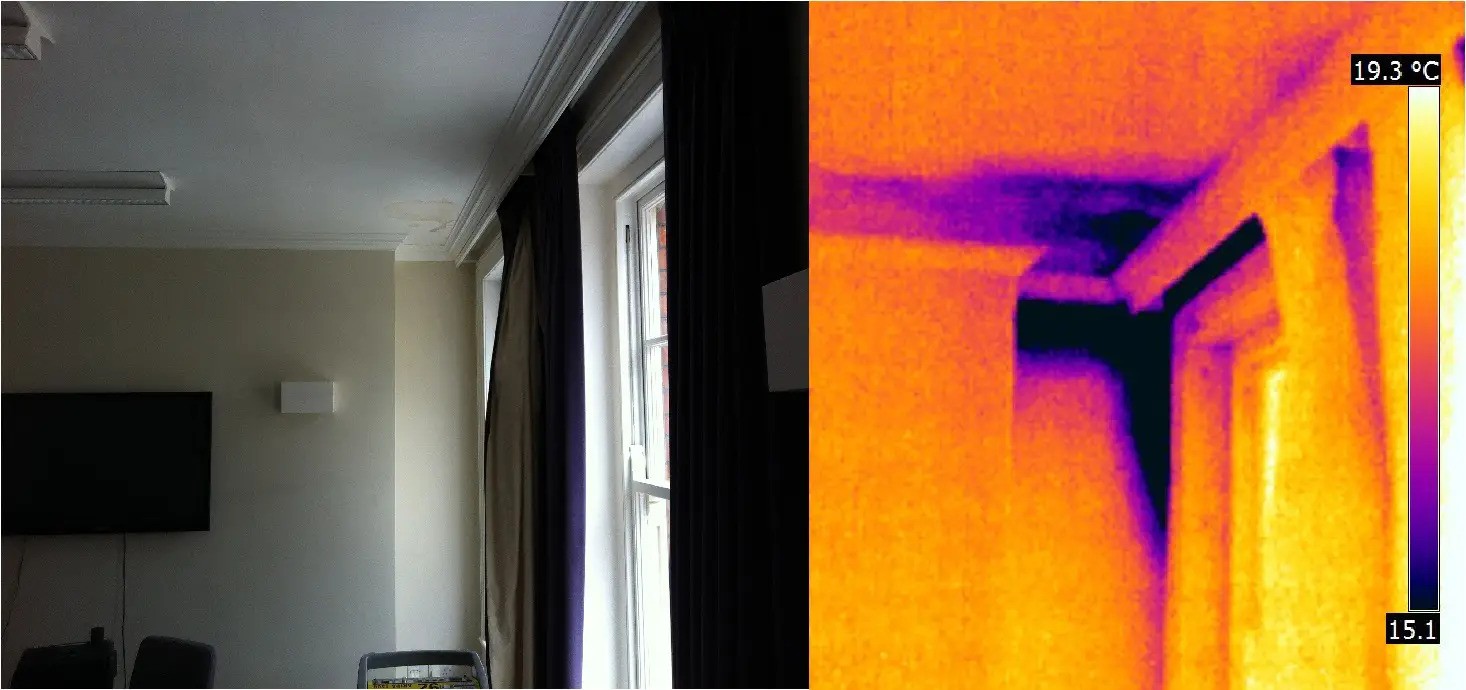
Thermal Imaging
Locating hidden moisture pockets within wall cavities.
Humidity Measurement
Ensuring indoor relative humidity remains within safe ranges.
At Inspections and More FL, we often find that behind-wall mold has been active longer than homeowners realized — especially in coastal environments like Merritt Island.
The Proper Mold Encapsulation Process Behind Walls
When encapsulation becomes necessary, the process follows clear steps.
1. Containment
Work areas are isolated to prevent spore spread throughout the home.
2. Removal of Affected Materials
Contaminated drywall and insulation are carefully removed.
3. Structural Cleaning
Framing is cleaned using approved remediation techniques and antimicrobial treatments.
4. Thorough Drying
Air movers and dehumidifiers stabilize moisture levels within structural materials.
5. Application of Encapsulant
A specialized mold-resistant sealant is applied to exposed wood framing and surfaces.
This coating:
- Seals porous materials
- Prevents future mold attachment
- Stabilizes structurally sound framing
6. Moisture Source Correction
Repairs are made to eliminate future intrusion.
Encapsulation protects the structure after cleaning — it is not a shortcut.
Why Encapsulation Is Often Necessary in Coastal Homes
In dry climates, cleaned framing may remain stable without additional sealing.
In Merritt Island’s coastal humidity, however:
- Wood continues absorbing moisture
- Airborne spores remain present
- Seasonal humidity spikes occur
Encapsulation provides an added layer of protection in a persistently damp environment.
Especially in older homes with wood framing, encapsulation often becomes part of a long-term prevention strategy.
Preventing Future Behind-Wall Mold Issues
After remediation and encapsulation, prevention focuses on moisture management.
Maintain Roofing Systems
Inspect after storms and repair minor damage promptly.
Reseal Windows and Doors
Check caulking annually.
Service HVAC Systems
Ensure condensate lines drain properly.
Monitor Indoor Humidity
Keep levels between 45%–55%.
Inspect After Hurricanes
Even minor water entry should be evaluated.
Routine inspections are especially important in waterfront or low-lying Merritt Island neighborhoods.
Why Local Experience Matters
Behind-wall mold in Merritt Island behaves differently than in drier regions.
Professionals must understand:
- Coastal humidity patterns
- Salt air material degradation
- Hurricane-driven rain intrusion
- Slab foundation moisture movement
- AC condensation dynamics
Without local insight, remediation may address visible growth but miss environmental contributors.
Inspections and More FL evaluates hidden mold with knowledge specific to Brevard County’s climate and construction styles, ensuring encapsulation is applied appropriately and only when necessary.
A Practical Next Step for Merritt Island Homeowners
If you suspect mold behind interior walls — especially after storms, plumbing leaks, or persistent humidity — early evaluation makes a difference.
Encapsulation becomes necessary when:
- Structural framing is affected
- Mold has penetrated porous materials
- Coastal humidity creates ongoing risk
The goal isn’t to overreact.
It’s to stabilize and protect your home’s structure in a climate that consistently challenges it.
Merritt Island’s coastal beauty comes with environmental realities. Managing moisture correctly — and knowing when encapsulation is appropriate — keeps homes safe, stable, and protected long-term.
