
Mold Remediation in Palm Bay Rental Properties: Why Quick Action Matters
Owning or managing rental property in Palm Bay comes with ongoing responsibilities — maintenance, tenant turnover, inspections, and storm preparation. But one issue that can quickly escalate from minor to major is mold.
In Palm Bay’s humid, coastal environment, mold growth can begin fast and spread quietly. In rental properties, where small leaks or humidity issues may go unreported for days or weeks, delays make the problem worse.
When it comes to mold remediation in Palm Bay rental homes, quick action isn’t just helpful — it’s critical.
Let’s look at why timing matters so much and what typically happens when response is delayed.
Why Mold Develops Quickly in Palm Bay Rentals
Palm Bay’s climate creates ideal conditions for mold growth.
Constant High Humidity
Outdoor humidity regularly exceeds 70–80%. During summer storms, it can climb even higher. When indoor humidity rises above 60%, mold-friendly conditions are present.
AC Condensation Issues
Air conditioning systems run nearly year-round. Clogged drain lines or pan overflows can introduce moisture into wall cavities.
Slab Foundations
Most Palm Bay homes sit on concrete slabs. Slabs absorb ground moisture and release it upward, especially after heavy rainfall.
Tenant Turnover Gaps
Vacant units may have systems turned off or set higher, allowing humidity to build inside.
Minor Leaks Going Unnoticed
Small plumbing drips behind sinks or inside walls often go unreported until odors appear.
In Florida’s warmth, mold can begin forming within 24–48 hours of sustained moisture.
What Happens When Remediation Is Delayed
Delays allow mold to expand beyond the original damp area.
Here’s what commonly happens in Palm Bay rental properties when action is postponed:
Moisture Spreads Laterally
Water travels along framing studs, beneath baseboards, and under flooring.
Mold Expands Into Insulation
Wet insulation traps moisture and supports growth.
Indoor Air Quality Declines
Airborne spores circulate through HVAC systems.
Structural Materials Weaken
Drywall softens. Wood framing absorbs moisture.
Tenant Complaints Increase
Musty odors and visible spotting create discomfort.
Quick action limits this spread.
Common Signs Tenants Report First
In rental settings, tenants often notice subtle changes before visible damage appears.
Common complaints include:
- Musty smells
- Humid indoor air
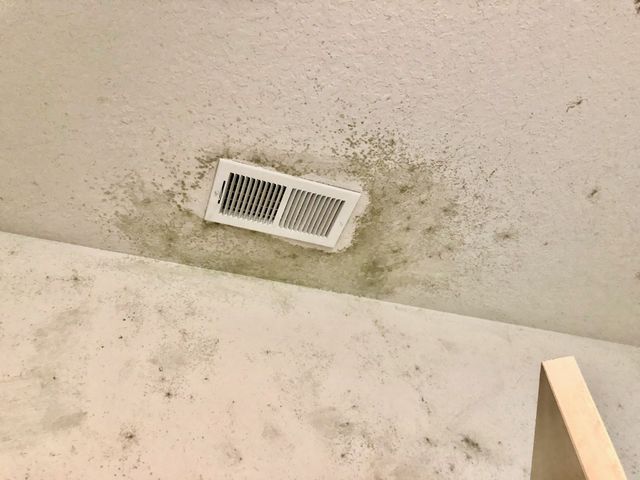
- Visible staining near vents
- Peeling paint
- Warped baseboards
- Persistent damp feeling in one room
Sometimes tenants don’t report early signs, assuming it’s just humidity.
That’s why routine inspections matter.
Why Professional Mold Remediation Is Necessary
Mold remediation in Palm Bay rental properties requires more than surface cleaning.
A proper approach includes:
Moisture Detection
Using thermal imaging and moisture meters to identify affected areas.
Source Correction
Fixing plumbing leaks, AC drain clogs, or roof intrusion.
Containment
Isolating affected areas to prevent spore spread.
Safe Mold Removal
Cleaning or removing contaminated materials.
HEPA Air Scrubbing
Filtering airborne spores during remediation.
Structural Drying
Using air movers and dehumidifiers to eliminate trapped moisture.
Skipping any of these steps increases recurrence risk.
Why Rental Properties Require Faster Response
Rental homes carry additional considerations.
Protecting the Investment
Extended moisture exposure increases repair costs.
Reducing Vacancy Time
Fast remediation allows quicker re-leasing.
Preventing Recurring Repairs
Early correction prevents larger structural damage.
Avoiding Repeated Tenant Disruption
Delayed remediation can lead to multiple repair visits.
Quick response stabilizes the property sooner.
Lessons Learned From Palm Bay Cases
Local experience in Palm Bay has revealed clear patterns:
- AC drain line clogs are common causes
- Slab moisture increases during heavy rain cycles
- Attic duct condensation often contributes to ceiling moisture
- Vacant units experience higher humidity levels
Addressing these local factors early prevents repeat problems.
Long-Term Prevention Strategies for Landlords
Quick remediation solves immediate issues, but prevention protects long-term.
Palm Bay rental property owners can:
- Flush AC drain lines quarterly
- Install float switches on air handlers
- Schedule annual HVAC inspections
- Monitor indoor humidity between 45–55%
- Inspect properties after major storms
- Check slab moisture before flooring replacement
- Improve attic ventilation
Routine oversight reduces emergency situations.
Why Local Experience Matters
Palm Bay homes vary widely in age and construction.
Understanding:
- Coastal humidity cycles
- Slab foundation moisture behavior
- Storm-driven intrusion patterns
- AC system performance in Florida climate
- Tenant usage patterns
helps tailor remediation effectively.
Experience across Palm Bay, Cocoa, Melbourne, Merritt Island, and Sanford provides insight into how moisture spreads in local rental properties.
Inspections and More FL approaches rental remediation with a focus on rapid detection, thorough drying, and long-term stability.
A Practical, Calm Recommendation
If you own rental property in Palm Bay and suspect mold growth — even minor — acting quickly limits both damage and cost.
Mold spreads silently in Florida’s humid environment.
Early detection, proper containment, and thorough drying protect both your investment and your tenants.
In rental properties, time matters. Quick action doesn’t just resolve the current issue — it prevents the next one.
