
Understanding Dehumidification Challenges in Cocoa Inside Commercial Buildings
If you manage or own a commercial building in Cocoa, you already know Florida humidity is relentless. It’s not just uncomfortable — it’s structural. Inside offices, retail spaces, warehouses, and medical buildings, excess moisture quietly affects indoor air quality, materials, and long-term maintenance costs.
In Cocoa and nearby areas like Merritt Island, Palm Bay, and Melbourne, commercial properties face a unique mix of coastal air, heavy rain seasons, high water tables, and year-round humidity. When indoor humidity isn’t properly controlled, it creates ongoing problems that standard air conditioning alone often can’t solve.
Let’s break down why dehumidification inside commercial buildings in Cocoa is more complex than most property managers expect — and what it really takes to control it properly.
What Dehumidification Really Means in Commercial Spaces
Many people assume that if the air conditioning is running, humidity is under control. That’s not always true.
Air conditioning systems cool air. While they do remove some moisture during the cooling process, they are not designed primarily for humidity control — especially in large commercial buildings with varying occupancy and airflow patterns.
True dehumidification involves:
- Removing excess moisture from indoor air
- Maintaining balanced relative humidity (ideally 45%–55%)
- Preventing condensation on surfaces
- Reducing moisture migration into walls, ceilings, and flooring
In Cocoa’s climate, indoor humidity can easily rise above 60% without proper management. At that level, mold growth becomes more likely, materials begin absorbing moisture, and indoor comfort drops significantly.
Why Cocoa Commercial Buildings Struggle With Humidity
1. Coastal Air and High Ambient Moisture
Cocoa sits close to the coast. Salt air carries moisture inland, and outdoor humidity levels remain high most of the year. Every time doors open — especially in retail and warehouse spaces — humid air enters the building.
Without proper air balancing, that moisture stays inside.
2. Oversized AC Systems
It’s common in commercial construction to install larger HVAC systems to cool spaces quickly. The problem? Oversized units cool air so fast that they shut off before running long enough to remove sufficient moisture.
The result:
Cool air. High humidity.
3. Frequent Door Traffic
Restaurants, storefronts, gyms, and medical facilities often have constant door openings. Each opening allows humid Florida air to mix with conditioned indoor air.
In busy commercial spaces, this happens dozens — sometimes hundreds — of times per day.
4. Flat Roof Systems
Many commercial buildings in Cocoa use flat or low-slope roofing systems. After heavy rainstorms, minor roof leaks or moisture intrusion can go unnoticed, increasing indoor humidity levels without visible signs.
5. Large Interior Volume
Warehouses and open-concept commercial spaces contain large volumes of air. Standard HVAC systems may struggle to evenly dehumidify such spaces, leaving certain zones persistently damp.
Common Signs of Poor Dehumidification
Property managers often notice symptoms before identifying the cause. These include:
- Musty odors in specific areas
- Condensation on vents or windows
- Warping of interior doors
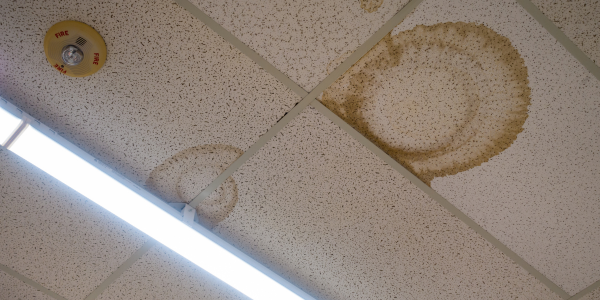
- Ceiling tile staining
- Rust on metal fixtures
- Persistent damp feeling despite cool air
- Mold growth around supply vents or in storage areas
In Cocoa’s humid climate, these warning signs shouldn’t be ignored. They typically mean indoor humidity is consistently above safe thresholds.
Hidden Moisture Sources Inside Commercial Buildings
Humidity problems are not always caused by outdoor air alone.
Hidden contributors may include:
- AC condensate line blockages
- Improperly insulated ductwork
- Leaking rooftop HVAC units
- Plumbing leaks inside walls
- Slab foundation moisture intrusion
- Poorly sealed building envelopes
- Inadequate exhaust ventilation in restrooms or kitchens
Commercial buildings often have multiple systems working simultaneously. If one system is imbalanced, it can throw off the entire building’s humidity control.
Why DIY or Basic Fixes Don’t Work
Some property managers try simple solutions like lowering the thermostat or adding portable dehumidifiers.
Lowering the thermostat may make the space feel cooler, but it doesn’t necessarily remove more moisture. In fact, short cooling cycles can worsen humidity retention.
Portable units rarely handle the square footage of commercial environments. They also don’t address the root cause — which may be ventilation imbalance, duct leakage, or building envelope issues.
Humidity control must be approached systematically, not reactively.
Professional Humidity Evaluation in Cocoa
In commercial buildings across Cocoa and surrounding areas, a proper dehumidification evaluation usually includes:
Visual Inspection
Checking for visible condensation, staining, and airflow issues.
Moisture Meter Testing
Testing drywall, flooring, and ceiling materials for elevated moisture content.
Thermal Imaging
Identifying hidden cold spots or moisture migration inside walls or ceilings.
Humidity Monitoring
Measuring indoor relative humidity levels across multiple zones.
HVAC Assessment
Reviewing system sizing, airflow balance, duct integrity, and condensate drainage.
Companies like Inspections and More FL focus on identifying how moisture enters, where it collects, and why it persists.
Dehumidification Solutions That Actually Work
When humidity challenges are confirmed, solutions typically include a combination of strategies:
Dedicated Dehumidification Systems
Installing commercial-grade dehumidifiers integrated with HVAC systems.
Airflow Rebalancing
Adjusting supply and return airflow to maintain consistent air circulation.
Air Scrubbing
Improving indoor air quality when elevated humidity has already impacted air conditions.
Encapsulation of Moisture-Prone Areas
Sealing crawl spaces or utility zones to prevent vapor migration.
Roof and Envelope Repairs
Addressing minor leaks before they escalate.
AC Condensate Line Maintenance
Ensuring proper drainage and preventing overflow.
Structural Dryouts
If excess moisture has already entered building materials, professional drying may be required before humidity control stabilizes.
Dehumidification in commercial spaces is rarely one single fix. It’s usually a coordinated system improvement.
Cost Factors in Commercial Dehumidification
Costs vary depending on:
- Building size
- Existing HVAC configuration
- Severity of humidity imbalance
- Whether structural drying is needed
- Type of dehumidification system required
- Roof or envelope repairs
It’s important to understand that long-term humidity damage is far more expensive than proactive control.
Ceiling replacement, flooring damage, mold remediation, and tenant complaints add up quickly.
Prevention Strategies for Cocoa Commercial Properties
Managing humidity long-term requires consistent monitoring and maintenance.
Property managers should:
- Schedule routine HVAC servicing
- Clean condensate lines quarterly
- Monitor indoor humidity with digital sensors
- Inspect roof systems after heavy rain
- Ensure exhaust fans operate properly
- Seal exterior gaps around doors and windows
- Schedule periodic moisture evaluations
Because Cocoa’s humidity never truly disappears, ongoing prevention is critical.
Why Local Experience Makes a Difference
Commercial humidity control in Florida is not the same as in dry climates.
Professionals familiar with Cocoa understand:
- Coastal moisture patterns
- How salt air affects HVAC systems
- How afternoon thunderstorms impact roof systems
- How slab foundations interact with high groundwater
- Seasonal humidity shifts
Local expertise allows faster diagnosis and practical solutions tailored to the environment.
A Practical, Calm Approach to Humidity Control
If your commercial building in Cocoa feels cool but damp, smells musty, or shows signs of moisture stress, it’s worth evaluating the humidity balance before larger issues develop.
The goal isn’t overreaction. It’s clarity.
A structured inspection and humidity assessment can identify whether your building needs minor airflow adjustments or a more comprehensive dehumidification strategy.
In Florida’s climate, humidity management isn’t optional — it’s maintenance.
With proper evaluation and targeted solutions, commercial buildings in Cocoa can remain comfortable, structurally sound, and moisture-controlled year-round.
