
Understanding Moisture Detection Challenges in Cocoa After Heavy Rainstorms
In Cocoa, heavy rainstorms aren’t unusual — especially during hurricane season and those long summer afternoons when storms roll in fast and dump inches of rain in a short time. For homeowners and property managers, the visible water usually gets the attention. A small puddle near a sliding door. A ceiling stain that suddenly appears. Damp carpet along an exterior wall.
But what you see is rarely the full story.
After major rain events in Cocoa and surrounding areas like Merritt Island, Melbourne, and Palm Bay, moisture often travels quietly behind walls, under flooring, and into structural cavities. Detecting that hidden moisture is where the real challenge begins.
Let’s break down why moisture detection after heavy rainstorms in Cocoa is more complex than it looks — and what needs to happen to properly identify and control it.
What Happens to Homes in Cocoa During Heavy Rain
Cocoa’s coastal location brings a unique combination of factors:
- Intense, wind-driven rain
- High humidity before, during, and after storms
- Saturated soil and rising groundwater
- Older roofing systems exposed to salt air
- Slab foundations in direct contact with moist soil
When storms hit, water doesn’t just fall straight down. It blows sideways. It pushes under shingles. It seeps behind siding. It finds tiny gaps around windows and doors.
And once it gets inside, Florida’s humidity prevents it from drying quickly.
That’s where detection becomes critical.
Why Moisture Detection Is Difficult After Rainstorms
1. Surfaces Dry Faster Than Structures
After a storm, visible surfaces might dry within hours. Sunlight, AC systems, and airflow can evaporate surface moisture quickly.
But inside walls, under baseboards, and within insulation, moisture remains trapped.
By the time everything looks dry, hidden dampness may still be present.
2. High Ambient Humidity Masks Problems
In Cocoa, outdoor humidity often stays above 70% after a rainstorm. Indoor humidity rises as well.
When the air itself is humid, it becomes harder to identify moisture issues based on “feel” alone. A room may feel normal even though structural materials are absorbing water.
3. Wind-Driven Intrusion Is Unpredictable
During tropical systems, rain may enter through unexpected points:
- Behind soffits
- Through roof vents
- Around poorly sealed windows
- Beneath sliding doors
- Through small cracks in stucco
The path water takes isn’t always visible from the surface. It can travel horizontally along framing before showing signs.
4. Slab Foundations Complicate Things
Many Cocoa homes sit on slab foundations. After heavy rainfall, saturated soil increases hydrostatic pressure against the slab.
Moisture may wick upward through:
- Tile grout lines
- Concrete pores
- Expansion joints
- Cracks in flooring
Because this happens gradually, property owners often miss early warning signs.
Common Signs You Shouldn’t Ignore
After heavy rainstorms in Cocoa, watch for:
- Musty odors in one room
- Discoloration near ceilings or corners
- Warped baseboards
- Bubbling paint
- Damp carpet edges
- Slight floor cupping
- AC running more than usual
- Condensation around vents
Sometimes the only clue is smell.
That earthy, damp odor usually means moisture has been sitting long enough for microbial growth to begin.
Hidden Areas Where Storm Moisture Lingers
Moisture detection is especially challenging because rainwater rarely stays in one place.
Common hidden zones include:
Behind drywall
Inside insulation
Under hardwood flooring
Inside attic decking
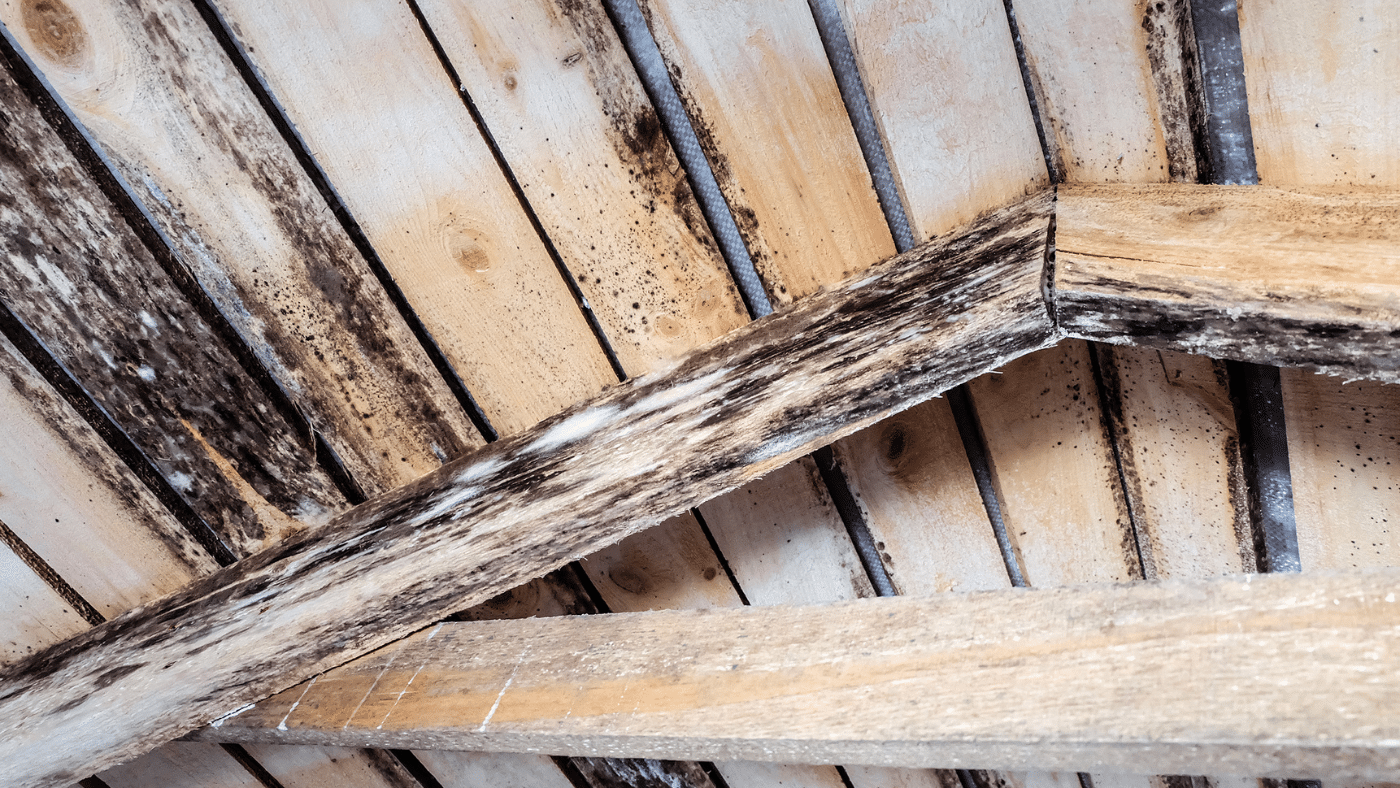
Along roof trusses
Inside wall cavities
Around plumbing penetrations
Inside HVAC ductwork
In Cocoa’s humid environment, moisture doesn’t evaporate quickly in enclosed spaces. It can remain trapped for days — sometimes weeks — if not properly identified.
Why DIY Detection Often Falls Short
After a heavy storm, many homeowners rely on visual inspection alone.
If there’s no active drip, they assume everything is fine.
Others use household fans and assume drying is complete.
The issue is that moisture inside materials cannot be judged visually. Drywall may look normal while insulation behind it remains saturated.
Bleach or surface cleaners won’t address moisture trapped inside structural materials.
Without proper testing tools, hidden moisture often goes undetected until mold growth or structural damage becomes visible.
Professional Moisture Detection Methods
In Cocoa and nearby areas, a proper moisture evaluation after heavy rain typically includes several steps.
Visual Inspection
Inspecting roof lines, attic spaces, windows, door seals, and exterior walls for entry points.
Moisture Meter Testing
Using calibrated moisture meters to measure water content inside drywall, flooring, and framing.
Thermal Imaging
Infrared cameras help identify temperature differences that may indicate hidden damp areas behind walls or ceilings.
Humidity Assessment
Checking indoor relative humidity levels across different zones in the property.
Attic and Crawl Space Evaluation
Storm-driven rain often enters through roof systems. Attics must be carefully inspected for staining, damp insulation, or decking moisture.
Companies like Inspections and More FL focus on identifying both the visible damage and the subtle moisture migration patterns that storms create.
Why Timing Matters After Heavy Rain
Moisture detection works best within a specific window.
Too early — and surfaces are still uniformly wet, making it harder to identify where water penetrated.
Too late — and moisture may have spread deeper into materials.
Ideally, evaluation should occur once surface water is cleared but before days of humidity allow moisture to settle into structural components.
In Cocoa, where humidity remains elevated after storms, delays can increase the risk of mold colonization.
What Happens If Moisture Is Found
If elevated moisture levels are confirmed, the next steps depend on severity.
Targeted Drying
Industrial dehumidifiers and air movers are positioned to dry specific affected zones.
Structural Dryouts
If framing or subflooring is saturated, controlled drying processes are used to avoid warping or cracking.
Containment (If Needed)
If microbial growth has begun, containment prevents cross-contamination.
Roof or Envelope Repairs
Entry points are corrected to prevent recurrence.
Ongoing Monitoring
Moisture levels are rechecked to confirm drying progress.
The key is addressing both the water intrusion source and the trapped moisture.
Prevention Strategies for Future Storms
Cocoa’s climate means storms will continue. Prevention reduces future detection challenges.
Property owners should:
- Inspect roofing annually
- Seal window and door frames
- Maintain proper attic ventilation
- Ensure gutters and downspouts direct water away from the foundation
- Monitor indoor humidity levels
- Schedule post-storm evaluations after major weather events
Because heavy rain events are common, routine inspections become part of responsible property maintenance.
Why Local Knowledge Makes a Difference
Moisture behavior in Florida is different from other states.
Professionals familiar with Cocoa understand:
- How coastal winds push water under roofing materials
- How slab foundations react to saturated soil
- How salt air degrades flashing and seals
- How persistent humidity slows drying
Experience in this environment allows faster, more accurate moisture detection after storms.
A Calm Approach After Heavy Rain
Heavy rainstorms in Cocoa are part of life. Not every storm causes damage — but some do.
If you notice unusual odors, stains, or dampness after a storm, it’s worth having a structured moisture evaluation.
The goal isn’t alarm.
It’s clarity.
Proper detection ensures small issues don’t quietly become larger structural or mold problems weeks later.
With the right tools and local experience, hidden storm moisture can be identified, dried, and resolved before it turns into something more serious — keeping your property safe, stable, and ready for the next Florida rain event.
