How Dehumidification Protects Properties in Palm Bay in Slab Foundation Houses
Palm Bay homeowners are no strangers to humidity. Between the coastal air drifting in from the Atlantic, the high water table beneath many neighborhoods, and long stretches of summer rain, moisture becomes part of daily life. But when that moisture settles into slab foundation homes, it can quietly create serious structural and indoor air issues.
In Palm Bay, slab foundation houses are common. They’re practical, durable, and well-suited for Florida’s terrain. But they also present unique moisture challenges that many property owners don’t recognize until visible damage appears. That’s where proper dehumidification plays a critical protective role.
For homeowners, landlords, and property managers in Palm Bay and nearby areas like Melbourne and Merritt Island, understanding how dehumidification protects slab homes can prevent costly repairs down the road.
What the Issue Is
A slab foundation house sits directly on a concrete base poured over soil. Unlike homes with crawl spaces, there’s no gap between the ground and the living structure. That sounds solid—and it is—but concrete is porous. It can absorb and transmit moisture from the soil below.
In Palm Bay, where the water table is often high and rainfall is frequent, moisture can move upward through the slab. This process is called vapor intrusion. Even if you never see standing water, humidity can rise into flooring materials, walls, and interior air.
Over time, that hidden moisture can:
- Warp flooring
- Cause musty odors
- Trigger mold growth
- Damage baseboards and drywall
- Increase indoor humidity levels
Dehumidification helps interrupt that cycle before structural or air quality problems escalate.
Why This Happens So Often in Palm Bay
Palm Bay’s environment creates ideal conditions for moisture migration.
High Humidity Year-Round
Florida’s humidity rarely gives homes a break. Even in cooler months, moisture lingers in the air. Slab homes trap that humidity inside when ventilation and moisture control aren’t optimized.
High Water Table
Many areas of Palm Bay sit close to groundwater. After heavy rainstorms or during hurricane season, soil saturation increases. That moisture presses upward against concrete slabs.
Storms and Flooding
Tropical systems and sudden downpours are common across Brevard County. Even if a property doesn’t flood visibly, water can seep into soil surrounding the slab, increasing vapor pressure.
AC Condensation
Air conditioning systems run heavily in Palm Bay. If ducts sweat or condensation drains improperly, moisture can accumulate along slab edges and interior flooring.
Limited Natural Ventilation
Slab homes rely heavily on mechanical systems for airflow. Without proper humidity control, moisture builds up indoors.
Common Signs Property Owners Notice
Moisture problems in slab foundation homes often start subtly.
Homeowners in Palm Bay may notice:
- Persistent musty odors
- Floors feeling slightly damp
- Warped laminate or wood flooring
- Peeling paint near baseboards
- Discoloration on lower drywall
- Indoor air feeling heavy or humid
- Increased allergy-like symptoms indoors
Because slab issues start below the surface, by the time visible damage appears, humidity has often been elevated for months.
Hidden or Overlooked Sources
In slab homes, moisture rarely stays confined to one area.
Beneath Flooring
Tile, vinyl plank, hardwood, and carpet can trap moisture rising from concrete. Mold can develop under flooring long before surface staining appears.
Behind Lower Wall Cavities
Moisture traveling upward can affect insulation and drywall near the floor line.
Around Plumbing Penetrations
Pipes that pass through slabs create small gaps that allow vapor movement.
HVAC Duct Runs
In some Palm Bay homes, ductwork runs close to slab surfaces. Combined humidity can amplify condensation.
Past Storm Damage
Even minor storm-related saturation can leave long-term moisture behind if not properly dried.
Why DIY Attempts Usually Fail
Many property owners attempt quick fixes.
They may:
- Run a small portable dehumidifier occasionally
- Use bleach on visible surface mold
- Increase AC usage
- Install fans for airflow
While these steps may offer temporary relief, they don’t address the full moisture load in slab foundations.
Bleach only treats surface staining. It does not eliminate embedded mold growth in porous materials.
Portable dehumidifiers often lack the capacity to handle Florida’s humidity levels in larger homes.
And running AC more frequently can sometimes worsen condensation if airflow and drainage aren’t balanced.
Without correcting the underlying moisture dynamics, problems return.
Professional Inspection & Detection Explained
When evaluating slab homes in Palm Bay, a professional moisture assessment looks beyond visible symptoms.
A thorough inspection may include:
Visual Assessment
Checking baseboards, flooring transitions, and wall surfaces for moisture patterns.
Thermal Imaging
Identifying temperature differences that indicate hidden dampness beneath floors or within walls.
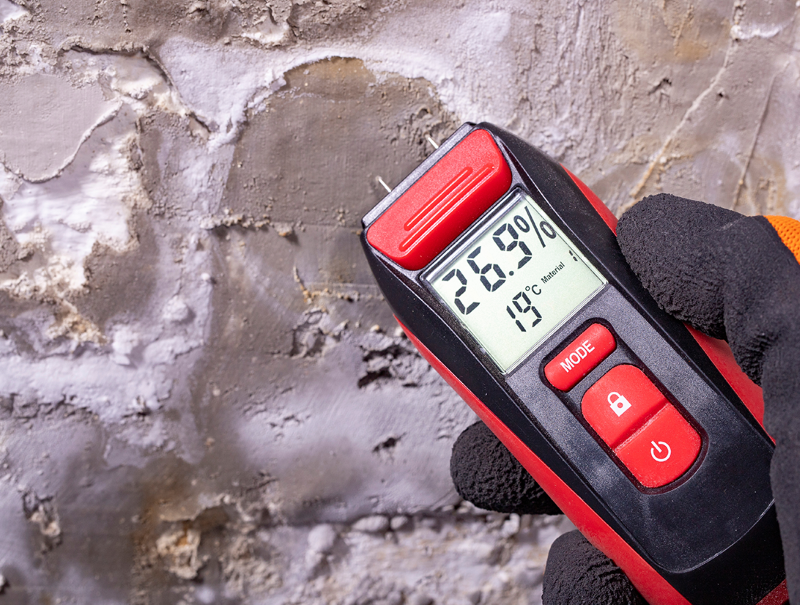
Moisture Meter Testing
Measuring slab surface readings and wall moisture content.
Indoor Humidity Monitoring
Determining whether indoor levels exceed recommended ranges.
HVAC Evaluation
Checking for duct condensation and airflow imbalances.
Companies like Inspections and More FL often combine multiple detection tools to understand how moisture moves through a slab structure rather than relying on one method.
Proper Remediation & Moisture Control Process
Dehumidification becomes a central part of protecting slab foundation homes.
A structured approach typically includes:
Containment (If Mold Is Present)
Preventing cross-contamination during remediation.
Safe Mold Removal
Removing affected materials if needed.
Mold Remediation
Cleaning and treating impacted surfaces properly.
Mold Encapsulation
Sealing areas where appropriate to prevent recurrence.
Air Scrubbing
Filtering airborne spores during and after remediation.
Anti-Microbial Fogging
Treating areas where microbial growth has been identified.
High-Capacity Dehumidification
This is where long-term protection begins.
Professional-grade dehumidifiers:
- Remove large volumes of moisture daily
- Maintain controlled indoor humidity levels
- Reduce vapor pressure within the home
- Prevent condensation buildup
Structural Dryouts
If slab saturation has occurred, targeted drying may be required.
Moisture Source Correction
Addressing drainage issues, improving grading, or sealing slab penetrations.
Prevention Focus
Installing monitoring systems and recommending ongoing humidity management.
In Palm Bay slab homes, dehumidification is not just a temporary drying tool—it becomes part of the moisture defense system.
How to Prevent Moisture & Mold in Palm Bay Slab Homes
Prevention is practical when approached consistently.
Monitor Indoor Humidity
Keep levels between 45–55%.
Maintain AC Systems
Ensure drain lines remain clear and ducts are properly insulated.
Improve Exterior Drainage
Confirm that water flows away from the slab during heavy rain.
Inspect After Storms
Even without visible flooding, moisture may increase beneath slabs.
Consider Whole-Home Dehumidification
Integrated systems connected to HVAC units provide steady control.
Schedule Routine Evaluations
Especially in high-humidity months or after hurricanes.
Palm Bay’s environment doesn’t change—but moisture management can.
Why Local Florida Experience Matters
Understanding slab moisture in Palm Bay requires knowledge of:
- Coastal humidity cycles
- Brevard County soil conditions
- Building practices used in slab construction
- Storm-related saturation patterns
Homes in Palm Bay behave differently than homes in drier regions. Professionals familiar with Melbourne, Merritt Island, Sanford, and surrounding areas understand these subtle environmental influences.
Local experience allows faster diagnosis and more accurate long-term moisture control planning.
Inspections and More FL works specifically within these Florida conditions, focusing on evaluation and correction rather than temporary surface treatments.
A Calm Next Step for Property Owners
If your Palm Bay slab home feels damp, smells musty, or shows early signs of moisture damage, waiting rarely improves the situation.
Dehumidification is not just about comfort—it protects flooring, drywall, air quality, and long-term structural integrity.
A professional moisture evaluation provides clarity. It identifies whether slab vapor intrusion, HVAC condensation, or storm-related saturation is contributing to the problem.
Addressing humidity early keeps repairs manageable and prevents recurring damage.
Palm Bay’s climate makes moisture control essential. With proper dehumidification and inspection, slab foundation homes can remain stable, dry, and healthy for years to come.