How Thermal Imaging Inspections Protect Properties in Palm Bay Under Hardwood Flooring
Hardwood flooring is a popular choice in Palm Bay homes. It looks clean, modern, and durable. But in Florida’s humid climate, what’s happening under that hardwood often matters more than what’s visible on top.
Between slab vapor, storm season humidity, plumbing leaks, and HVAC condensation, moisture can collect beneath flooring systems without obvious warning signs. By the time boards begin to cup or warp, the problem has usually been present for weeks.
That’s where thermal imaging inspections become essential. In Palm Bay, early detection under hardwood flooring protects both the structure and the long-term condition of the floor system itself.
Why Under-Hardwood Moisture Is So Common in Palm Bay
Palm Bay’s environment creates constant moisture pressure.
High Coastal Humidity
Outdoor air carries elevated moisture year-round.
Slab Foundations
Many Palm Bay homes are built on concrete slabs. Concrete is porous and allows vapor transmission over time.
Storm Saturation
Heavy rainfall increases soil moisture, raising vapor pressure beneath slabs.
AC Condensation
Continuous cooling cycles can create localized condensation issues.
Minor Plumbing Leaks
Slow leaks from appliances often migrate beneath flooring before detection.
Because hardwood sits tightly over subfloor materials, airflow underneath is limited. Once moisture gets trapped below, it spreads laterally.
The Problem With Waiting for Visible Signs
Homeowners typically notice issues only after:
- Boards begin cupping
- Edges darken
- Gaps form between planks
- A musty odor develops
- Certain areas feel slightly soft
By then, moisture has often traveled beyond the visibly affected boards.
Surface inspection alone rarely reveals the full footprint.
Thermal imaging helps identify hidden moisture before widespread flooring removal becomes necessary.
How Thermal Imaging Works Under Hardwood
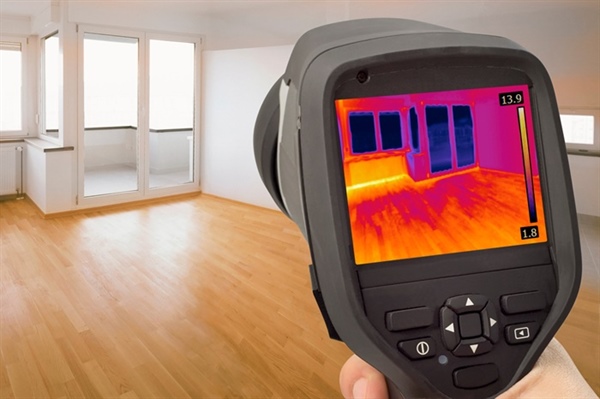
Thermal imaging cameras detect temperature differences across surfaces.
Moist areas often appear cooler than surrounding dry materials due to evaporative cooling. Even if the top of the hardwood feels dry, moisture beneath can create detectable temperature variations.
When used properly, thermal imaging can:
- Identify moisture patterns beneath flooring
- Detect slab vapor intrusion zones
- Reveal plumbing leak spread
- Map lateral moisture movement
- Reduce unnecessary demolition
Imaging does not see “through” wood directly, but it detects thermal differences that signal moisture below.
Professionals confirm findings with moisture meters to verify readings.
Companies such as Inspections and More FL use thermal imaging as part of a structured detection process — not as a standalone guess.
Why Early Detection Protects the Floor System
When moisture remains trapped under hardwood:
- Subfloors can weaken
- Adhesives may fail
- Boards may permanently warp
- Mold growth can develop
- Odors can become embedded
If caught early, drying may prevent permanent flooring damage.
If discovered late, larger sections of flooring may require removal.
Thermal imaging allows earlier intervention.
Slab Vapor: A Hidden Contributor
One of the most overlooked issues in Palm Bay slab homes is vapor transmission.
After extended rain periods:
- Soil becomes saturated
- Vapor pressure increases beneath slabs
- Moisture migrates upward
- Flooring systems trap the vapor
Because this process is gradual, homeowners may not notice until seasonal changes amplify the issue.
Thermal imaging helps detect areas where slab-related moisture is most active.
The Role of HVAC in Under-Floor Moisture
Air conditioning plays a major role in Florida homes.
If:
- Condensate lines clog
- Ducts sweat
- Airflow is unbalanced
moisture can accumulate near slab edges and migrate beneath flooring.
Thermal imaging often reveals moisture patterns tied to HVAC placement.
Without imaging, these patterns may be misdiagnosed as simple flooring defects.
Why DIY Checks Are Not Enough
Homeowners sometimes rely on:
- Touching boards
- Running portable dehumidifiers
- Inspecting for stains
These methods cannot detect moisture beneath sealed flooring systems.
Moisture meters used alone may miss the broader pattern.
Thermal imaging provides a larger moisture map before targeted testing confirms exact levels.
What Happens After Moisture Is Detected
If thermal imaging confirms dampness beneath hardwood, next steps may include:
- Controlled dehumidification
- Air movers to encourage evaporation
- Selective board removal (if necessary)
- Slab moisture testing
- Plumbing or drainage correction
- HVAC adjustments
Drying must continue until structural materials return to safe moisture content levels.
Measured drying prevents recurrence.
Preventing Recurring Under-Floor Moisture
Palm Bay homeowners can reduce risk by:
- Monitoring indoor humidity (ideally 45–55%)
- Inspecting appliances regularly
- Maintaining HVAC condensate systems
- Improving exterior drainage
- Scheduling moisture evaluations after storms
Under-floor moisture often starts quietly — prevention requires proactive monitoring.
Why Local Experience Matters
Moisture behavior under hardwood in Palm Bay differs from drier regions.
Professionals familiar with Palm Bay, Cocoa, Melbourne, Merritt Island, and Sanford understand:
- Coastal humidity cycles
- Slab vapor transmission patterns
- Storm-driven infiltration
- AC condensation challenges
Local expertise ensures thermal imaging results are interpreted within Florida’s environmental conditions.
Inspections and More FL works within these coastal dynamics, focusing on identifying moisture early before flooring damage spreads.
A Practical Next Step
If your Palm Bay home shows subtle hardwood changes — even minor cupping or unexplained odor — a thermal imaging inspection can provide clarity.
Early detection protects your flooring investment, structural materials, and indoor air quality.
In Florida’s humid coastal climate, moisture under hardwood doesn’t resolve on its own. Identifying it early is what prevents larger repair projects later.
Thermal imaging helps you see what isn’t visible — and act before the damage becomes permanent.