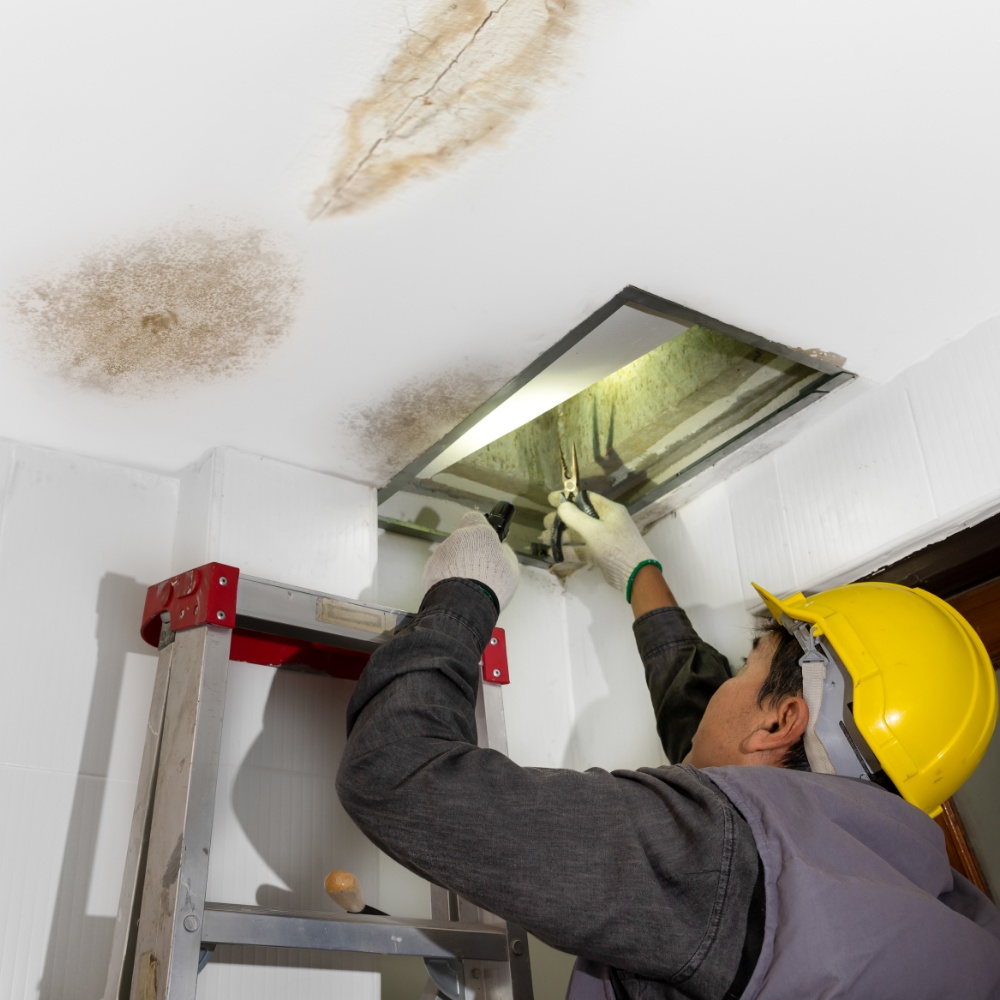
How Moisture Detection Protects Properties in Palm Bay After Roof Failures
Roof failures in Palm Bay rarely stop at the roofline.
After strong storms, heavy wind-driven rain, or hurricane activity, shingles may lift, flashing may loosen, and small gaps may form. Even when exterior repairs are completed quickly, moisture often travels beyond what’s visible.
In Florida’s humid climate, that hidden moisture doesn’t dry easily.
That’s where moisture detection becomes critical. In Palm Bay homes, early and accurate moisture detection after roof failures prevents mold growth, structural deterioration, and recurring interior damage.
What Happens After a Roof Failure in Palm Bay
When roofing materials are compromised, water intrusion can occur in several ways:
- Wind-driven rain forced under shingles
- Damaged flashing around vents or chimneys
- Cracked sealant at roof penetrations
- Compromised ridge vents
- Small punctures in roofing membranes
Once water enters, it rarely stays in one place.
It can:
- Soak attic insulation
- Saturate roof decking
- Travel along rafters
- Drip into wall cavities
- Pool above ceiling drywall
By the time a ceiling stain appears, moisture may have already spread across a wider structural area.
Why Palm Bay’s Climate Makes It Worse
Palm Bay’s environment increases the risk of lingering moisture.
High Humidity
Moist materials dry slowly in Florida’s damp air.
Frequent Storm Cycles
Repeated rain compounds minor roof damage.
Coastal Moisture Influence
Homes near waterways experience elevated ambient humidity.
Slab Foundations
Moisture migrating downward can settle near slab edges.
Even after visible leaks stop, internal dampness may remain.
Without moisture detection, that dampness can go unnoticed for weeks.
Why Visual Inspection Isn’t Enough
Homeowners often check for:
- Ceiling discoloration
- Dripping water
- Warped drywall
- Missing shingles
While these are important indicators, water often travels through framing before becoming visible.
A small stain may represent:
- Wet insulation above
- Damp rafters
- Moist wall cavities
- Saturated subfloors
In Palm Bay’s humid conditions, surfaces may feel dry while materials remain internally damp.
Moisture detection eliminates guesswork.
How Moisture Detection Works
Professional moisture detection involves multiple tools and methods.
Moisture Meters
Measure dampness in wood framing, drywall, and subfloors.
Thermal Imaging
Identify temperature differences caused by hidden moisture.
Attic Inspections
Check insulation saturation and roof decking condition.
Humidity Monitoring
Evaluate indoor moisture balance after repairs.
Exterior Assessment
Confirm roof repairs are complete and watertight.
Companies like Inspections and More FL combine these methods to create a complete picture of hidden moisture conditions.
Areas Most at Risk After Roof Failures
In Palm Bay homes, moisture detection commonly reveals hidden dampness in:
Attic Insulation
Water soaks insulation before ceiling damage appears.
Roof Decking
Repeated exposure weakens plywood sheathing.
Ceiling Joists
Moisture travels along framing members.
Wall Cavities
Water moves downward inside structural channels.
Around HVAC Ductwork
Attic moisture may affect duct insulation.
Without early detection, these areas remain vulnerable to mold growth and structural weakening.
How Early Detection Prevents Mold Growth
Mold requires moisture to grow.
When roof leaks leave materials damp, mold can develop within 24–48 hours — especially in Florida’s warm climate.
Moisture detection allows professionals to:
- Identify damp materials quickly
- Initiate structural drying
- Prevent mold colonization
- Limit the need for extensive remediation
The sooner moisture is addressed, the smaller the repair scope.
The Role of Structural Drying
If moisture is detected, controlled drying becomes essential.
This may include:
- Containment of affected areas
- Industrial dehumidification
- Strategic air movement
- Removal of saturated insulation
- Monitoring until moisture levels stabilize
Surface drying is not enough.
Materials must return to safe moisture thresholds before reconstruction.
Skipping this step often leads to recurring ceiling stains and hidden mold problems.
Structural Risks of Ignoring Hidden Moisture
When moisture remains inside structural materials, it can cause:
- Wood rot in rafters
- Ceiling sagging
- Insulation collapse
- Subfloor deterioration
- Fastener corrosion
- Mold spread into HVAC systems
Palm Bay’s coastal humidity accelerates these processes.
Early moisture detection reduces long-term structural repair costs.
Preventing Recurring Damage After Roof Repairs
Palm Bay homeowners can reduce risk by:
Scheduling Moisture Inspections After Storms
Even if exterior damage seems minor.
Monitoring Indoor Humidity
Keep levels between 45–55%.
Inspecting Attics Twice Per Year
Look for damp insulation or staining.
Repairing Flashing Immediately
Small gaps allow significant intrusion.
Evaluating HVAC Systems
Ensure attic moisture hasn’t affected ductwork.
Homes in Melbourne, Cocoa, Merritt Island, and Sanford face similar storm exposure, but Palm Bay’s storm cycles increase vulnerability.
Why Local Experience Matters
Moisture detection in Florida roof failures requires regional knowledge.
Professionals familiar with Palm Bay understand:
- Wind-driven rain patterns
- Coastal humidity cycles
- Slab foundation moisture behavior
- Common roof vulnerabilities
- Attic ventilation challenges
Inspections and More FL approaches roof-related moisture with a prevention-first mindset, focusing on identifying hidden dampness before it becomes structural damage.
That experience ensures accurate diagnosis without unnecessary demolition.
Protecting Your Palm Bay Home After Roof Damage
A repaired roof does not guarantee a dry structure.
Hidden moisture left behind can compromise framing, insulation, ceilings, and indoor air quality.
Moisture detection provides clarity.
It confirms whether:
- Insulation remains saturated
- Framing is damp
- Ceiling cavities require drying
- Mold risk is present
In Palm Bay’s humid climate, early detection after roof failures is one of the most effective ways to protect your property long term.
Addressing moisture early prevents small problems from becoming recurring repairs.