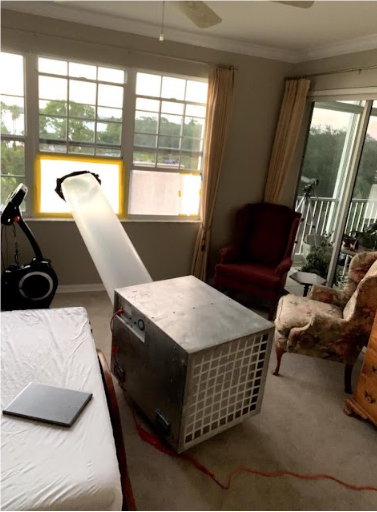
Air Blower Installation in Cocoa After Flooding Events: The Science Behind the Solution
Flooding events in Cocoa can happen quickly. Summer thunderstorms stall over Brevard County. Tropical systems push heavy rain inland. Storm surge and wind-driven rain affect coastal neighborhoods. Within hours, homes may experience standing water, soaked flooring, and saturated drywall.
Once the visible water is removed, many homeowners assume the worst is over. In reality, the most important phase of recovery is just beginning.
The science of drying after flooding depends heavily on airflow. Air blower installation—often referred to as air mover deployment—is a critical component of structural drying. In Cocoa’s humid coastal environment, it is not simply about speeding up evaporation. It is about controlling moisture movement, preventing mold growth, and protecting structural materials from long-term damage.
Understanding the science behind air blower installation helps homeowners appreciate why it plays such an important role in flood recovery.
What Happens to Building Materials During Flooding
When water enters a home, porous materials absorb moisture rapidly.
Commonly affected materials include:
-
Drywall
-
Wood framing
-
Subflooring
-
Insulation
-
Baseboards
-
Flooring underlayment
Even concrete slab foundations absorb water. Although concrete appears solid, it contains microscopic pores that hold moisture.
After the water is extracted, these materials remain saturated internally. Without intervention, they dry very slowly—especially in Florida’s high-humidity environment.
If drying is incomplete, moisture trapped inside materials can lead to:
-
Mold growth
-
Wood warping
-
Structural weakening
-
Odor development
-
Adhesive failure beneath flooring
Air blower installation addresses this problem at a scientific level.
The Science of Evaporation
Drying after flooding relies on evaporation—the process by which liquid water turns into water vapor and enters the air.
For evaporation to occur efficiently, three conditions are necessary:
-
Air movement across wet surfaces
-
Lower relative humidity in the surrounding air
-
Adequate temperature
In Cocoa, temperature is rarely an issue. However, humidity often is.
When indoor air is already humid, evaporation slows significantly. Moisture remains trapped inside materials longer.
Air blowers increase air velocity across wet surfaces, accelerating evaporation even when ambient humidity is elevated.
Why Still Air Slows Drying
After flooding, air near wet surfaces becomes saturated quickly. If that humid air remains stagnant, evaporation stops.
Think of it this way:
-
Wet material releases moisture
-
Surrounding air absorbs that moisture
-
Without movement, the air cannot hold more vapor
-
Drying stalls
Air blowers disrupt this stagnation.
By continuously moving air across surfaces, they:
-
Replace saturated air with drier air
-
Increase evaporation rates
-
Reduce surface moisture
This process is known as boundary layer disruption—a key principle in structural drying science.
The Role of Dehumidification
Air blowers alone do not remove moisture from the environment. They move moisture into the air.
That is why professional drying setups in Cocoa combine:
-
Air blowers (air movers)
-
Industrial dehumidifiers
Dehumidifiers extract water vapor from the air, lowering relative humidity.
When relative humidity drops, evaporation increases.
The combination of airflow and moisture extraction creates a controlled drying system.
In Florida’s humid climate, this pairing is essential.
Cocoa’s Unique Drying Challenges
Cocoa’s coastal environment adds complexity to flood recovery.
High Ambient Humidity
Outdoor humidity often exceeds 70–80%. Opening windows rarely helps.
Salt Air Exposure
Salt-laden air can accelerate corrosion on metal components, especially when surfaces remain damp.
Slab Foundation Homes
Many Cocoa homes are built on slabs. After flooding, moisture may migrate upward from saturated soil even after surface water is removed.
Warm Temperatures
Heat increases evaporation potential but also increases the risk of mold growth if moisture remains uncontrolled.
Because of these factors, air blower installation must be carefully planned.
Strategic Placement of Air Blowers
Air movers are not placed randomly.
Professionals assess:
-
Moisture levels
-
Room layout
-
Surface materials
-
Airflow patterns
-
Dehumidifier location
Air blowers are typically positioned to:
-
Create circular airflow
-
Direct air across wet drywall and baseboards
-
Push air beneath cabinets
-
Target flooring seams
-
Support subfloor drying
The goal is to create consistent airflow across all affected materials.
Drying Hardwood and Subfloor Systems
Hardwood flooring is particularly vulnerable after flooding.
Water may seep between boards and into subfloor layers.
Air blower installation helps by:
-
Increasing evaporation from board surfaces
-
Supporting under-floor drying systems
-
Reducing cupping and warping
Without controlled airflow, hardwood may swell permanently.
Moisture meters are used daily to track drying progress.
Slab Foundations and Vapor Pressure
In Cocoa, slab homes present an additional drying challenge.
When soil becomes saturated, moisture pressure beneath the slab increases. Concrete absorbs moisture and releases it gradually upward.
Air blowers positioned along slab edges help manage surface evaporation.
Combined with dehumidification, this reduces vapor buildup inside the home.
Ignoring slab moisture often leads to recurring flooring problems weeks later.
Preventing Mold Growth During Drying
Mold can begin developing within 24–48 hours in Florida conditions.
Air blower installation reduces mold risk by:
-
Shortening drying time
-
Preventing stagnant moisture pockets
-
Supporting dehumidification
-
Reducing surface dampness
However, if drying is delayed or incomplete, mold remediation may become necessary.
Companies such as Inspections and More FL often emphasize immediate airflow deployment to minimize secondary damage.
Why Household Fans Are Not Enough
Homeowners sometimes attempt to dry flood-damaged areas using box fans or ceiling fans.
While helpful, these devices:
-
Produce lower air velocity
-
Do not create targeted airflow patterns
-
Cannot manage large-scale moisture
-
Are not paired with industrial dehumidifiers
Professional air movers generate significantly higher airflow volumes and are positioned strategically based on moisture mapping.
Effective drying requires coordinated equipment, not casual ventilation.
Monitoring the Drying Process
Air blower installation is only part of the process.
Professionals monitor:
-
Wood moisture content
-
Drywall saturation levels
-
Indoor relative humidity
-
Temperature conditions
Daily readings confirm whether materials are drying properly.
Drying is complete only when moisture levels return to acceptable baseline ranges.
In Cocoa’s humid climate, this monitoring phase is essential.
Long-Term Protection After Flooding
Proper air blower installation protects Cocoa homes by:
-
Preserving structural framing
-
Preventing mold growth
-
Stabilizing flooring systems
-
Protecting insulation
-
Reducing odor development
Flood recovery is not complete until moisture is fully controlled.
Skipping airflow intervention increases the risk of recurring damage.
Preventative Insights for Future Flood Events
Cocoa homeowners can reduce flood-related damage by:
-
Maintaining proper drainage around the home
-
Inspecting roofs regularly
-
Installing moisture alarms
-
Servicing HVAC systems
-
Acting quickly after water intrusion
Early deployment of air movers significantly reduces long-term repair costs.
Why Local Experience Matters
Florida flood recovery differs from dry climates.
Professionals familiar with Cocoa understand:
-
Coastal humidity behavior
-
Slab foundation vapor dynamics
-
Storm rainfall intensity
-
Salt air effects on materials
-
AC system performance during high humidity
Experience in surrounding communities like Melbourne, Palm Bay, Merritt Island, and Sanford enhances understanding of regional moisture patterns.
Local knowledge improves drying outcomes.
A Science-Based Approach to Flood Recovery
Air blower installation in Cocoa after flooding events is grounded in physics and environmental science.
By accelerating evaporation, disrupting saturated air layers, and supporting dehumidification, air movers transform a damp, unstable environment into one that can dry efficiently.
In Florida’s humid coastal climate, this process is not optional — it is essential.
When applied strategically and monitored carefully, air blower installation helps restore homes safely and prevents recurring moisture damage long after floodwaters disappear.