
Air Blower Installation in Palm Bay During Storm Season: Common Mistakes Homeowners Make
Storm season in Palm Bay has a rhythm.
Afternoon thunderstorms roll in fast. Tropical systems sit offshore longer than expected. Heavy rain pounds rooftops, pushes water under door thresholds, and saturates soil around foundations.
When water finds its way inside — even in small amounts — many homeowners act quickly. Towels come out. Shop vacs run. And often, a few air blowers are brought in to “dry everything out.”
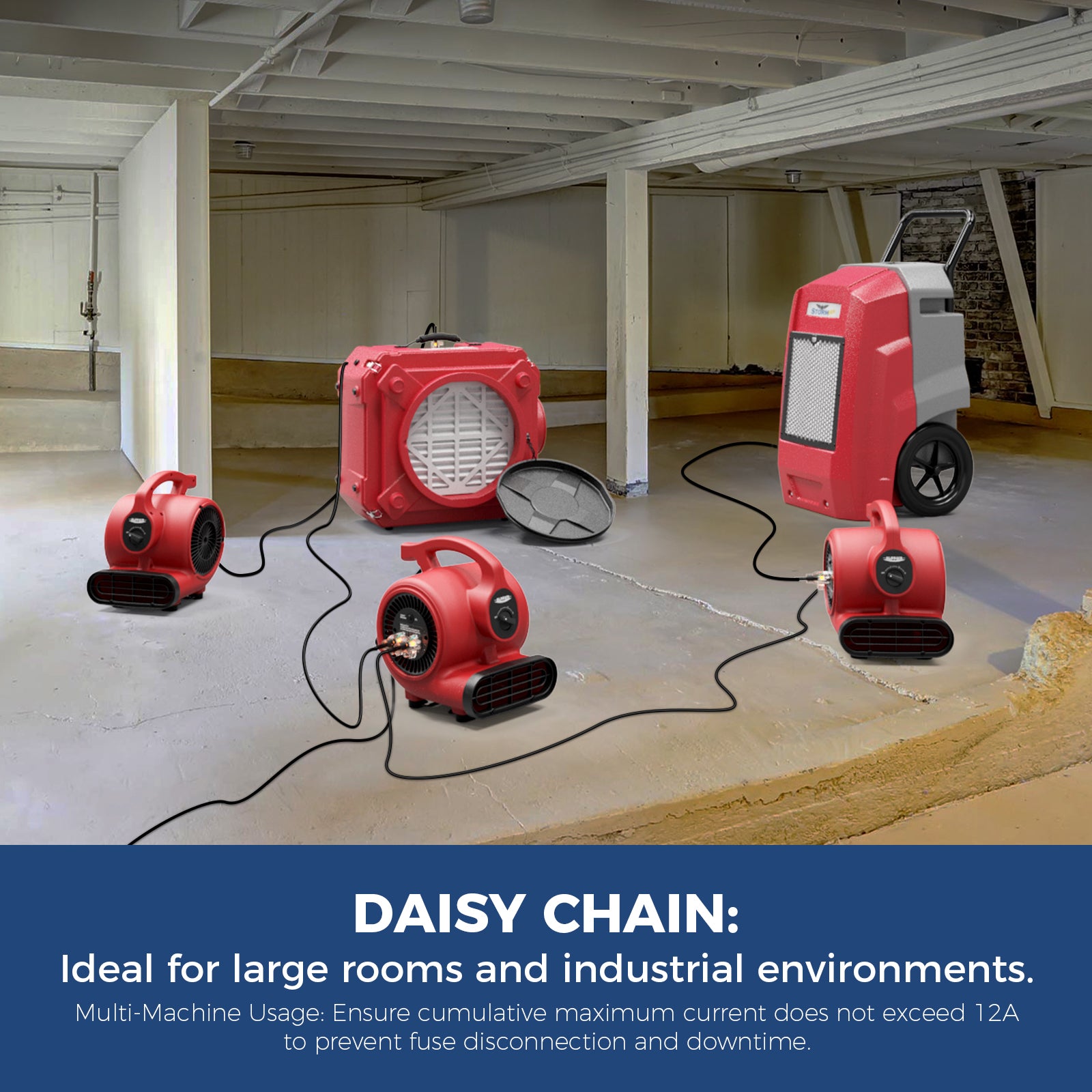
Air movers (sometimes called air blowers) are powerful tools during structural drying. But during storm season in Palm Bay, improper installation and use can create more problems than solutions.
Understanding the common mistakes helps homeowners protect their property instead of unintentionally spreading moisture.
Why Storm Season in Palm Bay Requires Controlled Drying
Palm Bay’s climate during storm season includes:
• High humidity even after rain stops
• Warm temperatures that accelerate microbial growth
• Elevated groundwater after heavy storms
• Prolonged damp outdoor air
When interior materials become wet — drywall, baseboards, subflooring, insulation — they don’t dry efficiently on their own.
Air blowers increase evaporation by moving air across damp surfaces.
But evaporation alone isn’t enough.
Without proper moisture control, you’re just moving humid air around the room.
Mistake #1: Using Air Blowers Without Dehumidifiers
This is the most common error.
Homeowners often place several air movers in a room and assume airflow equals drying.
What actually happens?
• Moisture evaporates from surfaces
• Humidity rises in the room
• Air becomes saturated
• Materials reabsorb moisture
In Palm Bay’s already humid environment, air blowers must be paired with dehumidifiers.
Air movers push moisture off materials.
Dehumidifiers remove that moisture from the air.
Without both working together, drying stalls.
Mistake #2: Ignoring Hidden Moisture
After a storm, visible wet spots get attention.
But water travels.
It can wick:
• Up drywall behind baseboards
• Beneath laminate flooring
• Into wall cavities
• Along slab expansion joints
• Inside insulation layers
Installing air blowers only in visible areas leaves hidden moisture untouched.
Professional moisture detection using meters and thermal imaging helps identify where air movers should actually be placed.
Guesswork leads to incomplete drying.
Mistake #3: Incorrect Airflow Direction
Air movers are not meant to blast directly into walls at random angles.
Proper placement matters.
Incorrect installation can:
• Create turbulence without effective evaporation
• Blow contaminants into unaffected areas
• Force moisture deeper into materials
• Disrupt containment zones
Air movers should create consistent airflow across wet surfaces — not just stir the air.
During storm season, controlled airflow reduces cross-contamination risk.
Mistake #4: Skipping Containment
If storm water has introduced contamination — especially in cases involving minor flooding — air blowers can spread particles.
Without containment:
• Mold spores may become airborne
• Debris can circulate through HVAC returns
• Adjacent rooms may become affected
Before installing air movers, it’s important to determine whether containment is necessary.
In Palm Bay homes, storm-driven water may carry soil and organic material inside.
Spreading that through airflow complicates remediation.
Mistake #5: Stopping Too Early
Drying looks complete when surfaces feel dry.
But materials beneath the surface may still hold moisture.
Homeowners often turn off air blowers after 24–48 hours once visible dampness disappears.
That’s often too soon.
Wood framing, subflooring, and insulation require moisture testing to confirm safe levels.
Stopping early allows residual moisture to remain — creating conditions for mold growth weeks later.
Companies like Inspections and More FL use moisture mapping to determine when drying is actually complete.
Verification prevents recurrence.
Mistake #6: Ignoring Crawl Spaces
In Palm Bay, crawl spaces are especially vulnerable during storm season.
Saturated soil raises humidity levels beneath the home.
Even if living areas appear dry, crawl space framing may remain damp.
Installing air blowers only inside the living space overlooks the area below.
Moisture rising from beneath can undo interior drying efforts.
Crawl space evaluation should always follow storm-related water intrusion.
Mistake #7: Running HVAC During Active Drying
Homeowners sometimes run HVAC systems during air blower operation to “help circulate air.”
This can backfire.
HVAC systems may:
• Spread moisture through ductwork
• Distribute contaminants
• Increase indoor humidity
• Strain equipment
Controlled drying requires coordinated airflow and humidity management.
Mixing HVAC airflow with drying equipment can interfere with the process.
Why Storm Season Increases Mold Risk
Palm Bay’s storm season creates ideal conditions for microbial growth.
Warm temperatures combined with moisture allow mold to develop within 24 to 48 hours.
Improper air blower use may accelerate evaporation but fail to remove humidity.
That lingering humidity feeds mold development in:
• Wall cavities
• Subfloors
• Attic insulation
• Crawl space framing
Proper drying protects structural integrity and indoor air quality.
Rushing the process increases remediation costs later.
When to Schedule a Professional Evaluation
After storm-related water intrusion, consider a professional evaluation if you notice:
• Persistent musty odors
• Warped flooring
• Ceiling discoloration
• Elevated indoor humidity
• Condensation on windows
• Recurrent dampness after drying
Air blowers are tools — not solutions by themselves.
An evaluation identifies moisture sources, confirms drying progress, and determines whether additional steps are necessary.
Preventing Storm-Season Drying Mistakes
Palm Bay homeowners can reduce errors by:
• Pairing air movers with dehumidifiers
• Using moisture meters to verify dryness
• Inspecting crawl spaces after heavy rain
• Scheduling roof inspections before storm season
• Addressing minor leaks immediately
• Avoiding DIY containment when contamination is suspected
Storm season is predictable.
Drying mistakes are preventable.
Why Local Experience Matters
Moisture behavior in Palm Bay differs from inland Sanford or waterfront Merritt Island.
Understanding:
• Local soil saturation patterns
• Typical slab and crawl space construction
• AC condensation behavior during storms
• Seasonal humidity cycles
allows professionals to design effective drying plans.
Localized knowledge prevents overuse of equipment while ensuring no damp areas are overlooked.
A Practical Next Step
If you’ve installed air blowers after a storm in Palm Bay but still notice humidity or odors, it may be time for a professional moisture assessment.
Airflow alone doesn’t solve storm-season moisture.
Controlled drying, proper sequencing, and moisture verification protect your home long-term.
In Florida’s humid climate, small mistakes during drying can lead to larger repairs later.
Handled correctly, air blower installation becomes part of a coordinated drying strategy — not a gamble.
