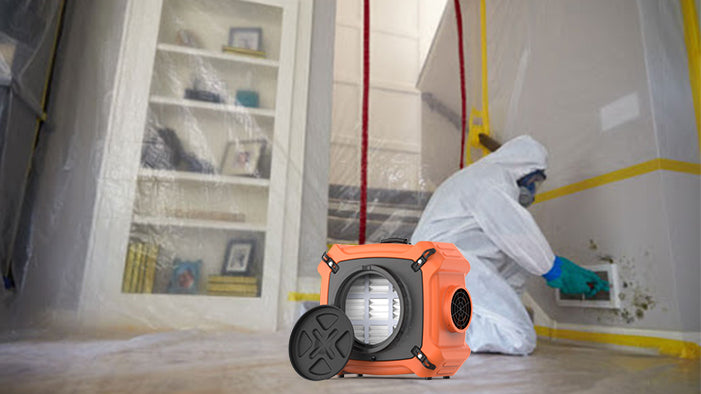
Air Scrubbing in Sanford in Slab Foundation Houses: The Science Behind the Solution
In Sanford, slab foundation homes are common. They’re practical, durable, and well-suited for Florida construction. But during long humid seasons and after heavy rain, these homes can develop a very specific type of indoor air issue.
You might not see visible mold. You might not have standing water. But you notice something isn’t right.
There’s a lingering musty smell. The air feels stale. Dust seems heavier than usual. Certain rooms feel slightly damp even when the AC runs constantly.
In many Sanford homes — and in similar areas like Palm Bay, Melbourne, Cocoa, and Merritt Island — air scrubbing becomes part of the solution when indoor air quality has been affected by moisture-related contamination.
Understanding the science behind air scrubbing helps explain why it’s often necessary in slab foundation properties.
What the Issue Really Is
Slab foundation houses sit directly on concrete poured over soil. There’s no crawl space underneath. While that design reduces some risks, it also creates unique moisture behavior.
Concrete is porous. During heavy rain and high humidity — both common in Sanford — ground moisture can slowly migrate upward through the slab. This process is known as vapor intrusion.
Over time, moisture can:
- Affect flooring adhesives
- Soften drywall along baseboards
- Raise indoor humidity levels
- Create conditions for mold growth
- Release microscopic particles into the air
Even after visible mold is removed or moisture sources are corrected, airborne spores and fine particulate contamination can remain suspended in indoor air.
That’s where air scrubbing becomes necessary.
Why This Happens So Often in Sanford Slab Homes
Sanford experiences frequent rain cycles, elevated humidity, and rising groundwater levels during storm season.
Several local factors increase the need for air purification in slab homes:
High Water Table
Soil saturation beneath the slab increases vapor pressure pushing moisture upward.
Heavy Storm Activity
Prolonged rain events keep foundations damp for extended periods.
Persistent Humidity
Outdoor humidity remains high long after rain stops, slowing indoor drying.
AC Condensation Issues
Ductwork in slab homes often runs through attics, where condensation can contribute to air contamination.
Limited Airflow at Floor Level
Because there is no crawl space, moisture accumulating near the slab has fewer ventilation escape routes.
In Sanford and nearby Melbourne or Cocoa areas, we frequently see indoor air quality concerns tied directly to slab-related moisture behavior.
Common Signs Property Owners Notice
Air contamination doesn’t always look obvious. In many cases, homeowners report subtle but persistent changes.
These include:
- Musty or earthy odors
- Increased dust accumulation
- Mild indoor irritation
- Stale-smelling air
- Rooms feeling humid despite cooling
- Recurring minor mold spots along baseboards
Even after visible mold cleanup, odor may remain. That odor is often caused by microscopic particles still circulating in the air.
Air scrubbing addresses that invisible contamination.
Hidden or Overlooked Sources of Airborne Contamination
In slab foundation homes, contamination sources often remain hidden.
Common areas include:
- Under laminate or vinyl flooring
- Behind drywall along exterior walls
- Inside insulation near slab edges
- HVAC return ducts pulling contaminated air
- Attic duct leaks introducing humid air
- Areas previously affected by slow leaks
When mold grows, it releases spores. Even if the growth is localized, those spores can spread throughout the house via air movement.
Without filtration, particles settle into vents, fabrics, and porous materials.
This is why remediation alone may not fully restore air quality.
Why DIY Air Cleaning Usually Fails
Homeowners often try air fresheners, basic HEPA air purifiers, or opening windows.
While these steps may temporarily improve comfort, they rarely solve slab-related contamination issues.
Here’s why:
Limited Filtration Power
Small residential purifiers cannot handle widespread particulate contamination.
No Containment
Disturbing mold without containment spreads spores further.
Air Movement Alone Is Not Enough
Opening windows in humid Florida air can increase moisture indoors.
No Source Correction
If slab moisture or hidden growth remains, contamination continues.
Air scrubbing works differently because it is engineered to capture microscopic particles at high efficiency.
Professional Inspection & Detection Explained
Before air scrubbing begins, a thorough inspection is essential.
In Sanford slab homes, evaluation typically includes:
Visual Inspection
Checking baseboards, flooring edges, vents, and attic connections.
Thermal Imaging
Detecting moisture pockets behind walls and along slab edges.
Moisture Meter Testing
Confirming whether drywall or subflooring retains elevated moisture.
HVAC System Review
Ensuring ductwork is not contributing to contamination.
Air Quality Assessment
Measuring particulate levels and evaluating odor sources.
Inspections and More FL frequently identifies elevated airborne particulates even after homeowners believe the visible problem has been resolved.
Air scrubbing is recommended when air contamination remains after moisture correction.
The Science Behind Air Scrubbing
Air scrubbing uses high-efficiency filtration systems to remove airborne particles from indoor environments.
Professional air scrubbers contain:
HEPA Filtration
High-Efficiency Particulate Air filters capture 99.97% of particles as small as 0.3 microns.
Activated Carbon Filters
These reduce odors by absorbing volatile organic compounds.
Negative Air Pressure Systems
Used during containment to prevent contaminated air from spreading.
High Airflow Volume
Industrial units circulate large volumes of air multiple times per hour.
In a slab foundation home in Sanford, air scrubbers are strategically placed to continuously cycle indoor air through filtration systems.
This process removes:
- Mold spores
- Fine dust
- Construction debris
- Bacterial particles
- Odor-causing compounds
The goal is not masking smells — it’s physically removing contaminants.
Proper Remediation & Moisture Control Process
Air scrubbing is most effective when combined with full remediation steps.
A comprehensive approach includes:
Containment
Isolating affected areas to prevent spore spread.
Removal of Contaminated Materials
Drywall or flooring sections may need removal.
Surface Cleaning & Treatment
Applying antimicrobial solutions where appropriate.
Air Scrubbing Operation
Running continuously during remediation to clean circulating air.
Dehumidification
Lowering humidity to prevent further growth.
Structural Dryouts
Using air movers and drying equipment when needed.
Slab Moisture Correction
Addressing vapor barriers or drainage issues.
Final Clearance Assessment
Ensuring air quality levels have stabilized.
This integrated method restores both surfaces and indoor air.
How to Prevent Air Quality Problems in Slab Homes
Prevention focuses on controlling moisture before contamination occurs.
Sanford homeowners can:
- Monitor indoor humidity levels
- Install vapor barriers beneath flooring
- Inspect slab edges annually
- Seal expansion joints properly
- Maintain HVAC systems regularly
- Ensure attic ducts are insulated
- Schedule post-storm evaluations
- Address plumbing leaks immediately
Homes in Palm Bay and Merritt Island experience similar slab moisture patterns, especially during extended rainy periods.
Routine inspections reduce the likelihood that air scrubbing becomes necessary.
Why Local Florida Experience Matters
Slab foundation homes in Central Florida behave differently than homes in dry climates.
Sanford’s:
- High groundwater levels
- Prolonged humidity
- Frequent rain cycles
- Warm temperatures year-round
… create ideal conditions for airborne contamination if moisture isn’t controlled.
Professionals familiar with Cocoa, Melbourne, and surrounding communities understand how slab moisture migrates and how HVAC systems interact with indoor air patterns.
Inspections and More FL approaches slab-related air quality issues with this local understanding — focusing on both moisture science and air purification technology.
A Calm, Practical Next Step
If your Sanford slab foundation home smells persistently musty or feels stale even after visible mold cleanup, it may be time to evaluate indoor air quality.
Air scrubbing is not a cosmetic solution. It’s a scientific filtration process designed to restore balance to indoor air after contamination.
Florida’s humidity and soil conditions aren’t changing.
But with proper inspection, moisture control, and air purification when needed, slab homes can maintain healthy, stable indoor environments year-round.