How Structural Dryouts Protect Properties in Merritt Island When Indoor Air Feels Damp
If you live on Merritt Island, you’ve probably had days when the indoor air just feels… heavy. Not wet enough to see water damage. Not humid enough to fog every window. But damp enough that something feels off.
In a coastal environment surrounded by the Indian River Lagoon, Banana River, and Sykes Creek, that “damp” feeling isn’t just about comfort. It can be an early warning sign of elevated moisture inside structural materials.
Why Indoor Air Feels Damp in Merritt Island Homes
Merritt Island’s coastal climate creates constant moisture pressure on homes.
Common contributing factors include:
- High outdoor humidity year-round
- Elevated water tables after rain
- Crawl spaces absorbing ground moisture
- Slab foundations releasing moisture upward
- HVAC condensation issues
- Storm-driven rain intrusion
Even if no visible water enters the home, structural materials can absorb moisture slowly.
Over time, that moisture releases into the air — creating that persistent damp feeling.
What a Structural Dryout Actually Is
A structural dryout is a controlled drying process designed to remove moisture from building materials — not just from the air.
It focuses on drying:
- Wall framing
- Subflooring
- Slab edges
- Insulation
- Crawl space joists
- Attic decking
Unlike simply lowering the thermostat, structural drying uses professional equipment to target moisture inside materials.
The goal is stabilization — bringing structural moisture levels back to safe ranges.
Why Damp Indoor Air Can Signal Hidden Structural Moisture
When indoor air feels humid despite AC running, it often means:
- Moisture is evaporating from damp materials
- Slab edges are releasing absorbed groundwater
- Crawl space air is migrating upward
- Wall cavities are holding residual moisture
In Merritt Island homes, especially raised properties near waterways, this pattern is common after heavy rain.
The air feels damp because the structure is slowly releasing moisture into the living space.
Without intervention, that moisture cycle continues.
How Structural Dryouts Work
Professional structural dryouts follow a science-based process.
Step 1: Moisture Detection
Technicians measure:
- Indoor relative humidity
- Moisture content in wood framing
- Subfloor moisture levels
- Slab edge readings
- Crawl space humidity
Thermal imaging may identify hidden damp zones behind drywall or under flooring.
This step confirms whether structural materials are contributing to indoor dampness.
Step 2: Air Movement Installation
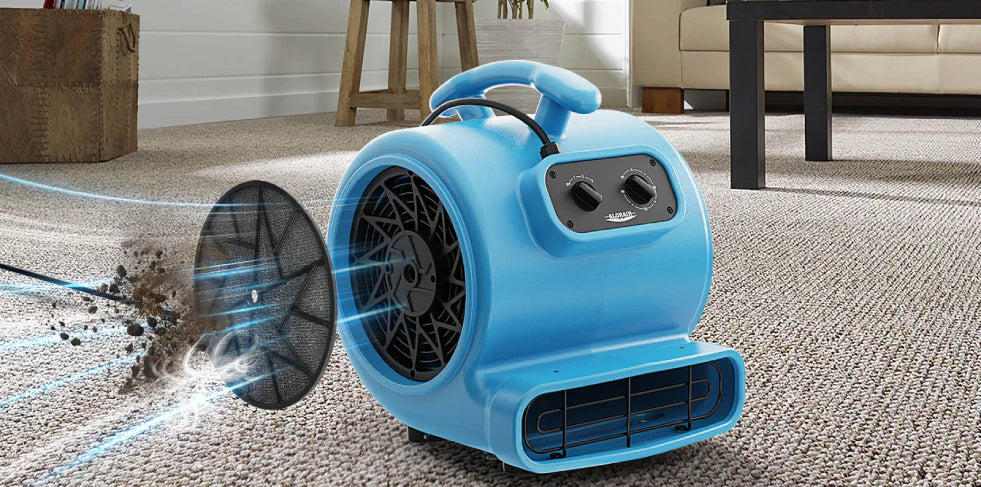
High-velocity air movers (air blowers) are strategically placed to:
- Increase airflow across wall bases
- Accelerate evaporation from subfloors
- Improve circulation in stagnant areas
Air movement breaks up the humid air layer sitting on damp materials.
In Merritt Island homes, airflow is often directed toward perimeter walls and crawl space openings.
Step 3: Industrial Dehumidification
Air movers release moisture from materials into the air.
Dehumidifiers remove that moisture from the air, lowering overall humidity.
This two-step process:
- Speeds up evaporation
- Prevents reabsorption
- Stabilizes indoor air conditions
Because coastal humidity slows natural drying, dehumidifiers are essential.
Step 4: Crawl Space and Attic Evaluation
When indoor air feels damp, professionals check both ends of the home.
Crawl spaces may trap humid soil air.
Attics may accumulate condensation during cooler nights.
Targeted drying in these zones prevents moisture migration into living areas.
Step 5: Monitoring and Verification
Structural dryouts are monitored daily.
Technicians re-check:
- Wood moisture levels
- Subfloor readings
- Indoor humidity
- Air temperature
Drying continues until materials return to safe moisture content levels.
Professionals experienced with Merritt Island’s coastal conditions, such as Inspections and More FL, understand how lagoon-influenced humidity affects drying timelines.
How Structural Dryouts Protect the Property
When indoor air feels damp, structural dryouts prevent long-term problems such as:
Mold Development
Elevated moisture levels create ideal microbial conditions.
Wood Framing Swelling
Moisture expansion can stress structural components.
Flooring Damage
Hardwood may cup or warp.
Insulation Degradation
Damp insulation loses effectiveness.
HVAC Contamination
Persistent humidity affects ductwork and system performance.
By stabilizing materials, structural dryouts stop moisture cycles before damage spreads.
Why AC Alone Doesn’t Fix the Problem
Many homeowners lower the thermostat when air feels humid.
While AC removes some humidity, it does not:
- Target moisture inside walls
- Dry slab edges
- Remove dampness from crawl spaces
- Correct localized saturation
Air conditioning controls comfort. Structural drying controls moisture inside materials.
In coastal Florida, the difference matters.
Long-Term Prevention in Merritt Island Homes
After structural drying, prevention becomes essential.
Homeowners can reduce recurring dampness by:
- Monitoring indoor humidity (45–55% ideal range)
- Ensuring proper exterior drainage
- Installing vapor barriers in crawl spaces
- Servicing HVAC systems regularly
- Checking attic ventilation
- Inspecting slab edges after heavy rain
Homes in nearby Cocoa and Melbourne face similar humidity, but Merritt Island’s island geography increases groundwater influence.
Proactive monitoring reduces repeat issues.
Why Local Coastal Experience Matters
Structural moisture behaves differently in humid coastal zones.
Professionals familiar with Merritt Island understand:
- Tidal moisture patterns
- Hydrostatic pressure beneath foundations
- Salt air effects on building materials
- Evaporation delays in lagoon-side environments
- Stack effect airflow patterns in raised homes
Accurate drying strategies depend on understanding these regional behaviors.
Experience prevents unnecessary demolition while ensuring full stabilization.
A Practical Perspective for Merritt Island Homeowners
When indoor air feels damp in a Merritt Island home, it’s rarely just a comfort issue.
It often signals elevated moisture inside structural materials.
Structural dryouts protect properties by:
- Removing hidden moisture
- Stabilizing wood framing and subfloors
- Lowering indoor humidity
- Preventing mold-friendly conditions
- Protecting long-term property value
In a coastal climate surrounded by water, moisture control is ongoing.
With accurate detection, controlled airflow, and professional dehumidification, Merritt Island homes can maintain stable indoor conditions — even when the outdoor air stays humid year-round.