
Moisture Detection in Palm Bay Under Hardwood Flooring: Long-Term Protection Strategies
Hardwood flooring adds warmth, character, and long-term value to homes throughout Palm Bay. But in Florida’s humid coastal climate, hardwood can also act like an early warning system for hidden moisture problems. When boards begin cupping, gapping, or lifting, it’s rarely just a cosmetic issue. It’s often a sign that moisture has moved beneath the surface.
In Palm Bay, with its high humidity, heavy summer rains, slab foundations, and fluctuating groundwater levels, moisture under hardwood flooring is more common than many homeowners expect. Detecting it early — and implementing long-term protection strategies — can prevent structural damage, mold growth, and expensive flooring replacement.
Let’s take a closer look at how moisture detection works under hardwood flooring in Palm Bay homes and what steps protect your property for the long run.
Why Hardwood Flooring Is Vulnerable in Palm Bay
Palm Bay homes experience several environmental pressures that affect flooring systems.
High Ambient Humidity
Relative humidity in Florida often stays above 60% without active control. Wood naturally absorbs moisture from the air. When humidity remains elevated, hardwood boards expand.
Slab Foundation Construction
Many homes in Palm Bay sit directly on concrete slabs. After heavy rain, hydrostatic pressure can push moisture upward through the slab. If a proper vapor barrier is missing or compromised, that moisture reaches the flooring system.
Storm Season Exposure
Wind-driven rain can enter around doors, windows, or roof systems, traveling downward and settling beneath flooring edges.
Plumbing Leaks
Small leaks beneath sinks or inside walls can spread under flooring without immediate visible damage.
Because hardwood is porous and responsive to environmental changes, it reacts quickly to moisture imbalance.
Early Signs of Moisture Under Hardwood Flooring
Moisture under hardwood does not always appear as standing water. Instead, homeowners often notice subtle changes:
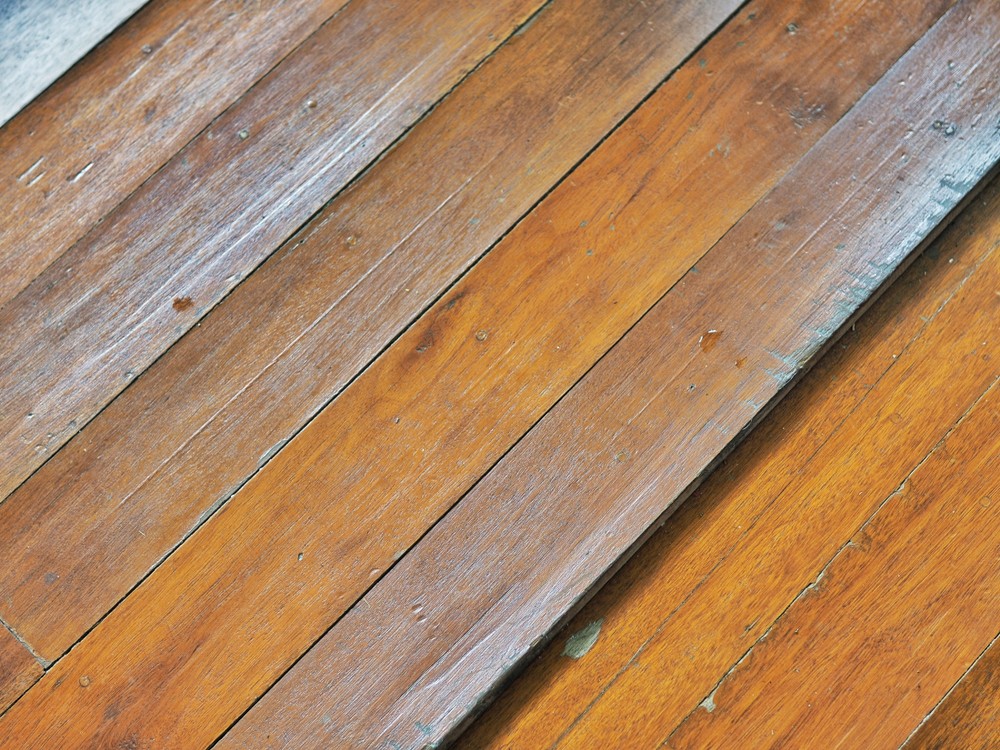
- Cupping (edges raised higher than the center)
- Crowning (center raised higher than edges)
- Gaps between boards
- Buckling or lifting sections
- Soft or spongy areas
- Persistent musty odors
These symptoms indicate moisture imbalance — not necessarily surface spills.
Ignoring these early signs allows moisture to move deeper into subflooring and framing.
Why Surface Dryness Can Be Misleading
After a spill or storm, the floor may look dry within hours. However:
- Subfloor layers may remain saturated
- Insulation beneath slab edges may hold moisture
- Adhesives under engineered hardwood may weaken
- Slab moisture may continue migrating upward
Palm Bay’s humid air slows evaporation. Even with air conditioning running, moisture can remain trapped beneath flooring systems.
Surface appearance alone is not reliable.
How Professional Moisture Detection Works
Detecting moisture beneath hardwood requires specialized tools and a structured process.
Visual Inspection
Examining floor conditions, transitions, baseboards, and nearby walls for signs of swelling or warping.
Moisture Meter Testing
Pin or pinless moisture meters measure the moisture content of hardwood and subfloor layers.
Elevated readings indicate imbalance even when damage is not obvious.
Thermal Imaging
Infrared cameras identify temperature anomalies that may suggest hidden moisture patterns beneath flooring.
Slab Testing (If Applicable)
In slab foundation homes, professionals may test concrete moisture levels to determine if vapor transmission is occurring.
Companies like Inspections and More FL emphasize combining these tools to ensure hidden moisture is accurately identified in Palm Bay homes.
Why Early Detection Matters
Moisture left untreated beneath hardwood can lead to:
- Mold growth in subflooring
- Wood rot
- Delamination of plywood
- Structural framing damage
- Full flooring replacement
- Persistent indoor air quality issues
In Florida’s climate, mold can begin developing within 24–48 hours in damp subfloor areas.
Early detection significantly reduces long-term repair costs.
Structural Drying When Needed
If moisture levels are elevated, controlled structural drying may be required.
This process typically involves:
- Industrial dehumidifiers
- Air movers
- Floor drying mats
- Controlled humidity monitoring
In Palm Bay’s humid environment, simply opening windows is ineffective. Outdoor air often contains more moisture than indoor air.
Drying must be gradual and monitored to prevent further flooring distortion.
Long-Term Protection Strategies
Once moisture is detected and corrected, long-term protection becomes the priority.
Maintain Proper Indoor Humidity
Keep indoor relative humidity between 45% and 55%.
Dehumidification may be necessary during humid months.
Inspect Plumbing Regularly
Check under sinks, around appliances, and near water heaters for small leaks.
Monitor Slab Moisture
In slab homes, periodic moisture evaluation helps detect vapor transmission early.
Ensure Proper Drainage
Gutters and grading should direct water away from the foundation.
Service HVAC Systems
Air conditioning systems must drain properly and avoid excessive condensation.
Install Vapor Barriers
If flooring is replaced, ensure proper moisture barriers are installed between slab and hardwood.
Proactive maintenance significantly reduces recurrence.
Common Mistakes Homeowners Make
In Palm Bay, common errors include:
- Ignoring minor cupping
- Running fans without dehumidifiers
- Replacing boards without drying subfloor
- Lowering thermostat instead of reducing humidity
- Waiting weeks before inspection
These actions often worsen the underlying issue.
Moisture beneath hardwood rarely resolves on its own.
Cost Factors for Moisture Detection and Drying
Costs depend on:
- Size of affected area
- Type of hardwood (solid vs engineered)
- Extent of subfloor involvement
- Duration of moisture exposure
- Equipment runtime for drying
- Need for material removal
Early detection typically limits both scope and expense.
Delays increase the likelihood of full flooring replacement.
Why Local Palm Bay Experience Matters
Palm Bay’s coastal environment creates moisture patterns unique to Florida’s Space Coast.
Professionals familiar with the area understand:
- How slab foundations respond to heavy rain
- How humidity cycles affect hardwood expansion
- How water tables influence vapor transmission
- How storm season impacts drying timelines
That local knowledge leads to more accurate moisture detection and more effective long-term solutions.
A Practical, Long-Term Approach
Hardwood flooring in Palm Bay homes requires proactive moisture management.
If you notice cupping, buckling, or persistent odors, a structured moisture evaluation should be the first step.
The correct sequence is:
Detect hidden moisture.
Correct the source.
Dry structural layers.
Verify stabilization.
Implement prevention strategies.
Moisture detection beneath hardwood is not about overreaction — it’s about protecting structural integrity and indoor air quality in Florida’s demanding climate.
Handled properly and early, long-term protection strategies ensure your hardwood flooring — and the structure beneath it — remain stable, dry, and resilient despite Palm Bay’s high humidity and storm exposure.
