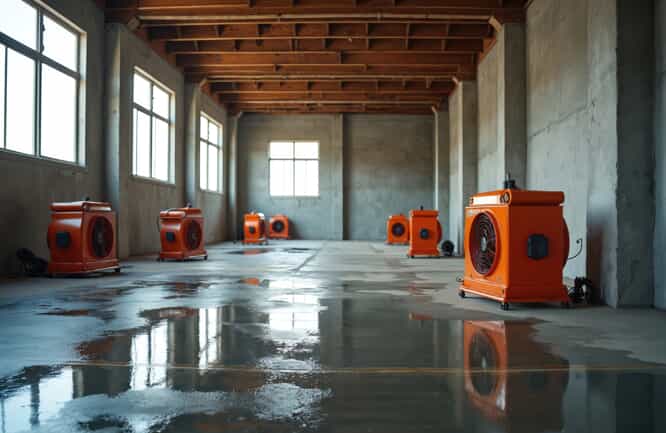
Structural Dryouts in Merritt Island in Slab Foundation Houses: Lessons Learned from Local Cases
Slab foundation homes are common throughout Merritt Island. From waterfront neighborhoods near the Banana River to inland communities closer to SR-520, many properties are built directly on concrete slabs. While slab construction is durable and well-suited for Florida’s sandy soil, it also presents unique moisture challenges—especially after heavy rain, plumbing leaks, or hurricane events.
Structural dryouts in slab homes require a methodical approach. Moisture doesn’t just sit on the surface. It migrates through porous concrete, wicks into drywall, seeps beneath flooring systems, and settles along baseboards. If not handled properly, it can lead to mold growth, flooring failure, and long-term structural deterioration.
Over the years, local cases in Merritt Island have highlighted important lessons about what works—and what doesn’t—when drying slab foundation homes. Understanding these lessons helps homeowners respond quickly and protect their properties effectively.
Why Slab Foundations in Merritt Island Are Vulnerable
Merritt Island’s geography plays a major role in slab moisture behavior.
High Water Tables
Being surrounded by water means groundwater levels can rise significantly after heavy rainfall.
Prolonged Rainfall Events
Storm systems and hurricanes saturate soil around foundations.
Coastal Humidity
Even without flooding, elevated humidity slows evaporation and drying.
Capillary Action in Concrete
Concrete is porous. It absorbs and releases moisture depending on surrounding conditions.
These environmental factors mean slab homes may experience moisture migration even without visible flooding.
Common Moisture Scenarios in Slab Homes
Structural dryouts are often required after:
-
Plumbing leaks beneath the slab
-
Washing machine or dishwasher line failures
-
Refrigerator water line leaks
-
Roof leaks that travel down wall cavities
-
Storm-related groundwater pressure
-
AC condensation overflow
Moisture may not appear dramatic at first. It often presents subtly.
Signs That Structural Dryout Is Necessary
Homeowners in Merritt Island may notice:
-
Damp baseboards
-
Soft or swollen drywall near floor level
-
Flooring separation or cupping
-
Musty odors
-
Cool or damp floor perimeters
-
Persistent humidity indoors
These signs indicate moisture may have migrated beyond surface areas.
Lesson #1: Surface Drying Is Not Enough
One of the most common mistakes in slab foundation cases is assuming that visible surface drying solves the problem.
Mopping floors or running household fans only addresses surface moisture.
Moisture often remains:
-
Inside concrete slabs
-
Behind drywall
-
Under flooring adhesives
-
In insulation along slab edges
Professional moisture detection tools are necessary to determine the extent of saturation.
Lesson #2: Early Moisture Mapping Reduces Damage
Local cases show that early moisture mapping significantly limits repair costs.
Professionals use:
-
Moisture meters
-
Thermal imaging
-
Hygrometers
to identify how far moisture has spread.
Mapping allows targeted drying rather than unnecessary demolition.
Companies such as Inspections and More FL often emphasize structured moisture mapping before beginning structural dryouts.
Lesson #3: Baseboards and Lower Drywall Are High-Risk Areas
In slab homes, moisture often wicks upward through drywall.
This happens because drywall acts like a sponge.
Even if the floor looks dry, the bottom few inches of drywall may remain damp.
Prompt removal of affected baseboards and selective drywall cuts often improves drying efficiency and prevents mold growth.
Lesson #4: Flooring Systems Can Trap Moisture
Tile, laminate, vinyl plank, and engineered wood floors may trap moisture beneath them.
Adhesives can:
-
Break down when exposed to water
-
Retain moisture
-
Create hidden pockets beneath flooring
Structural dryouts sometimes require lifting sections of flooring to ensure proper drying.
Ignoring trapped moisture often leads to recurring issues.
Lesson #5: Dehumidification Is Essential in Coastal Conditions
In Merritt Island’s humid environment, passive drying is rarely effective.
Professional structural dryouts typically involve:
-
Industrial dehumidifiers
-
High-velocity air movers
-
Controlled airflow patterns
Dehumidification lowers ambient moisture levels, encouraging concrete and framing to release trapped water.
Without humidity control, drying slows dramatically.
Lesson #6: Slab Moisture Can Travel Farther Than Expected
Moisture from a single plumbing leak may travel several feet along the slab.
Concrete distributes water laterally through capillary action.
Drying must account for the full spread—not just the visible source.
Comprehensive moisture mapping ensures full coverage.
Step-by-Step: How Structural Dryouts Are Conducted
Step 1: Identify and Stop the Source
Repair plumbing leaks or correct intrusion points immediately.
Step 2: Moisture Mapping
Inspect slab edges, drywall, flooring, and framing.
Step 3: Remove Affected Materials
-
Lift baseboards
-
Remove damaged drywall
-
Pull back saturated flooring if necessary
Step 4: Deploy Drying Equipment
Industrial dehumidifiers and air movers are placed strategically.
Step 5: Monitor Moisture Levels
Daily readings track progress and confirm drying.
Step 6: Confirm Structural Stability
Reconstruction begins only after moisture readings return to acceptable levels.
The Role of Indoor Humidity Control
High indoor humidity slows drying and increases mold risk.
Maintaining indoor humidity between 45–55% supports effective structural dryouts.
Whole-home dehumidifiers may be recommended in some cases.
Preventing Mold During Structural Dryouts
Mold growth is a risk when moisture lingers.
Quick action reduces:
-
Insulation saturation
-
Wood framing dampness
-
Subfloor moisture retention
-
Odor development
Proper drying minimizes the need for mold remediation.
Cost Considerations
Costs vary depending on:
-
Extent of moisture spread
-
Flooring removal requirements
-
Duration of equipment use
-
Accessibility of affected areas
-
Severity of water exposure
Early intervention generally lowers overall expense.
Delays increase repair scope.
Long-Term Prevention Strategies
Merritt Island homeowners can reduce future slab moisture risk by:
-
Monitoring plumbing systems regularly
-
Installing leak detection devices
-
Maintaining proper exterior drainage
-
Sealing foundation penetrations
-
Inspecting slab perimeters after storms
-
Monitoring indoor humidity levels
Proactive measures reduce structural stress.
Why Local Experience Matters
Merritt Island’s environment presents unique conditions:
-
Elevated water tables
-
Lagoon-driven humidity
-
Storm surge exposure
-
Slab foundation construction
-
Salt air influence
Professionals familiar with Merritt Island, Cocoa, Melbourne, Palm Bay, and Sanford understand how moisture behaves in Florida slab homes.
Local expertise improves drying strategies and long-term planning.
A Practical Takeaway for Slab Homeowners
Structural dryouts in Merritt Island slab foundation houses require more than surface cleanup. Moisture migrates through concrete and wall systems in ways that are not immediately visible.
Lessons from local cases consistently show that:
-
Early moisture detection limits damage
-
Professional drying prevents mold
-
Flooring systems must be evaluated carefully
-
Dehumidification is critical in coastal climates
-
Reconstruction should wait until full dryness is confirmed
By responding quickly and using a structured approach, homeowners can protect their slab foundation homes from long-term structural damage.
In Florida’s humid coastal environment, proper structural dryouts are not just repairs—they are preventative investments in the home’s durability and stability.