
Thermal Imaging Inspections in Palm Bay When AC Condensation Becomes a Problem: Warning Signs You Should Never Ignore
In Palm Bay, air conditioning isn’t optional — it’s constant. Systems run most of the year, especially through long humid summers. And while AC units are designed to remove moisture from the air, they can also become one of the most common hidden moisture sources inside a home or commercial property.
When condensation builds up in the wrong places, it doesn’t always drip into a visible puddle. More often, it settles quietly behind drywall, above ceilings, and inside attic spaces.
By the time staining appears, moisture has usually been active for a while.
That’s where thermal imaging inspections become critical. In Palm Bay’s humid climate, catching condensation issues early can prevent structural damage and mold growth.
Let’s take a closer look at the warning signs you should never ignore — and how thermal imaging helps uncover what’s happening behind the walls.
Why AC Condensation Is Such a Common Issue in Palm Bay
Palm Bay’s climate creates a perfect environment for condensation-related problems:
- High outdoor humidity year-round
- Long AC operating cycles
- Hot attic temperatures
- Ductwork running through unconditioned spaces
- Slab-on-grade construction
- Coastal air accelerating corrosion
When warm, humid air meets cold AC components, condensation forms. Normally, that moisture drains safely away.
Problems develop when:
- Drain lines clog
- Drain pans rust or crack
- Duct insulation deteriorates
- Airflow becomes restricted
- AC units short cycle
- Indoor humidity remains elevated
In Florida, small condensation problems can quickly become ongoing moisture issues.
The Subtle Warning Signs Most Property Owners Overlook
AC condensation rarely starts with visible mold. It starts with small changes.
Warning signs include:
- Musty odors near vents
- Slight discoloration around ceiling registers
- Peeling paint near interior AC closets
- Damp drywall below air handlers
- Rust forming around vent boots
- Increased indoor humidity
- AC running longer than usual
Many homeowners dismiss these signs because they appear minor.
In Palm Bay’s climate, minor moisture rarely stays minor.
What Thermal Imaging Inspections Actually Do
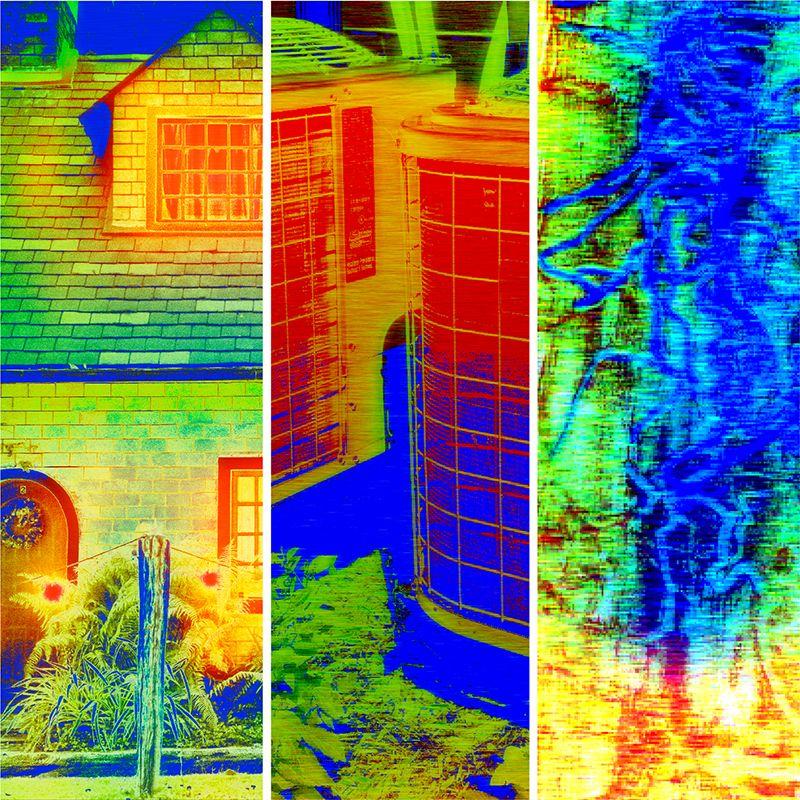
Thermal imaging uses infrared technology to detect temperature variations in surfaces.
When moisture is present behind drywall or above ceilings, it often creates cooler temperature patterns. These differences show up clearly on a thermal scan.
Thermal imaging does not see through walls in a traditional sense. Instead, it highlights abnormal temperature differences that suggest moisture intrusion.
It’s especially effective when dealing with condensation-related issues because:
- Moisture cools surfaces as it evaporates
- Wet insulation changes temperature patterns
- Damp framing retains cooler readings
When paired with moisture meters, thermal imaging becomes a powerful diagnostic tool.
What Thermal Imaging Often Reveals in Palm Bay Condensation Cases
In properties across Palm Bay and nearby Melbourne and Cocoa areas, thermal imaging frequently uncovers:
1. Moisture Around Ceiling Supply Vents
Duct sweating inside attic spaces often leads to damp drywall around vent openings.
Thermal scans show circular cool patterns surrounding registers.
2. Hidden Moisture Below Air Handler Closets
Condensate drain line backups can allow moisture to travel downward inside walls.
Thermal imaging often reveals vertical cooling patterns behind drywall.
3. Damp Insulation in Attics
When duct insulation fails, condensation drips into surrounding insulation.
Thermal scans highlight irregular temperature zones in attic ceilings.
4. Wet Framing Around Return Plenums
Condensation can build up near return ducts, especially when airflow is restricted.
Cool linear patterns may indicate hidden moisture along framing members.
5. Slab Edge Moisture Migration
In slab-on-grade homes, moisture near AC closets can migrate into lower wall cavities.
Thermal imaging often detects cooler baseboard areas before visible damage appears.
Why You Should Never Ignore These Patterns
When thermal imaging reveals moisture patterns, ignoring them allows:
- Insulation to remain damp
- Drywall to soften
- Framing to stay saturated
- Mold growth to begin
- Odors to intensify
- Repair costs to increase
Condensation is often ongoing, not a one-time event. That means the moisture source continues unless corrected.
In Florida’s humidity, damp materials rarely dry on their own.
Step-by-Step: What Happens After Thermal Imaging Identifies a Problem
Step 1: Confirm Moisture with Meter Testing
Thermal imaging identifies suspicious areas.
Moisture meters confirm whether materials are elevated.
Both tools work together.
Step 2: Identify the Condensation Source
This may involve:
- Inspecting AC drain lines
- Evaluating duct insulation
- Checking airflow balance
- Inspecting drain pans
- Measuring indoor humidity
Without source correction, drying efforts fail.
Step 3: Controlled Drying
If moisture is present, drying may include:
- Dehumidifiers
- Air movers
- In-wall air injection systems
- Insulation removal (if saturated)
Drying continues until moisture levels return to acceptable ranges.
Step 4: Mold Remediation (If Necessary)
If microbial growth has begun, affected materials are removed and surfaces cleaned.
Thermal imaging helps ensure no hidden damp zones remain afterward.
Step 5: Final Moisture Verification
After drying and repairs, readings confirm the issue has been resolved.
This prevents recurring problems.
Why Palm Bay’s Climate Makes Early Detection Essential
Palm Bay properties deal with:
- Constant humidity
- Long AC cycles
- Storm-driven moisture
- Hot attic environments
- Slab moisture interaction
These conditions increase the likelihood of recurring condensation.
Thermal imaging allows early detection before damage spreads.
Companies like Inspections and More FL use moisture mapping and thermal imaging to identify condensation-related problems quickly — especially during high humidity seasons.
Preventative Strategies for AC Condensation Issues
To reduce risk in Palm Bay properties:
- Schedule annual AC maintenance
- Flush drain lines regularly
- Inspect attic duct insulation
- Monitor indoor humidity levels
- Check for rust around vent boots
- Investigate musty odors promptly
- Schedule periodic moisture evaluations
Preventative inspections cost far less than full-scale remediation.
A Practical Next Step
If you notice subtle warning signs — musty odors, staining near vents, or elevated humidity — don’t assume it’s just “Florida air.”
Thermal imaging inspections provide clarity.
They reveal what’s happening behind walls before structural damage or mold spreads.
In Palm Bay’s climate, condensation issues rarely resolve on their own. Early detection protects your property, reduces repair costs, and prevents small problems from becoming larger remediation projects.
