
Understanding Air Scrubbing Challenges in Melbourne Inside Commercial Buildings
Commercial property owners in Melbourne face a unique set of indoor air quality challenges that don’t always appear obvious at first. Florida’s climate—especially along the Space Coast—creates constant pressure from humidity, airborne particles, and moisture intrusion. Inside offices, retail centers, warehouses, and medical buildings, these environmental factors often make air scrubbing more complex than many property managers expect.
Air scrubbing is a critical process used to remove airborne contaminants such as mold spores, dust, and microscopic particles. However, in commercial buildings throughout nearby areas like Palm Bay, Cocoa, Merritt Island, and Sanford, the process often comes with structural and environmental challenges that require specialized local experience.
Understanding these challenges helps building owners reduce long-term costs, improve indoor air conditions, and prevent recurring contamination.
What Air Scrubbing Does in Commercial Buildings
Air scrubbing refers to the use of high-efficiency filtration systems designed to capture airborne particles that standard HVAC filters cannot fully remove.
Commercial air scrubbers commonly target:
- Mold spores
- Fine dust particles
- Construction debris
- Smoke particles
- Bacteria and microscopic contaminants
These systems typically use HEPA filtration combined with strong airflow circulation to clean indoor environments during:
- Mold remediation
- Water damage restoration
- Renovation projects
- Indoor air quality correction
In Florida’s humid climate, air scrubbing often becomes necessary after even minor moisture issues.
Why Commercial Buildings in Melbourne Require Air Scrubbing More Often
Florida commercial properties operate under environmental conditions that naturally increase airborne contamination risks.
High Humidity Levels Year-Round
Humidity is the biggest factor affecting indoor air quality across Brevard County. Moisture in the air allows microscopic particles to remain suspended longer, making filtration more difficult.
When humidity enters through:
- Entryways
- HVAC systems
- Roof or wall leaks
airborne contaminants spread faster throughout the structure.
Large commercial interiors make the situation more challenging because air circulation varies from zone to zone.
Heavy Rain and Storm Exposure
Frequent rain events introduce moisture into roofing systems, wall assemblies, and building foundations. Even small intrusion points can create hidden dampness that later releases airborne particles.
After storms, many commercial buildings experience:
- Ceiling moisture pockets
- Wet insulation
- Hidden drywall saturation
Air scrubbing becomes necessary once these materials begin releasing particles into the indoor environment.
HVAC System Complexity
Commercial HVAC systems are significantly larger than residential systems and often include multiple air handling zones.
While these systems are designed for efficiency, they also:
- Circulate air across long duct runs
- Pull humidity into return air channels
- Spread contaminants if moisture is present
When mold develops inside ductwork or air handlers, airborne particles can move throughout the entire building quickly.
Unique Structural Challenges Inside Commercial Properties
Air scrubbing inside homes is relatively straightforward compared to large commercial structures.
Commercial environments introduce several additional complications.
Large Open Floor Plans
Warehouses, retail stores, and open office layouts allow air to move freely, but this also allows contaminants to spread across larger areas.
Air scrubbers must be strategically placed to ensure proper circulation.
Incorrect placement reduces effectiveness significantly.
Drop Ceilings and Hidden Voids
Many commercial buildings contain suspended ceilings that hide:
- HVAC ductwork
- Electrical systems
- Plumbing lines
Moisture often accumulates in these hidden spaces without visible signs below.
When mold develops in ceiling cavities, air scrubbers must address both:
- Occupied spaces
- Hidden air pockets above ceiling tiles
Continuous Occupancy Challenges
Unlike residential remediation projects, commercial buildings often remain operational during air quality corrections.
This introduces challenges such as:
- Foot traffic disruption
- Airflow interference
- Equipment placement limitations
Maintaining business operations while improving air quality requires careful planning.
Common Signs That Air Scrubbing May Be Needed
Commercial property managers usually notice subtle indoor air changes before identifying the source.
Typical warning signs include:
- Persistent musty odors
- Increased dust accumulation
- Uneven humidity between rooms
- HVAC performance changes
- Employee comfort complaints
These symptoms often indicate airborne particles circulating within the building.
Hidden Sources of Airborne Contamination
Many indoor air issues begin in areas that are rarely inspected.
Moisture Behind Walls
Small plumbing leaks or condensation inside wall cavities can release airborne particles without visible exterior damage.
Wet Insulation After Roof Leaks
Flat commercial roofing systems are especially vulnerable to moisture intrusion.
Wet insulation gradually releases particles into indoor air systems.
HVAC Drainage Problems
Clogged condensate lines can allow moisture buildup inside air handling units.
This often becomes a primary contamination source.
Previous Water Damage
Even after visible repairs are completed, improperly dried materials may continue affecting air quality months later.
Why Air Scrubbing Alone Is Not Always Enough
One of the most common misconceptions is that air scrubbers solve every indoor air quality issue.
In reality, air scrubbing is only effective when combined with moisture correction.
If underlying moisture remains:
- Mold growth continues
- Airborne particles return
- Filtration becomes temporary rather than corrective
Air scrubbing must always be part of a broader indoor environmental strategy.
Professional Air Scrubbing Equipment and Setup
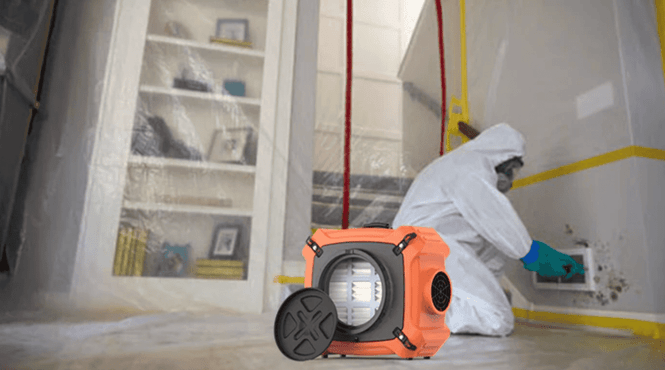
Commercial air scrubbing requires specialized equipment designed for high-volume airflow environments.
Professional systems typically include:
- HEPA filtration units
- Activated carbon filters
- Negative air machines
- Airflow containment barriers
Equipment placement depends heavily on building layout.
Strategic positioning helps ensure contaminants move toward filtration zones rather than circulating randomly.
The Role of Containment in Commercial Air Scrubbing
Containment is one of the most overlooked—but critical—steps in successful air scrubbing projects.
Without containment:
- Clean air mixes with contaminated air
- Filtration efficiency drops
- Airflow becomes unpredictable
Containment often involves temporary barriers that isolate affected zones.
This allows air scrubbers to operate more effectively.
Moisture Control: The Real Key to Long-Term Results
Air scrubbing improves air quality quickly, but moisture control determines whether results last.
Common moisture corrections include:
- Roof leak repairs
- Dehumidification systems
- HVAC insulation improvements
- Drainage adjustments
Florida buildings often require ongoing humidity management due to constant environmental exposure.
How Professional Inspections Identify Air Quality Challenges
Local companies like Inspections and More FL use multiple tools to locate airborne contamination sources.
Visual Building Assessments
Inspectors evaluate structural areas prone to moisture buildup.
Thermal Imaging
Infrared scans detect hidden moisture that may contribute to airborne particle release.
Moisture Meter Testing
Moisture readings help identify damp building materials before visible damage appears.
Air Sampling (When Needed)
Targeted testing can help confirm airborne contamination patterns.
These inspection methods help determine whether air scrubbing is necessary—and where it will be most effective.
Why DIY Air Cleaning Solutions Rarely Work in Commercial Spaces
Portable air purifiers designed for residential use cannot handle commercial airflow volumes.
Commercial buildings require:
- Larger filtration capacity
- Controlled airflow patterns
- Moisture correction strategies
Without these factors, air quality improvements are often temporary.
Prevention Strategies for Commercial Buildings in Coastal Florida
Because Melbourne sits near the coast, prevention plays a major role in indoor air quality control.
Maintain HVAC systems regularly
Routine servicing prevents condensation buildup.
Monitor indoor humidity levels
Commercial interiors should ideally remain between 45% and 55% humidity.
Inspect roofing systems annually
Early leak detection prevents airborne contamination.
Check ceiling cavities after storms
Hidden moisture often develops above drop ceilings.
Schedule periodic moisture inspections
Preventive evaluations catch issues before air quality declines.
Why Local Experience Matters for Air Scrubbing Projects
Commercial indoor air challenges in Florida differ significantly from those in drier climates.
Local professionals understand:
- Coastal humidity behavior
- Storm-related moisture patterns
- Regional construction styles
- HVAC performance under high moisture loads
This knowledge leads to faster identification and more effective long-term solutions.
When It’s Time to Evaluate Indoor Air Quality
If indoor air conditions change—or if the building has experienced recent moisture issues—it may be time for a professional evaluation.
Early air quality assessments help:
- Prevent widespread contamination
- Improve occupant comfort
- Protect building materials
- Reduce long-term remediation costs
Commercial buildings operate best when indoor environments remain stable and clean.
In humid regions like Melbourne and surrounding communities, proactive monitoring makes a measurable difference.
Air scrubbing is a powerful tool—but only when combined with accurate inspection and moisture control strategies tailored to Florida conditions.
