
Understanding Dehumidification Challenges in Melbourne in Older Florida Homes
Older homes in Melbourne have character. Solid construction, mature landscaping, and established neighborhoods make them highly desirable. But when it comes to humidity control, many of these properties face challenges that newer homes are better designed to handle.
In coastal Florida, dehumidification isn’t optional — it’s essential. And in older Melbourne homes, keeping indoor humidity under control can be more complicated than simply adjusting the thermostat.
Let’s take a practical look at why dehumidification becomes difficult in older Florida homes, what signs to watch for, and how proper moisture control protects the structure long term.
Why Humidity Is a Bigger Problem in Melbourne
Melbourne’s coastal location creates constant moisture exposure.
Homes here deal with:
- Year-round high humidity
- Salt-heavy air
- Frequent summer rainstorms
- Long cooling seasons
- High groundwater levels
Outdoor humidity often stays above 70%. When that air enters a home — through doors, attic vents, crawl gaps, or small cracks — indoor humidity rises quickly.
In newer homes, improved insulation, vapor barriers, and sealed ductwork help manage this. Older homes weren’t always built with modern humidity control in mind.
That’s where the challenges begin.
Common Construction Features in Older Melbourne Homes
Many older Florida homes include:
- Slab foundations without modern vapor barriers
- Minimal attic insulation
- Outdated HVAC systems
- Leaky ductwork
- Single-pane windows
- Limited attic ventilation
- Older roof designs
These features allow moisture to enter and linger.
Concrete slabs are porous. When soil becomes saturated during heavy rain, vapor rises upward. Without a strong vapor barrier, moisture accumulates along lower walls and flooring systems.
At the same time, attic spaces may trap humid air due to insufficient ventilation.
The home ends up absorbing moisture from above and below.
Why Air Conditioning Alone Isn’t Enough
Many homeowners assume their AC system handles humidity.
In reality, older HVAC systems often:
- Are oversized
- Short cycle
- Lack proper airflow balance
- Have clogged drain lines
- Have worn insulation around ducts
Short cycling cools the home quickly but doesn’t remove enough moisture.
That leaves indoor humidity levels elevated — sometimes above 60% — even when the temperature feels comfortable.
Cooling and dehumidifying are not the same thing.
Without dedicated dehumidification, moisture continues accumulating inside structural materials.
Signs Dehumidification Is Struggling
In older Melbourne homes, humidity problems often show up subtly:
- Musty odors
- Sticky indoor air
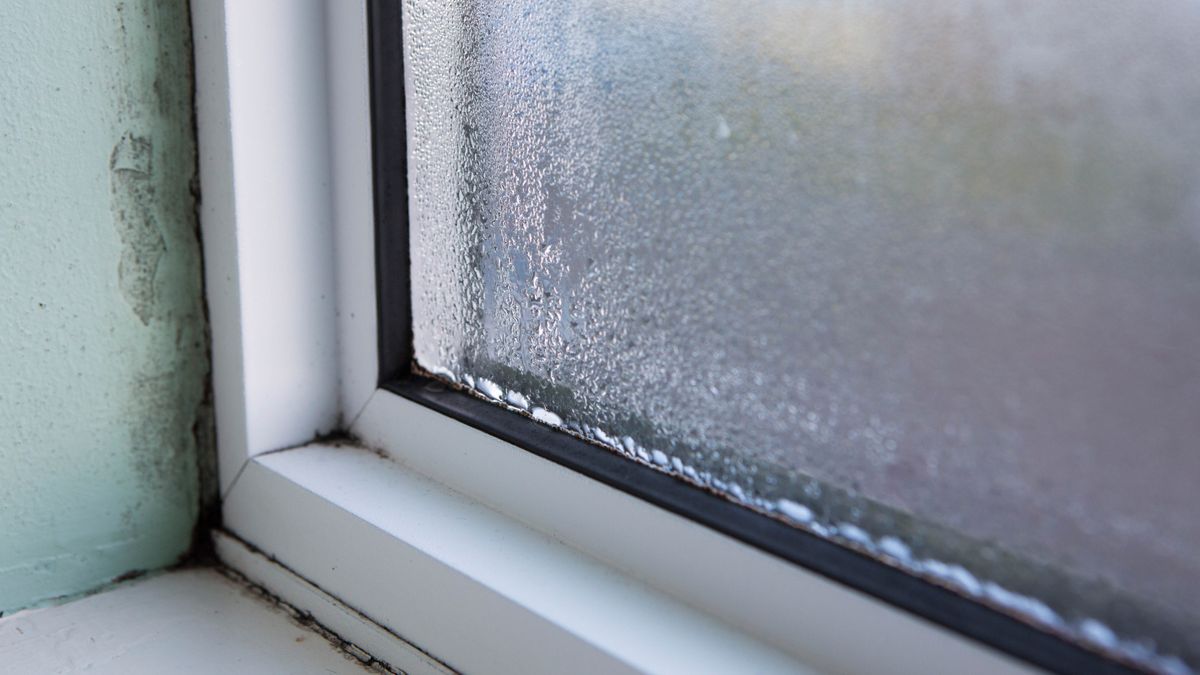
- Condensation on windows
- Peeling paint
- Warped baseboards
- Cupped hardwood floors
- Damp closets
- Elevated indoor humidity readings
Rooms along exterior walls may feel heavier than interior spaces.
In slab homes, moisture tends to appear first near the floor line.
Because Florida’s climate stays humid for long periods, these signs can develop gradually.
Slab Foundations and Vapor Intrusion
Older slab homes in Melbourne are particularly vulnerable.
After prolonged rain:
- Soil moisture increases
- Vapor rises through concrete
- Lower drywall absorbs dampness
- Flooring systems trap humidity
Without modern moisture barriers beneath the slab, vapor intrusion becomes an ongoing issue.
Dehumidification reduces indoor humidity, which in turn lowers vapor pressure differences between the slab and interior air.
But if indoor humidity remains high, slab moisture continues migrating upward.
Managing both air humidity and structural moisture is critical.
Attic Ventilation and Warm Moist Air
Older homes often lack balanced attic ventilation.
When humid indoor air rises:
- It enters attic spaces
- Condensation forms on roof decking
- Insulation becomes damp
- Moisture lingers due to poor airflow
This can lead to mold growth on rafters and decking if left unchecked.
Dehumidification inside the living space helps reduce the amount of warm moist air rising into the attic.
However, ventilation upgrades are often needed to support long-term stability.
Why Portable Dehumidifiers Often Fall Short
Homeowners frequently try small portable units.
While useful for individual rooms, they often:
- Lack sufficient capacity
- Don’t cover entire homes
- Require constant emptying
- Don’t integrate with HVAC systems
- Fail to control humidity during extreme weather
In Melbourne’s climate, whole-home dehumidification systems are often more effective.
These systems operate independently of cooling cycles and remove moisture consistently.
Structural Drying May Be Required
In some older homes, materials may already be saturated.
When moisture readings are elevated in drywall or flooring:
- Structural dryouts may be necessary
- Air movers and commercial dehumidifiers are used
- Moisture levels are monitored daily
Dehumidification alone stabilizes air humidity.
Structural drying corrects existing saturation.
Both may be needed depending on the extent of moisture intrusion.
Preventing Mold in Older Melbourne Homes
Florida’s warm environment allows mold growth to begin within 24–72 hours when materials remain damp.
Proper dehumidification:
- Keeps indoor humidity below 55%
- Protects wood framing
- Preserves drywall
- Prevents flooring damage
- Reduces musty odors
- Improves indoor air stability
In many local cases, improving humidity control prevented full mold remediation later.
Humidity management is prevention.
Lessons from Local Melbourne Properties
Common patterns seen in older homes include:
- Elevated slab-edge moisture
- Condensation near single-pane windows
- Duct leakage pulling humid attic air inside
- Bathrooms lacking proper ventilation
- Homes closed up during humid seasons
In several cases, the HVAC system was cooling properly — but indoor humidity remained high.
Installing whole-home dehumidifiers and sealing ductwork stabilized the environment.
Temperature control alone wasn’t enough.
Long-Term Humidity Management Strategies
For older homes in Melbourne, effective moisture control may include:
- Installing whole-home dehumidifiers
- Upgrading attic ventilation
- Sealing ductwork
- Improving vapor barriers where possible
- Maintaining HVAC systems regularly
- Monitoring humidity with digital hygrometers
- Scheduling periodic moisture inspections
Older homes require proactive care.
Coastal humidity doesn’t ease up over time.
Why Local Experience Matters
Humidity behavior in Melbourne differs from inland Florida areas.
Professionals familiar with Brevard County understand:
- Coastal air moisture retention
- Slab vapor intrusion patterns
- Storm-season humidity spikes
- Common older construction methods
- HVAC strain during peak humidity
Accurate diagnosis ensures the right combination of dehumidification and structural drying is used.
Inspections and More FL works with homeowners in Melbourne who need climate-specific moisture solutions tailored to older Florida homes.
When to Schedule a Humidity Evaluation
If your older Melbourne home feels damp, musty, or unevenly cooled, it’s worth evaluating indoor humidity levels.
Dehumidification becomes necessary when:
- Indoor humidity remains above 55%
- Condensation appears regularly
- Flooring begins to cup
- Baseboards swell
- Structural materials show elevated moisture
Florida’s humidity isn’t temporary — especially in coastal communities.
With proper dehumidification, ventilation improvements, and moisture monitoring, older homes in Melbourne can remain stable, dry, and protected for years to come.
