
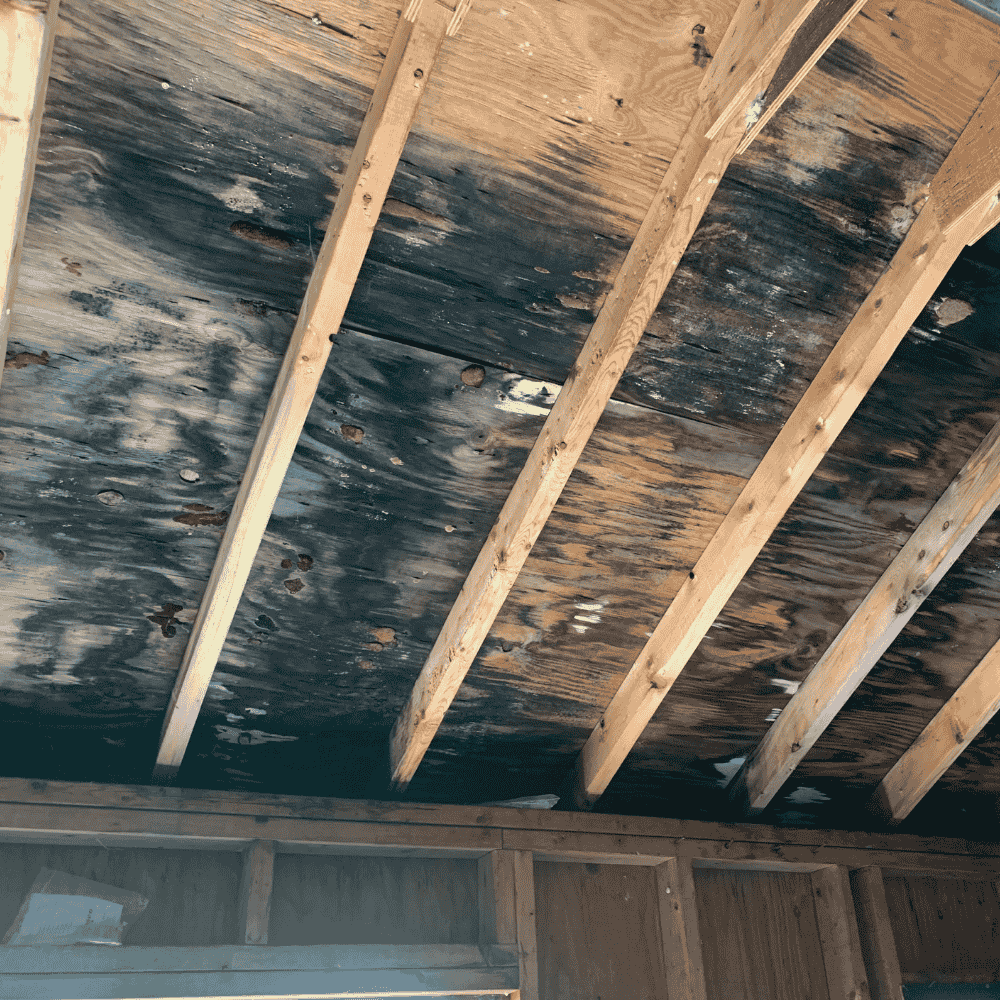
Why Mold Encapsulation Becomes Necessary in Merritt Island Waterfront Homes
Living on the water in Merritt Island comes with incredible views and constant exposure to moisture.
Homes along the Indian River Lagoon, Sykes Creek, and canal-front neighborhoods experience humidity levels that don’t really take a season off. Even on clear days, the air carries moisture. Add afternoon storms, salt air, and tidal fluctuations, and you’ve got an environment that quietly pressures a home year-round.
Over time, that constant humidity can lead to mold growth in crawl spaces, attics, and structural framing. In some waterfront properties, mold encapsulation becomes a necessary step to protect the structure long-term.
But encapsulation isn’t about covering up a problem. When done correctly, it’s part of a structured remediation strategy designed specifically for Florida’s waterfront conditions.
What Mold Encapsulation Actually Is
Mold encapsulation involves applying a specialized coating to structural surfaces — typically wood framing — after proper remediation has taken place.
This coating:
• Seals porous surfaces
• Helps prevent future microbial growth
• Creates a moisture-resistant barrier
• Stabilizes previously affected areas
• Improves durability of structural components
Encapsulation is not a substitute for mold removal. It comes after contaminated materials are cleaned or removed and moisture sources are corrected.
Think of it as a protective layer added once the problem is properly addressed.
Why Waterfront Homes in Merritt Island Face Greater Risk
Waterfront properties deal with a different moisture cycle than inland homes in places like Sanford.
In Merritt Island:
• Outdoor humidity often remains elevated overnight
• Sea breezes carry salt-laden moisture
• Storm surge and heavy rains are common
• Water tables sit higher near canals and lagoons
• Soil saturation persists longer after storms
Crawl spaces and lower framing are especially vulnerable. Even homes elevated slightly above grade are exposed to evaporative ground moisture.
Over time, repeated moisture exposure increases the likelihood of mold growth on joists, beams, and subflooring.
Encapsulation is often recommended when structural wood has experienced previous growth but remains structurally sound.
The Crawl Space Connection
In waterfront Merritt Island homes, crawl spaces are frequently the starting point.
Humidity rises from saturated soil beneath the home. If vapor barriers are thin, torn, or missing, moisture continuously evaporates upward.
When wood framing absorbs that humidity:
• Surface mold develops
• Insulation becomes damp
• Subfloor moisture levels increase
• Odors begin rising into living spaces
Once remediation removes active growth and structural dryouts return moisture levels to safe ranges, encapsulation may be applied to protect exposed framing from future recurrence.
It reinforces the structure against ongoing humidity pressure.
Salt Air Adds Another Complication
Salt air doesn’t just corrode metal.
When combined with high humidity, salt particles can settle onto framing and create a surface environment that supports microbial growth.
In waterfront homes, especially those closer to open water, salt exposure accelerates deterioration of untreated wood.
Encapsulation coatings provide an added protective layer that reduces direct exposure to humid, salt-laden air.
It’s not just about mold prevention. It’s about long-term durability.
When Encapsulation Becomes Necessary
Not every mold issue requires encapsulation.
However, it often becomes necessary when:
• Structural framing has experienced previous mold growth
• Crawl space humidity remains difficult to control
• Minor staining remains after cleaning
• Wood surfaces are porous and vulnerable
• The home is exposed to consistent waterfront humidity
If structural components are salvageable but remain at risk, encapsulation helps extend their lifespan.
It stabilizes areas that cannot be replaced easily without major reconstruction.
The Importance of Proper Preparation
Encapsulation must never be applied over active mold growth.
Before any coating is installed, the process should include:
• Identification and correction of moisture sources
• Removal of contaminated insulation
• Cleaning of structural framing
• Structural dryouts to safe moisture levels
• Verification that microbial growth is inactive
Skipping these steps traps moisture beneath the coating — which can worsen conditions.
Proper sequencing matters.
Companies like Inspections and More FL evaluate moisture conditions thoroughly before recommending encapsulation in waterfront homes.
How Encapsulation Protects Long-Term
In Merritt Island’s humid environment, the goal is not just to treat today’s issue but to reduce recurrence risk.
Encapsulation contributes to long-term protection by:
• Reducing surface porosity
• Limiting moisture absorption into wood
• Slowing future microbial attachment
• Improving crawl space air quality
• Supporting vapor barrier and dehumidification systems
When combined with crawl space encapsulation (plastic vapor barriers) and dehumidification, structural encapsulation forms part of a comprehensive moisture control strategy.
Waterfront homes often require layered protection.
HVAC and Indoor Air Quality Considerations
In many Merritt Island homes, HVAC ductwork runs through crawl spaces.
When framing surfaces experience microbial growth, spores can circulate through return ducts if conditions are uncontrolled.
Encapsulation helps reduce exposed microbial surfaces, supporting improved air quality upstairs.
However, duct integrity and humidity control must also be addressed.
Encapsulation alone does not correct airflow problems.
It works best within a coordinated system.
Preventing Future Mold in Waterfront Homes
Beyond encapsulation, waterfront homeowners can reduce mold risk by:
• Installing proper vapor barriers
• Monitoring indoor humidity year-round
• Servicing HVAC systems regularly
• Inspecting crawl spaces annually
• Sealing foundation penetrations
• Addressing minor leaks immediately
• Evaluating attic ventilation
Waterfront living demands proactive moisture management.
Waiting for visible mold growth often means the problem has been developing for months.
Why Local Experience Matters in Merritt Island
Moisture behavior along the Indian River Lagoon differs from inland conditions.
Professionals familiar with:
• Waterfront construction styles
• Elevated and slab foundation variations
• Canal-front drainage challenges
• Coastal humidity cycles
• Salt exposure effects
can determine when encapsulation is truly necessary — and when simpler measures are sufficient.
Understanding Merritt Island’s environment allows for accurate recommendations without overcorrecting or under-responding.
A Measured and Practical Next Step
If your waterfront home in Merritt Island has experienced crawl space mold growth or persistent humidity issues, encapsulation may be worth discussing.
But only after proper remediation and moisture correction.
Encapsulation is a protective step, not a shortcut.
With the right assessment, structural dryout, and humidity management, it becomes a powerful tool for protecting your home against Florida’s constant moisture pressure.
Water views are permanent.
Moisture exposure is too.
Managing it correctly keeps the structure strong for years to come.
