In Slab Foundation Houses in Merritt Island: A Closer Look at Thermal Imaging Inspections
Slab foundation homes are common throughout Merritt Island. Built directly on concrete poured over prepared ground, these structures are durable and practical for Florida’s coastal environment. But slab construction also presents unique moisture challenges—especially after heavy rain, plumbing leaks, or seasonal humidity shifts.
Because much of the structure rests directly on concrete in contact with the ground, moisture movement is not always obvious. Water can migrate upward through slabs, travel laterally beneath flooring, or settle along wall base plates without leaving clear visual evidence.
That’s where thermal imaging inspections become especially valuable.
In Merritt Island—as well as nearby Cocoa, Palm Bay, Melbourne, and even inland Sanford—thermal imaging has become one of the most effective tools for evaluating hidden moisture in slab foundation homes. It allows professionals to see patterns that the naked eye cannot detect.
Why Slab Foundation Homes in Merritt Island Require Special Attention
Slab construction eliminates crawl spaces and basements. While this reduces some moisture risks, it introduces others.
Direct Ground Contact
Concrete slabs sit directly on soil. When groundwater rises during heavy rain or tropical systems, moisture can migrate upward through the slab by capillary action.
High Water Table
Merritt Island’s proximity to surrounding waterways means groundwater levels fluctuate significantly during storms.
Coastal Humidity
Even without flooding, humidity remains elevated year-round. Slab edges and lower wall sections are particularly vulnerable to condensation.
Plumbing Lines Beneath the Slab
Many water supply and drain lines run beneath the concrete. A small leak below the slab may go unnoticed for months.
Because slab foundation homes lack accessible subfloor space, moisture detection requires advanced diagnostic tools.
What Thermal Imaging Inspections Actually Do
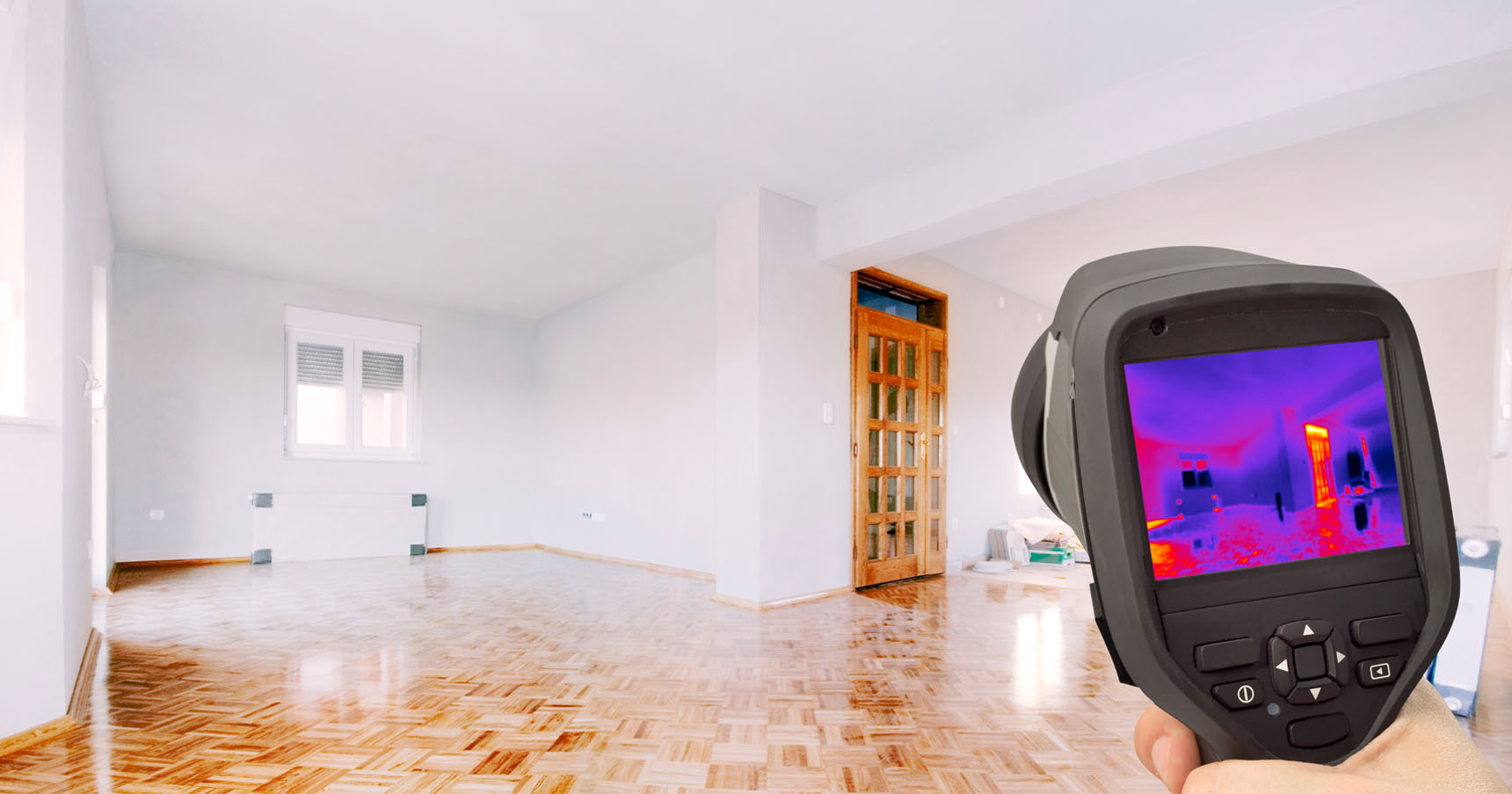
Thermal imaging cameras detect temperature variations on surfaces.
They do not see moisture directly. Instead, they identify temperature differences that often indicate moisture presence.
When materials contain moisture, they:
-
Retain heat differently
-
Cool differently
-
Evaporate at different rates
These differences create visible patterns in thermal images.
For slab foundation homes in Merritt Island, thermal imaging helps identify:
-
Moisture migration through concrete
-
Hidden plumbing leaks
-
Saturated base plates
-
Damp wall cavities
-
Flooring moisture spread
It provides a non-invasive way to assess conditions without unnecessary demolition.
Common Moisture Issues in Slab Homes
Before understanding thermal imaging’s role, it helps to recognize the common moisture problems slab homes experience in Merritt Island.
Rising Moisture from Below
During prolonged rain events, slabs can absorb groundwater and slowly release it upward into flooring materials.
Wind-Driven Rain Intrusion
Storm-driven rain can enter through door thresholds and seep into slab joints.
Plumbing Leaks Beneath the Slab
Even a small pinhole leak in a supply line can create significant saturation beneath flooring over time.
Condensation Along Perimeter Walls
Air conditioning running in humid conditions can cause condensation at slab-to-wall transitions.
Many of these issues show little surface evidence early on.
How Professionals Conduct Thermal Imaging Inspections
Thermal imaging inspections in slab foundation homes follow a structured approach.
Step 1: Environmental Assessment
Before scanning, professionals assess indoor conditions. Temperature and humidity levels affect thermal readings.
Understanding Florida’s baseline humidity is essential for accurate interpretation.
Step 2: Surface Scanning
Thermal cameras are used to scan:
-
Flooring surfaces
-
Baseboards
-
Interior walls
-
Ceiling perimeters
-
Plumbing areas
Patterns indicating possible moisture appear as cooler or irregularly shaped areas.
Step 3: Confirmatory Moisture Testing
Thermal imaging identifies suspect areas, but confirmation requires moisture meters.
Pinless meters scan larger sections of flooring and walls. Pin-type meters provide precise readings inside wood framing.
This combination ensures accurate diagnosis.
Thermal Imaging and Plumbing Leaks
One of the most valuable uses of thermal imaging in Merritt Island slab homes is identifying plumbing leaks.
Leaks beneath the slab often produce subtle temperature differences as water spreads through surrounding materials.
Thermal imaging can reveal:
-
Linear patterns following pipe paths
-
Isolated cool spots under flooring
-
Temperature variations near bathrooms or kitchens
Early detection prevents extensive structural damage and flooring replacement.
Flooring Evaluations in Slab Homes
Hardwood, laminate, vinyl plank, and tile flooring are all affected differently by slab moisture.
Thermal imaging helps identify:
-
Moisture beneath tile installations
-
Damp subfloor adhesives
-
Cupping hardwood boards
-
Saturated underlayment
In Merritt Island’s humid climate, wood flooring is especially vulnerable to moisture migrating upward from slabs.
Without thermal imaging, hidden dampness beneath intact surfaces may go undetected.
The Importance of Edge and Perimeter Scanning
Moisture in slab homes often accumulates at the edges.
Thermal imaging frequently reveals:
-
Cooler patterns along exterior walls
-
Damp base plates
-
Insulation saturation inside lower wall cavities
Because slab edges are in close contact with soil, they are more susceptible to groundwater influence.
This is especially relevant in waterfront and lagoon-adjacent neighborhoods.
Lessons Learned from Local Cases
Professionals serving Merritt Island and surrounding communities have observed consistent patterns.
Slabs Release Moisture Slowly
Even after flooding subsides, slabs may remain damp for weeks. Thermal imaging helps track drying progress.
Moisture Travels Laterally
Water beneath slabs often spreads sideways before surfacing.
Visual Inspections Miss Hidden Dampness
Many homeowners only notice problems once flooring begins warping.
Early Detection Reduces Costs
Identifying moisture early often prevents large-scale flooring removal.
Experience in Cocoa, Palm Bay, Melbourne, and Sanford reinforces the importance of thorough slab evaluations.
Integrating Thermal Imaging with Drying Strategies
Once thermal imaging identifies moisture patterns, drying plans are implemented.
This may include:
-
Industrial dehumidifiers
-
Air movers
-
Targeted floor drying systems
-
Plumbing repairs
Thermal imaging is then used again to monitor drying effectiveness.
In Merritt Island’s humid environment, ongoing monitoring is critical.
Why DIY Thermal Cameras Are Not Enough
Some homeowners purchase handheld thermal devices. While useful for spotting obvious temperature differences, interpreting images accurately requires experience.
Factors affecting readings include:
-
HVAC operation
-
Sun exposure
-
Time of day
-
Surface material differences
-
Reflected temperatures
Professionals trained in Florida conditions understand how to differentiate true moisture signals from normal thermal variations.
Preventing Slab Moisture Issues
While not all slab moisture problems can be avoided, homeowners can reduce risk by:
-
Maintaining exterior drainage
-
Sealing foundation cracks
-
Monitoring indoor humidity
-
Servicing plumbing systems regularly
-
Scheduling inspections after heavy rain
Routine evaluations are especially important in coastal areas where water tables fluctuate.
Companies such as Inspections and More FL often recommend periodic slab moisture assessments in high-risk neighborhoods.
Why Local Knowledge Matters
Thermal imaging interpretation depends heavily on understanding local building conditions.
In Merritt Island, professionals must account for:
-
Lagoon-side humidity patterns
-
Salt air exposure
-
Slab construction standards
-
AC condensation behavior
-
Seasonal rainfall intensity
Experience in Merritt Island, Cocoa, Palm Bay, Melbourne, and Sanford helps professionals identify typical moisture migration paths in Florida slab homes.
A Closer Look at Protection and Prevention
Thermal imaging inspections provide clarity in slab foundation homes where moisture is otherwise hidden.
They allow professionals to:
-
Detect early moisture intrusion
-
Locate plumbing leaks
-
Monitor drying progress
-
Prevent mold development
-
Protect flooring systems
In Florida’s coastal climate, slab foundation homes require careful attention to moisture behavior.
Thermal imaging offers a non-invasive, accurate method to evaluate conditions beneath the surface.
By combining experience, proper tools, and an understanding of Merritt Island’s environmental challenges, professionals help homeowners maintain stable, healthy indoor environments—even in the face of Florida’s demanding moisture conditions.