Merritt Island Homes Dealing with Moisture Detection After Flooding Events — How Professionals Approach the Issue
Flooding is something many Merritt Island homeowners eventually face. Whether it’s from a tropical system pushing water inland, heavy summer thunderstorms overwhelming drainage, rising lagoon levels, or wind-driven rain entering through vulnerable areas, water intrusion is part of living in coastal Brevard County.
What often catches property owners off guard isn’t the visible water — it’s what remains after the water recedes.
Moisture that seeps behind walls, under flooring, into insulation, and inside structural framing can remain hidden for days or even weeks. In Florida’s warm, humid environment, that hidden moisture creates ideal conditions for mold growth, material deterioration, and long-term indoor air quality concerns.
Professional moisture detection in Merritt Island is not just about finding wet spots. It’s about understanding how water behaves in coastal homes and applying a systematic, measured approach to protect the structure.
Why Merritt Island Homes Are Especially Vulnerable After Flooding
Merritt Island’s geography and climate create specific moisture challenges that differ from many inland areas.
Surrounded by Water
Located between the Indian River Lagoon and the Banana River, homes are exposed to elevated water tables and storm surge risk. During heavy rain events, groundwater levels rise quickly.
High Ambient Humidity
Even after a storm passes, humidity remains high. Materials that might dry naturally in drier climates stay damp much longer here.
Slab Foundations
Many homes are built on concrete slabs. When floodwater enters, slabs absorb moisture and slowly release it upward into flooring and wall systems.
Wind-Driven Rain
Coastal storms don’t just bring standing water. They drive rain horizontally into siding, window frames, soffits, and roof systems.
These factors mean that visible floodwater is often only part of the story.
The First Step: A Thorough Visual Assessment
After a flooding event, professionals begin with a careful visual evaluation.
They assess:
-
Water lines on walls
-
Warped baseboards
-
Swollen door frames
-
Ceiling stains
-
Buckled flooring
-
Damaged cabinetry
-
Attic areas if roof intrusion occurred
While visual signs offer clues, experienced inspectors know that water often travels beyond what is immediately visible.
In Merritt Island homes, drywall can wick moisture upward well above the visible flood line. Insulation can remain damp even if exterior surfaces appear dry.
Moisture Mapping: Going Beyond the Surface
The core of professional moisture detection is moisture mapping.
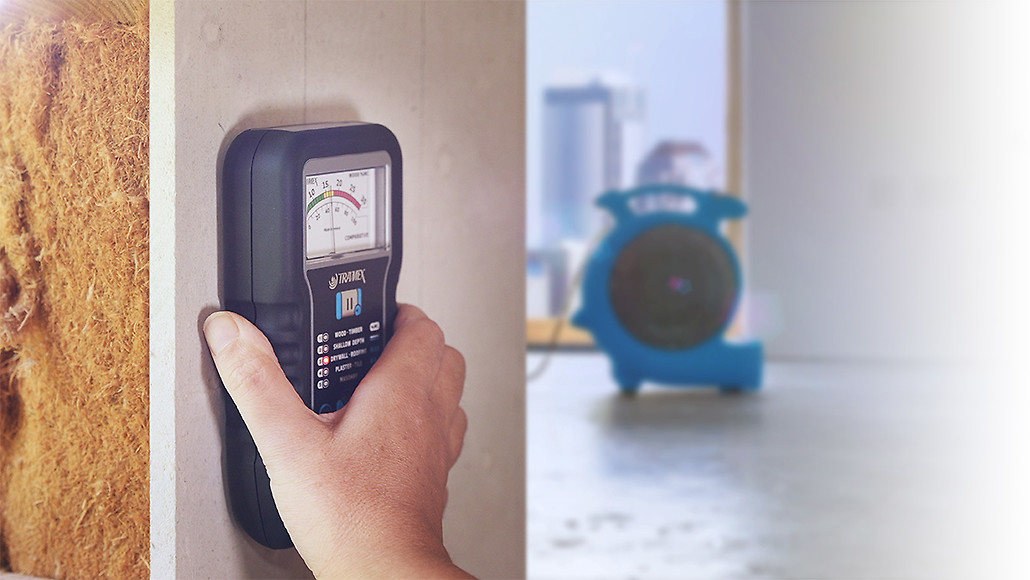
Using calibrated moisture meters, professionals measure and document moisture content throughout the affected areas.
Two common tools include:
Pin-Type Moisture Meters
These measure moisture inside materials like wood framing and drywall by penetrating the surface slightly. They provide precise readings of internal saturation levels.
Pinless Moisture Meters
These scan larger surface areas without damaging materials. They are useful for quickly identifying elevated moisture behind walls and under flooring.
In Merritt Island, understanding baseline moisture levels is important. Florida homes naturally carry slightly higher moisture readings than homes in arid climates. Local experience allows professionals to distinguish between normal humidity and problematic saturation.
Thermal Imaging: Identifying Hidden Damp Areas
Thermal imaging cameras are especially valuable in post-flood situations.
These cameras detect temperature differences within building materials. Wet materials often appear cooler than dry ones due to evaporation effects.
Thermal imaging helps locate:
-
Moisture inside wall cavities
-
Saturated insulation
-
Hidden ceiling leaks
-
Subfloor dampness
-
Water migration patterns
In several Merritt Island cases, thermal scans revealed moisture behind kitchen cabinets and inside interior walls where no visible staining existed.
Without this step, hidden pockets of moisture could easily be missed.
Evaluating Flooring and Subfloor Systems
Floodwater rarely stays on the surface.
Professionals carefully inspect:
-
Hardwood flooring
-
Laminate and vinyl plank systems
-
Carpet padding
-
Tile underlayment
-
Subfloor materials
Tile may appear intact while moisture remains trapped beneath it. Hardwood may begin cupping days after initial exposure.
Moisture readings under flooring systems determine whether drying is possible or removal is necessary.
In slab-based homes common to Merritt Island, moisture can migrate upward long after floodwaters recede.
Inspecting Wall Cavities and Insulation
Drywall can conceal significant moisture damage.
When readings indicate elevated moisture, small inspection openings may be made to examine:
-
Insulation saturation
-
Framing moisture content
-
Bottom plate conditions
-
Mold presence
Insulation that remains wet for extended periods loses its effectiveness and may require removal.
Florida’s warm temperatures accelerate microbial growth if moisture lingers.
HVAC Systems: An Often Overlooked Risk
After flooding, HVAC systems must be evaluated carefully.
High humidity levels following a storm can lead to:
-
Condensation inside ductwork
-
Damp insulation in air handlers
-
Microbial growth in return air spaces
If HVAC systems are not inspected, airborne contaminants can circulate throughout the home even after structural drying is completed.
A complete moisture detection process includes mechanical systems.
Controlled Drying After Detection
Moisture detection identifies the problem. Controlled drying resolves it.
Professionals deploy:
-
Industrial dehumidifiers
-
High-velocity air movers
-
Wall cavity drying systems
-
Air scrubbers if microbial contamination is suspected
Drying is monitored daily with moisture readings to ensure progress.
In Merritt Island’s humid climate, natural air drying is rarely sufficient. Active humidity control is essential.
Lessons Learned from Local Flood Cases
Over time, several consistent lessons have emerged from Merritt Island flooding events:
Moisture Travels Further Than Expected
Water often migrates laterally and vertically beyond visible boundaries.
Slabs Retain Moisture
Concrete absorbs water and releases it slowly, affecting flooring and walls long after visible drying.
Delayed Mold Growth Is Common
Homes that appeared dry initially developed mold weeks later due to incomplete moisture detection.
Quick Action Reduces Long-Term Damage
Prompt professional evaluation significantly lowers the risk of structural removal later.
Experience across Merritt Island, Cocoa, Palm Bay, Melbourne, and Sanford has reinforced the importance of thorough moisture mapping.
Companies such as Inspections and More FL approach post-flood inspections with careful attention to these local patterns.
Why DIY Moisture Checks Often Fall Short
Homeowners sometimes rely on touch or visual appearance to judge dryness.
However:
-
Surfaces can feel dry while internal framing remains saturated.
-
Odors may not appear immediately.
-
Moisture may be trapped beneath flooring.
Without professional equipment, it is difficult to confirm complete drying.
Florida’s climate makes incomplete drying especially risky.
Long-Term Prevention After Flooding
Once moisture detection and drying are complete, prevention becomes the focus.
Homeowners can reduce future risk by:
-
Improving exterior drainage
-
Maintaining roof flashing and seals
-
Installing humidity monitors
-
Servicing HVAC systems regularly
-
Inspecting after heavy rain events
-
Maintaining indoor humidity between 45–55%
Periodic inspections help identify minor moisture concerns before they escalate.
Why Local Experience Matters
Merritt Island’s coastal exposure creates moisture patterns that differ from inland communities.
Understanding:
-
Lagoon-driven humidity cycles
-
Slab foundation moisture migration
-
Wind-driven rain intrusion
-
Salt air effects on materials
-
Year-round air conditioning behavior
is essential for accurate detection.
Professionals who regularly work in Merritt Island recognize common moisture entry points and drying challenges specific to the area.
A Careful, Structured Approach
Moisture detection in Merritt Island homes after flooding events is about more than removing visible water. It requires a systematic process informed by coastal experience and professional tools.
Floodwaters may recede quickly, but hidden moisture can remain without thorough evaluation.
By combining visual assessment, moisture mapping, thermal imaging, HVAC inspection, and controlled drying, professionals help ensure that homes are truly stabilized — not just temporarily dried.
In Florida’s demanding coastal environment, careful moisture detection protects structural integrity, indoor air quality, and long-term property value.