Inside Commercial Buildings in Cocoa: A Closer Look at Thermal Imaging Inspections
Commercial buildings in Cocoa face a unique combination of environmental pressure: coastal humidity, heavy summer storms, salt air exposure, and year-round HVAC demand. When moisture problems develop inside these structures, they’re often hidden — behind walls, above drop ceilings, under flooring systems, or inside mechanical chases.
That’s where thermal imaging inspections become one of the most valuable diagnostic tools available.
In commercial environments, guessing is expensive. Thermal imaging allows professionals to see temperature patterns that may indicate hidden moisture, insulation failures, air leaks, or HVAC irregularities — without unnecessary demolition.
Why Commercial Buildings in Cocoa Need Advanced Moisture Detection
Commercial properties differ from residential buildings in several important ways:
- Larger square footage
- Complex HVAC systems
- Multi-tenant layouts
- Flat or low-slope roofing systems
- Drop ceilings hiding utilities
- Long exterior wall runs
When moisture intrusion happens — even minor roof seepage or window failure — water can travel unseen across large areas.
In Cocoa’s humid coastal climate, hidden moisture doesn’t dry quickly on its own. That’s why early detection matters.
What Thermal Imaging Actually Does
Thermal imaging cameras detect surface temperature differences.
They do not directly see water. Instead, they reveal temperature variations that may suggest:
- Damp materials
- Insulation gaps
- Air infiltration
- Condensation zones
- Active leaks
Moist materials often cool or heat differently than dry materials. That contrast appears as a pattern on the thermal camera.
In commercial settings, these patterns help professionals pinpoint where deeper testing should occur.
How Thermal Imaging Is Used in Cocoa Commercial Buildings
1. Roof and Ceiling Inspections
Flat or low-slope commercial roofs in Cocoa are especially vulnerable during hurricane season.
Thermal imaging can help identify:
- Wet insulation beneath roofing membranes
- Moisture spreading across decking
- Active leak pathways
- Temperature inconsistencies across large roof surfaces
Inside the building, ceiling scans may reveal damp insulation above drop ceiling tiles.
This allows targeted repairs rather than full ceiling removal.
2. Exterior Wall Assessments
Wind-driven rain during storms can penetrate:
- Window frames
- Expansion joints
- Stucco systems
- Masonry walls
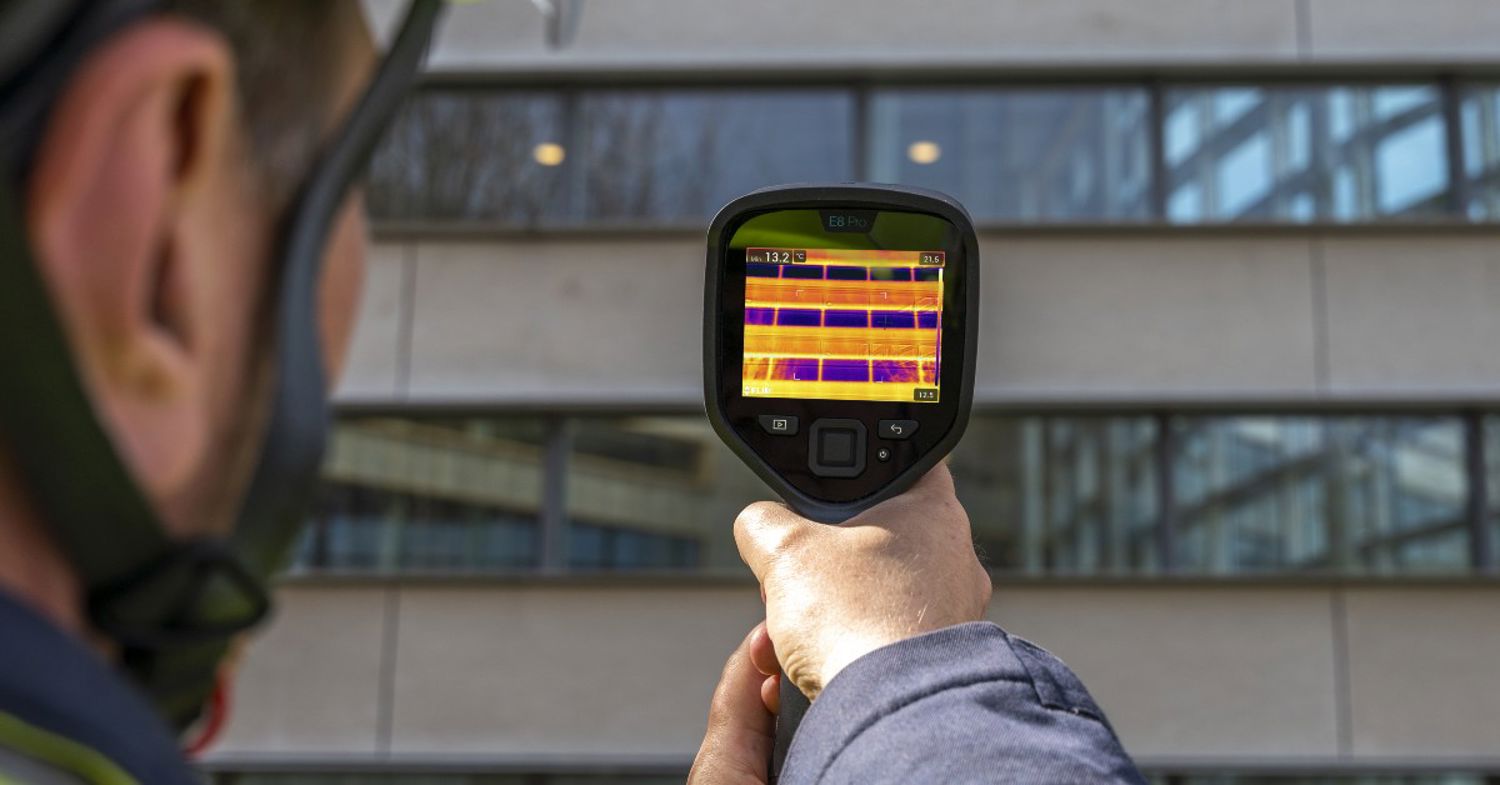
Thermal imaging helps detect cooler or warmer areas along exterior walls that may indicate moisture intrusion.
In Cocoa’s coastal environment, long wall runs facing prevailing winds are common problem zones.
3. Slab and Flooring Evaluation
Commercial slab foundations may absorb groundwater after heavy rain.
Thermal scans can reveal:
- Moisture migration along slab edges
- Damp zones beneath flooring
- Areas where subfloor systems are holding moisture
This is particularly useful in retail or office spaces where flooring removal is disruptive.
4. HVAC and Mechanical Systems
Commercial HVAC systems are large and complex.
Thermal imaging can identify:
- Condensation around ductwork
- Temperature imbalances in air handlers
- Insulation failures
- Air leakage from duct seams
In Cocoa’s humid conditions, duct sweating and condensation are common contributors to hidden moisture problems.
Why Thermal Imaging Is Especially Useful in Cocoa
Cocoa’s coastal environment presents specific moisture challenges:
- High ambient humidity
- Salt air exposure
- Heavy storm cycles
- Elevated groundwater levels
- Large roof surface exposure
These conditions increase the likelihood of subtle moisture intrusion.
Because thermal imaging is non-invasive, it allows professionals to scan large commercial spaces quickly without interrupting operations.
Companies familiar with Brevard County conditions, such as Inspections and More FL, understand how local storm patterns and humidity cycles influence temperature anomalies inside commercial buildings.
The Step-by-Step Thermal Imaging Process
A structured approach ensures accurate interpretation.
Step 1: Environmental Assessment
Professionals measure indoor temperature, humidity, and recent weather conditions.
Thermal imaging works best when there is sufficient temperature contrast.
Step 2: Controlled Scanning
Technicians scan:
- Exterior walls
- Ceilings
- Floor surfaces
- Mechanical rooms
- Around windows and doors
- Roof access points
Patterns are recorded for analysis.
Step 3: Confirm Findings With Moisture Meters
Thermal imaging highlights suspicious areas — but confirmation is critical.
Moisture meters are used to verify whether anomalies represent:
- Active moisture
- Old staining
- Insulation voids
- Air leaks
This prevents false conclusions.
Step 4: Develop a Targeted Plan
Based on confirmed findings, professionals may recommend:
- Structural drying
- Roof repairs
- Window resealing
- Air scrubbing
- Dehumidification
- Insulation replacement
Thermal imaging ensures the response is proportional and localized.
Limitations and Challenges
Thermal imaging is powerful, but it must be interpreted correctly.
Challenges include:
- Reflections from metal surfaces
- Heat from lighting systems
- HVAC temperature fluctuations
- Limited temperature contrast during certain times of day
Experienced professionals understand how to account for these variables.
In Cocoa’s humid climate, moisture may not always create strong temperature differences — which is why moisture meter confirmation is essential.
Benefits for Commercial Property Owners
Thermal imaging inspections provide:
- Early detection of hidden leaks
- Reduced demolition costs
- Faster diagnosis
- Minimized business disruption
- Targeted repair planning
- Protection of tenant spaces
For multi-tenant buildings, this helps prevent cross-unit damage and air quality complaints.
When to Schedule a Thermal Imaging Inspection
Commercial property managers in Cocoa should consider thermal imaging:
- After hurricane season
- When indoor humidity feels elevated
- After roof repairs
- When ceiling staining appears
- Before major renovations
- During routine preventative maintenance
Early detection reduces long-term repair expenses.
Why Local Experience Matters
Thermal imaging in a coastal commercial environment requires understanding:
- Storm-driven intrusion patterns
- Salt air effects on building materials
- Humidity-driven condensation behavior
- HVAC interaction with large open spaces
- Roof system performance in Florida heat
Professionals familiar with Cocoa know where moisture tends to hide in local commercial construction.
Accurate interpretation prevents unnecessary repairs while ensuring hidden issues are addressed.
A Practical Takeaway for Cocoa Commercial Property Managers
Inside commercial buildings in Cocoa, thermal imaging inspections provide a non-invasive way to identify hidden moisture and air imbalance before they become structural or air quality problems.
In a coastal climate where humidity is constant and storms are seasonal realities, early detection is one of the most cost-effective tools available.
When combined with moisture verification and targeted corrective action, thermal imaging helps protect:
- Structural integrity
- Indoor air quality
- Tenant comfort
- Long-term property value
In commercial settings, seeing what the eye can’t see makes all the difference.